
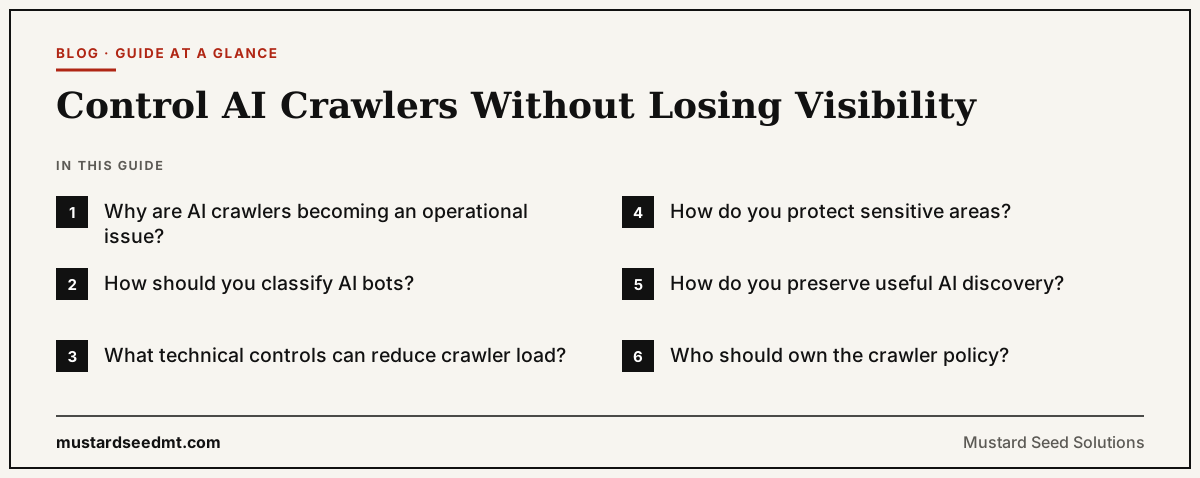
Companies do not need to choose between allowing every AI bot and blocking them all. A better approach is to classify crawlers by purpose, decide what business value each type provides, and enforce technical controls that protect infrastructure while preserving the discovery channels you want.
This matters because control AI crawlers is rarely a one factor problem. Website structure, authority, content, technical access, external evidence, and buyer intent can all shape the result.
The goal is to diagnose the system before applying isolated tactics. The sections below show what to check, what to improve, and how to connect the work to a useful commercial outcome.
Why are AI crawlers becoming an operational issue?
AI systems can generate significant automated traffic, and not every crawler delivers equal value. Infrastructure teams may see bandwidth, performance, abuse, or security concerns while marketing teams worry about disappearing from AI search.
That creates a governance problem that should be solved jointly.
How should you classify AI bots?
Separate search and retrieval bots, training bots, user initiated fetchers, unknown agents, and malicious impersonators. Each category can have a different policy based on visibility value and risk.
- Identify documented legitimate bots
- Flag spoofed or unverifiable agents
- Define what each category may access
What technical controls can reduce crawler load?
Rate limiting, CDN controls, caching, bot management, request logging, and targeted access rules can reduce unnecessary load. Avoid broad rules that block important search and AI discovery traffic simply because traffic volume increased.
Operations and marketing should review the impact together.
How do you protect sensitive areas?
Public marketing content and sensitive application areas should not share the same access assumptions. Credential files, admin paths, staging systems, and internal tools need stronger protection regardless of SEO or GEO goals.
AI visibility should never depend on exposing material that should not be public.
How do you preserve useful AI discovery?
Keep important public pages accessible to the crawlers that support the platforms you care about. Make those pages fast, readable, indexable, and rich in clear text so legitimate retrieval does not need excessive requests to understand them.
Then monitor whether cited pages and AI referrals are improving.
Who should own the crawler policy?
Marketing, SEO, security, and infrastructure teams should share ownership because each sees a different risk. A short written policy is better than undocumented rules added reactively during an incident.
Mustard Seed can support the visibility and content side while coordinating with technical owners through an AI Visibility Audit.