
Starting August 17, 2026, Google Ads will change how target based bidding behaves when a campaign is limited by budget. Affected campaigns using Target ROAS or Target CPA will optimize more consistently toward the target the advertiser actually set.
This matters most when a campaign has been performing better than its stated target. Google says that if advertisers make no change, actual performance may move closer to the existing target once the update takes effect.
The update does not mean Google will automatically raise your budget or rewrite your bidding target. It means the target you already entered can become a more accurate instruction for budget constrained campaigns.
What exactly is changing in Google Ads?
Google is changing the bidding behavior of campaigns that are both limited by budget and using a target based bid strategy. According to Google's official announcement, these campaigns will perform more consistently toward their stated target after August 17, including when advertisers adjust budgets.
Before the update, some budget constrained campaigns could materially overperform their targets. That created a gap between the number entered in Google Ads and the efficiency the campaign was actually delivering.
After the update, Google wants the relationship between the target and actual performance to become more predictable.
- Target ROAS campaigns will optimize more consistently toward the ROAS target.
- Target CPA campaigns will optimize more consistently toward the CPA target.
- Google will not automatically change campaign budgets.
- Google will not automatically change bid targets.
Which campaigns are affected?
The update is aimed at target based campaigns that are constrained by budget. Google says the change applies to Target CPA and Target ROAS across Search, Shopping, Performance Max, Demand Gen and Travel campaigns, with some platform and campaign type differences.
A campaign using Target ROAS or Target CPA that is not budget constrained is not expected to change behavior because of this update.
That distinction is important. Seeing Target ROAS in your account does not automatically mean you need to change anything. First check whether the campaign is limited by budget and whether actual performance has been substantially better than the target.
Why can an old Target ROAS suddenly matter more?
Target ROAS expresses the average conversion value you want for each unit of ad spend. A Target ROAS of 500% means you are asking Google to aim for roughly five units of conversion value for every one unit spent.
Imagine a budget limited campaign has a Target ROAS of 200%, but it has recently been achieving 500%. Under the new behavior, leaving the target at 200% tells the bidding system that performance around that stated target is acceptable.
This does not guarantee that actual ROAS will become exactly 200%. Auction conditions, conversion rates, demand, tracking and other factors still influence results. The practical point is that the target itself should reflect the efficiency your business actually wants.
What should advertisers review before August 17?
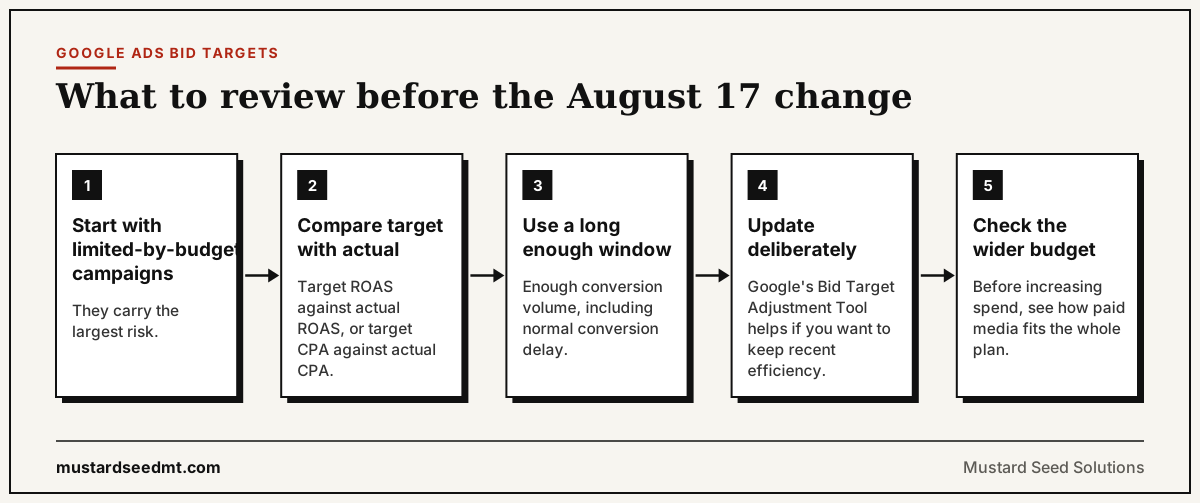
Start with campaigns marked as limited by budget and then compare the bid target with recent actual performance. The largest risk is a target that no longer represents the business goal.
For Target ROAS, compare the target with recent actual ROAS. For Target CPA, compare the target with recent actual CPA. Look across a period that is long enough to include meaningful conversion volume and any normal conversion delay.
Google has made a Bid Target Adjustment Tool available to help advertisers review affected campaigns. If recent performance is better than the stated target and you want to preserve that level of efficiency, Google says you can update the target to better reflect recent performance.
You can also review how paid media fits into your wider marketing budget allocation before increasing spend.
Should you copy recent performance directly into the target?
Not automatically. Recent performance is useful evidence, but your target should ultimately reflect the economics of the business.
For ecommerce, that may mean contribution margin, repeat purchase behavior and allowable acquisition cost. For B2B, it may mean lead quality, opportunity rate, close rate, contract value and the delay between the ad click and revenue.
A campaign that achieved 600% ROAS last month does not automatically mean 600% is the right target forever. The question is what level of efficiency gives the business an acceptable return while still allowing enough volume to meet growth goals.
If you use Google Ads for B2B demand generation, connect campaign targets with qualified pipeline rather than treating platform metrics as the final business outcome.
What happens after the update goes live?
Google warns that affected campaigns may experience temporary traffic and performance fluctuations. For multi channel campaign types such as Performance Max and Demand Gen, traffic allocation across channels may also shift.
Google recommends waiting one to two conversion cycles before evaluating performance after significant changes. That is especially important for businesses with long conversion delays.
Avoid judging a campaign from one day of data. Compare actual CPA or ROAS against the target over a meaningful period and check whether conversion volume, lead quality and business outcomes remain healthy.