
Complex B2B content becomes easier to understand when it starts with the buyer’s problem, uses the customer’s language, explains one idea at a time, and connects technical detail to commercial consequences. Simplification should remove unnecessary friction without removing the expertise buyers need to trust the product.
This matters because make complex B2B content easier to understand is rarely a one factor problem. Website structure, authority, content, technical access, external evidence, and buyer intent can all shape the result.
The goal is to diagnose the system before applying isolated tactics. The sections below show what to check, what to improve, and how to connect the work to a useful commercial outcome.
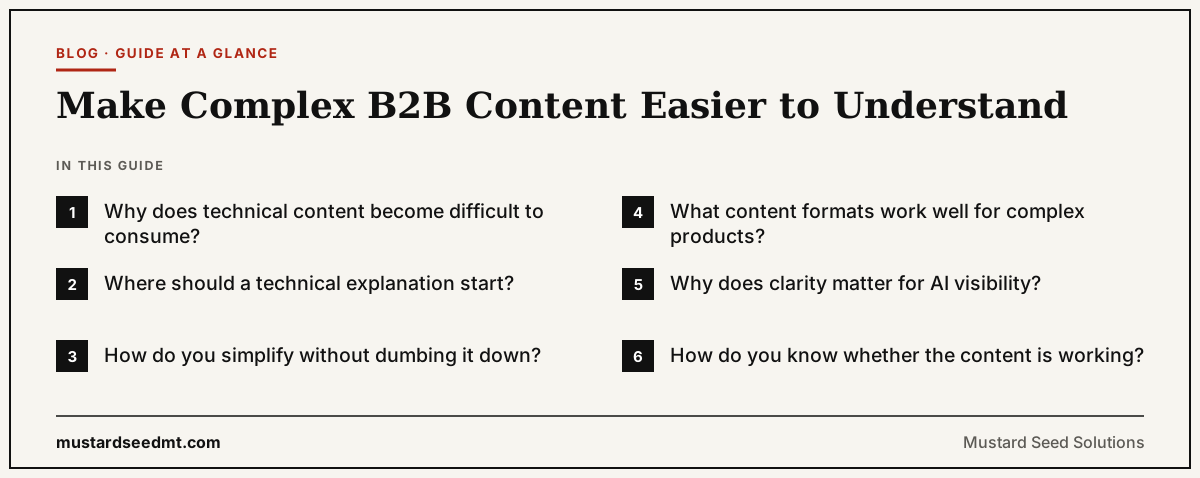
Why does technical content become difficult to consume?
Teams often organize content around product architecture instead of buyer questions. They assume readers share internal terminology and introduce too many concepts before explaining why the topic matters.
Accuracy alone does not guarantee comprehension.
Where should a technical explanation start?
Start with the operational or commercial problem and then introduce the technology as the mechanism that solves it. This gives buyers a reason to care before they encounter technical detail.
- Problem first
- Outcome second
- Mechanism third
How do you simplify without dumbing it down?
Use concrete examples, analogies where appropriate, diagrams, visual stories, definitions, and layered detail. Keep the technical facts available for expert buyers while giving less technical stakeholders a clear path through the page.
Different readers can use different levels of the same asset.
What content formats work well for complex products?
Explainer articles, ebooks, diagrams, case studies, buyer guides, comparison pages, visual stories, short videos, and sales enablement content can all translate complex material into usable decisions.
Mustard Seed’s content work includes story based and campaign based formats alongside conventional B2B content.
Why does clarity matter for AI visibility?
AI systems also need to identify what the product does, who it is for, how it differs, and what evidence supports the claim. Clear headings, definitions, examples, and entity relationships make technical content easier to retrieve accurately.
Connect strong explanatory content to AI Visibility work.
How do you know whether the content is working?
Measure completion, engagement, sales usage, assisted conversions, buyer questions, search visibility, AI citations, and whether sales teams reuse the explanation. The best signal is that buyers can repeat the value proposition correctly.
Clarity should improve both marketing performance and sales conversations.