
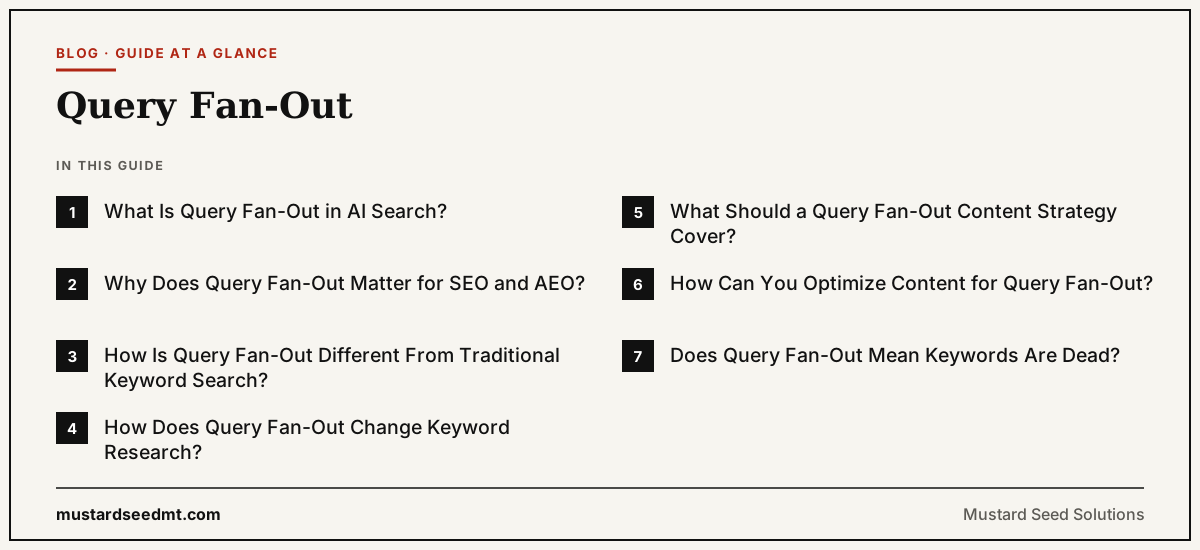
Query Fan-Out is a search technique in which an AI system expands one complex question into multiple related queries, explores supporting subtopics and sources, then combines what it finds into a broader answer. For marketers, the practical implication is clear: visibility can depend on an entire network of related questions, not only the original keyword.
Traditional SEO often starts with a direct relationship between a query and a page. AI search makes that relationship more complex because one prompt can trigger several supporting information needs. That widens the competitive surface for keyword research, content planning, AEO, and brand authority.
What Is Query Fan-Out in AI Search?
Query Fan-Out is a process where an AI powered search system breaks a broad question into smaller related searches, investigates subtopics, and synthesizes the results into one response.
A simple model looks like this: one user question, multiple derived searches, multiple sources, one synthesized answer.
For “What is the best backup solution for a mid sized company moving away from VMware?”, the system may explore migration, ransomware recovery, immutable backup, Proxmox support, pricing, geography, and customer evidence.
Why Does Query Fan-Out Matter for SEO and AEO?
Query Fan-Out matters because ranking for one obvious phrase may not establish relevance across the wider decision process. A page can perform well for a primary keyword while the site remains weak on supporting topics. A website may also contribute to an AI generated answer through a page that matches one of those supporting questions.
This connects SEO with AI visibility strategy. Content coverage, clear entity information, evidence, internal relationships, and external brand signals become more important.
How Is Query Fan-Out Different From Traditional Keyword Search?
Traditional keyword strategy focuses on a main phrase and close variations. Query Fan-Out can expand the search into pricing, geography, use cases, integrations, alternatives, risks, reviews, and implementation.
| Comparison point | Traditional keyword search | Query Fan-Out environment |
|---|---|---|
| Starting point | One keyword or close variants | One prompt expanded into related questions |
| Content target | A page for the main phrase | A connected set of useful answers |
| Relevance | Direct query match | Direct and supporting subtopic relevance |
| Evidence | On-page optimization | Content, proof, comparisons, external signals |
| Strategy | Rank for the keyword | Cover the wider decision environment |
For “best accounting software for startups,” a classic campaign may target close keyword variations. An AI search system may also investigate VAT support, international invoicing, payroll, geography, SaaS workflows, reviews, and alternatives. The scope of competition expands with the question.
How Does Query Fan-Out Change Keyword Research?
Keyword research still matters because keywords reveal demand, language, and intent. A list of high volume terms, however, is not a complete strategy.
A stronger approach starts with the main query and maps surrounding information needs. For a DCIM software company, these might include power monitoring, capacity planning, deployment, BMS comparisons, AI data centers, MSP use cases, ROI, and customer evidence. That creates a broader search footprint than one definition article.
What Should a Query Fan-Out Content Strategy Cover?
A useful strategy maps the buyer’s wider problem, not just keyword variations. A practical content map should consider:
- Definitions, use cases, buyer questions, implementation, pricing, alternatives, comparisons, risks, integrations, industry scenarios, customer evidence, reviews, and proof behind major claims.
This is where topic clusters become more useful. A backup software company may also need content about ransomware recovery, VMware migration, immutable storage, RTO and RPO, disaster recovery testing, Kubernetes protection, and cloud costs.
How Can You Optimize Content for Query Fan-Out?
There is no guaranteed method that forces an AI system to cite or recommend a website. The goal is to make content easier to understand, useful across related questions, and supported by evidence.
Start with specific content for real scenarios. “Best Cybersecurity Software” is broad, while “How a 200 Person Manufacturer Can Evaluate Ransomware Recovery Software” adds clear industry, company size, risk, and buying context.
Make important facts explicit: what the product does, who it serves, supported environments, availability, deployment, and differentiators. Original evidence such as benchmark data, customer surveys, expert interviews, technical tests, and case studies can add information generic summaries cannot reproduce.
Connect the work with broader marketing strategy. Publications, partner sites, interviews, directories, customer discussions, and comparison content can shape how a brand is understood beyond its own website.
Does Query Fan-Out Mean Keywords Are Dead?
No. Keywords still reveal how people describe problems, categories, products, and buying intent.
Marketers should ask two questions: “Which keyword should this page rank for?” and “What related questions might an AI system investigate before answering the buyer?”
A strong page can still target one primary keyword. The wider site should connect it to alternatives, risks, implementation, integrations, use cases, and evidence.
The bigger lesson is that the unit of competition is expanding beyond the individual keyword. One question may surface many subtopics, pages, brands, comparisons, reviews, and pieces of evidence. Is your brand visible only for one keyword, or across the wider information network that influences the answer?
That is where SEO and AEO increasingly come together. Technical SEO, crawlability, internal linking, useful content, and brand authority still matter, but the strategy must cover a wider decision environment.