
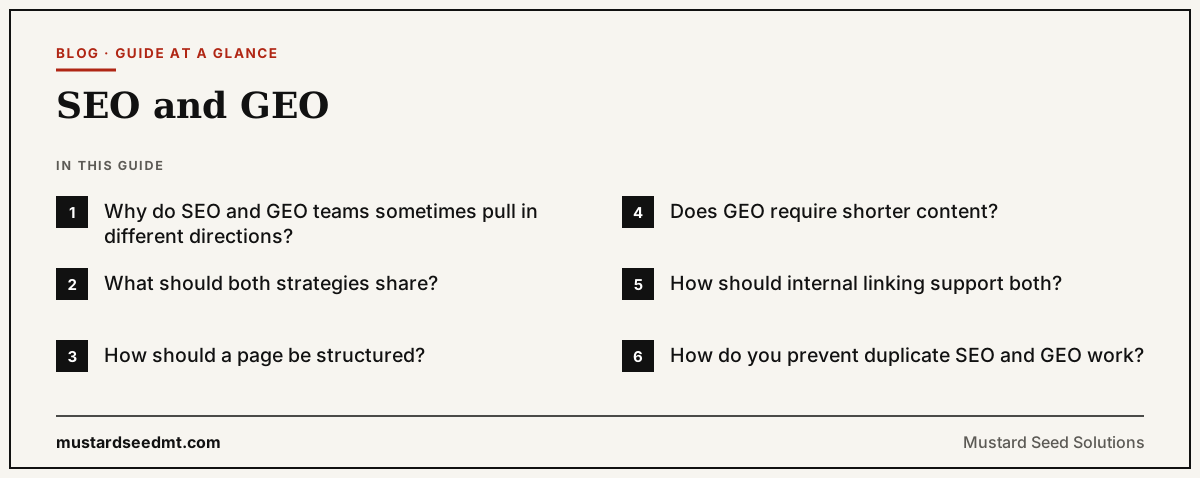
SEO and GEO should share the same foundation: useful content, clear intent, strong authority, technical accessibility, and a coherent brand entity. The conflict usually comes from treating GEO as a separate set of formatting tricks instead of an extension of search and content strategy.
This matters because SEO and GEO strategy is rarely a one factor problem. Website structure, authority, content, technical access, external evidence, and buyer intent can all shape the result.
The goal is to diagnose the system before applying isolated tactics. The sections below show what to check, what to improve, and how to connect the work to a useful commercial outcome.
Why do SEO and GEO teams sometimes pull in different directions?
SEO teams may prioritize comprehensive pages built around keyword demand, while GEO advice often emphasizes concise answers and extractable chunks. Both can be correct when the page is structured well.
A deep page can answer the question early and still provide the supporting detail needed for search and buyers.
What should both strategies share?
Use the same buyer problems, service taxonomy, entity definitions, evidence, internal linking, and commercial goals. That prevents duplicate pages and contradictory messaging.
- One canonical page for each main intent
- Direct answer near the top
- Evidence and depth below the answer
How should a page be structured?
Open with a clear answer, then expand through question based sections, examples, proof, and related decision criteria. This gives AI systems citable units while preserving depth for users and search engines.
The uploaded Mustard Seed template follows this answer first pattern.
Does GEO require shorter content?
No. GEO requires accessible information, not necessarily short pages. Length should follow the complexity of the question and the amount of useful evidence available.
Cut repetition, not substance.
How should internal linking support both?
Educational pages should link to parent topics, sibling intent, and the relevant commercial next step. This helps search engines understand topical relationships and helps buyers move toward action.
Connect AI search education to the AI Visibility Audit or another relevant service.
How do you prevent duplicate SEO and GEO work?
Plan content by buyer intent and entity need instead of by channel. One strong page can often serve Google, AI assistants, and human buyers when it is structured and evidenced properly.
Separate platform specific work only when you identify a real technical or citation difference.