
Enterprise SEO Consultant: What They Do and When You Need One
An enterprise SEO consultant manages SEO for large, complex websites — typically thousands of pages, multiple stakeholder teams, and technical stacks that a generalist freelancer isn't set up to handle. The role is less about finding keywords and more about coordinating engineering, content, legal, and regional teams around a shared technical and editorial standard. Engagements typically run $5,000 to $20,000+ per month on retainer, or $150 to $400+ per hour for project-based advisory work.
What makes SEO different at enterprise scale
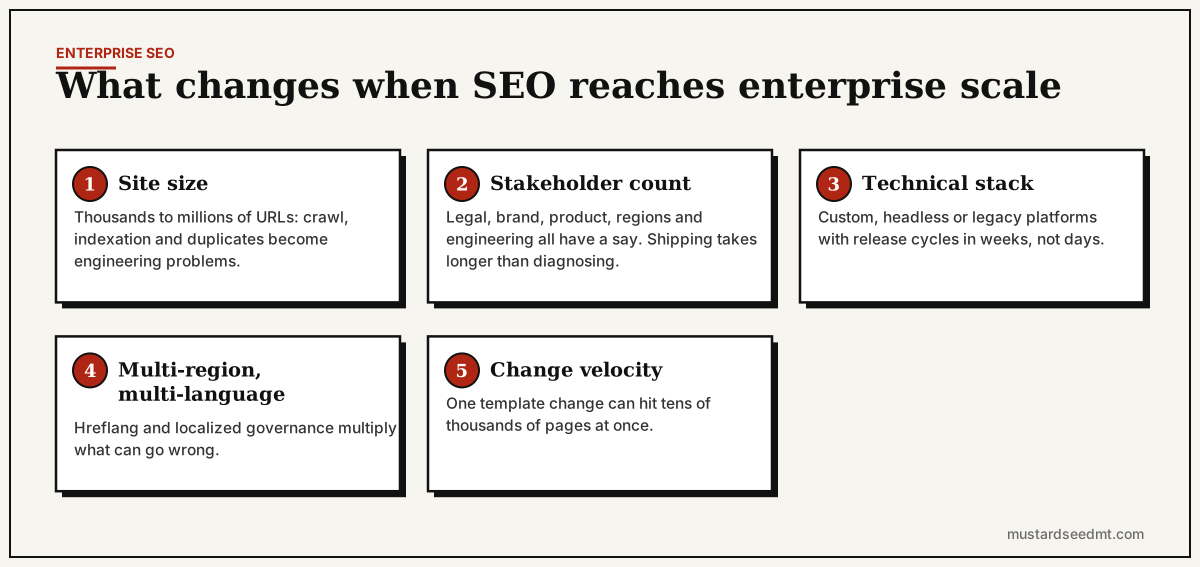
- Site size. Thousands to millions of URLs means crawl budget, indexation, and duplicate-content management become engineering problems, not content problems.
- Stakeholder count. Legal, brand, product, regional marketing, and engineering all have a say — and often conflicting priorities. Getting a change shipped can take longer than diagnosing it.
- Technical stack complexity. Enterprise sites are frequently built on custom CMSs, headless architectures, or legacy platforms with release cycles measured in weeks, not days.
- Multi-region, multi-language. Hreflang, localized content governance, and regional search behavior differences multiply the surface area of what can go wrong.
- Change velocity. A single template change can affect tens of thousands of pages at once — for better or worse. Enterprise SEO work carries more downside risk per decision.
What an enterprise SEO consultant actually does
Day to day, the work is closer to program management than tactical SEO. A consultant typically runs technical audits at scale, prioritizes fixes by estimated impact and engineering cost, and translates SEO requirements into tickets that development teams can actually execute against a sprint backlog.
- Technical SEO audits. Crawl analysis, indexation health, Core Web Vitals, structured data coverage — usually run on a recurring cadence, not a one-time engagement.
- Information architecture. How the site's URL structure, internal linking, and category taxonomy support both users and crawlers at scale.
- Stakeholder alignment. Translating SEO impact into terms each team cares about — engineering effort, legal risk, brand consistency, regional revenue.
- Governance and documentation. Style guides, technical SEO standards, and review processes so quality doesn't erode as more teams publish content.
- Cross-functional reporting. Dashboards and reporting cadences that different stakeholders (execs, engineering leads, regional marketers) can each use.
Enterprise SEO consultant vs. agency vs. in-house team
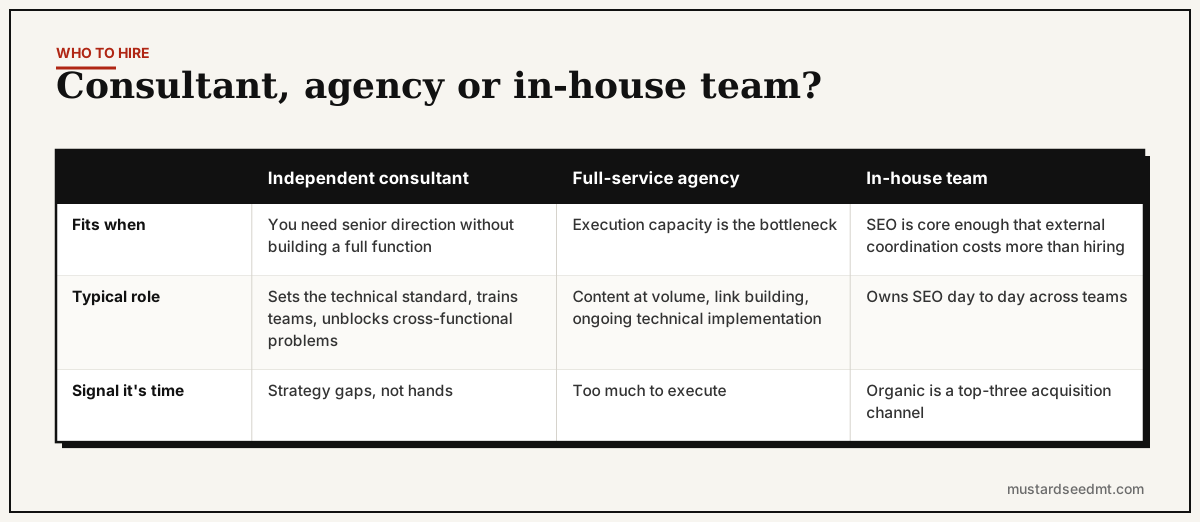
An independent consultant is usually the right fit when the organization needs senior strategic direction without building a full internal function — someone who sets the technical standard, trains internal teams, and unblocks the hardest cross-functional problems, while day-to-day execution stays in-house or with an agency.
A full-service agency makes more sense when execution capacity, not strategy, is the bottleneck — content production at volume, link building programs, or ongoing technical implementation with a dedicated team.
An in-house team becomes worthwhile once SEO is core enough to the business that the coordination overhead of an external party outweighs the cost of hiring — often once organic search is a top-three acquisition channel.
What it costs
Enterprise SEO consulting typically runs $5,000 to $20,000+ per month on retainer, or $150 to $400+ per hour for project-based advisory work, reflecting both the seniority required and the scope of coordination involved. Larger, more technically complex sites and highly competitive verticals (finance, SaaS, e-commerce) sit at the higher end.
The right way to evaluate cost isn't the monthly figure alone — it's cost against the size of the opportunity. A 5% organic traffic lift on a site doing meaningful revenue through search can dwarf the consulting fee many times over; the same lift on a small site may not justify enterprise-level engagement at all.
Frequently Asked Questions
What does an enterprise SEO consultant do?
They lead SEO strategy for large, complex websites — running technical audits at scale, coordinating across engineering, legal, and regional marketing teams, setting governance standards, and prioritizing fixes by business impact rather than working keyword-by-keyword.
How is enterprise SEO different from small business SEO?
Enterprise SEO deals with site sizes, stakeholder counts, and technical complexity that make it closer to program management than tactical optimization. A single change can affect tens of thousands of pages, and getting anything shipped requires cross-team coordination that small-business SEO rarely involves.
How much does an enterprise SEO consultant cost?
Typically $5,000 to $20,000+ per month on retainer, or $150 to $400+ per hour for project work, depending on site complexity and market competitiveness.
When should a company hire an enterprise SEO consultant instead of an agency?
When the need is senior strategic direction and cross-functional unblocking rather than execution capacity. If the bottleneck is content or link-building volume, an agency with dedicated execution resources is usually the better fit.
Do enterprise SEO consultants work with international companies?
Often, yes — multi-region and multi-language sites are one of the areas where enterprise SEO expertise matters most, since hreflang, localized content governance, and regional search behavior all add complexity that scales with the number of markets served.
Enterprise & Cross-Border SEO
Coordinating SEO Across Teams, Markets, or Borders?
Mustard Seed Solutions advises technology and B2B companies on the SEO and go-to-market decisions that span engineering, regional marketing, and international expansion — including China–Europe market entry.
Talk to an SEO Advisor