
SEO Reputation Management: Control What People Find About You
SEO reputation management — often called reputation SEO — is the practice of shaping what appears when someone searches your name or brand. The first page of results is your de facto reputation — and increasingly, so is what AI answer engines say about you. This guide explains how to suppress unwanted results, build positive assets that rank, and take control of the search narrative around your business.
Why the first page is your reputation
When a customer, investor, or candidate looks you up, they rarely go past page one. Whatever ranks there — your site, reviews, news, a stray complaint, a competitor comparison — becomes the story they believe. If negative or misleading results occupy that space, they shape decisions before anyone speaks to you. SEO reputation management exists to make sure the search narrative reflects reality and favours you.
The same logic now extends to AI. When someone asks ChatGPT, Perplexity, or Google's AI Overview about your brand, the answer is assembled from what those systems find credible online. Managing your reputation increasingly means managing what AI engines say, not just what ranks in blue links.
The two sides of reputation SEO
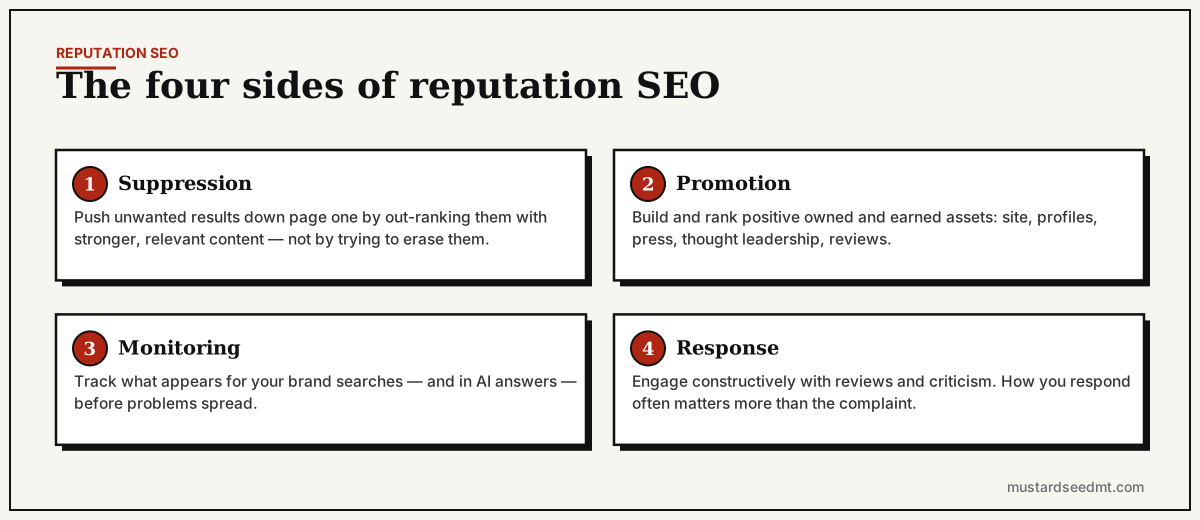
- Suppression. Pushing negative or unwanted results down page one by out-ranking them with stronger, more relevant content — not by trying to erase them.
- Promotion. Building and ranking positive owned and earned assets: your site, profiles, press, thought leadership, and reviews.
- Monitoring. Tracking what appears for your brand searches — and now in AI answers — so you can respond before problems spread.
- Response. Engaging constructively with reviews and criticism, since how you respond often matters more than the original complaint.
How to build positive assets that rank
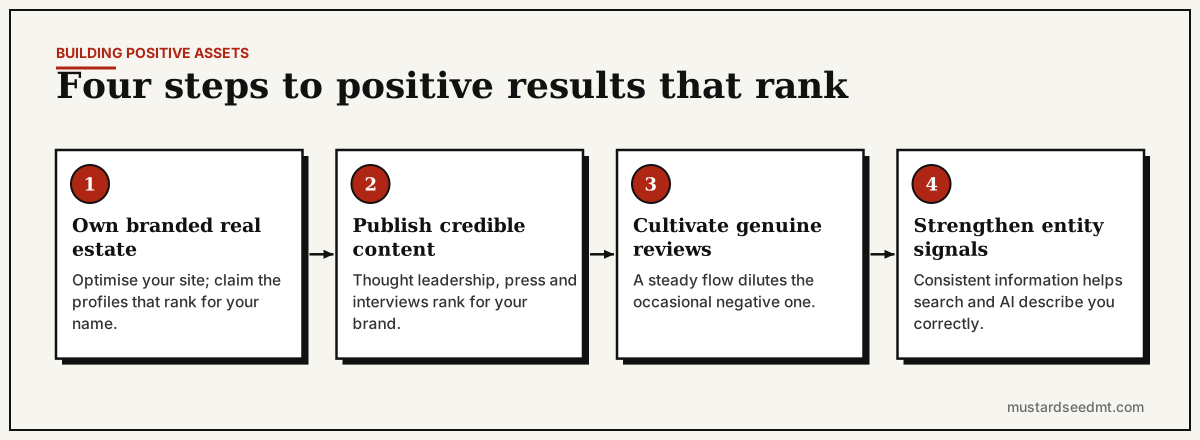
- 01
Own your branded real estate. Optimise your website, and claim and complete profiles on the platforms that rank for your name — social, review sites, industry directories.
- 02
Publish credible content. Thought leadership, press coverage, and interviews create authoritative pages that naturally rank for your brand.
- 03
Cultivate genuine reviews. A steady flow of authentic positive reviews both ranks and reassures — and dilutes the impact of the occasional negative one.
- 04
Strengthen entity signals. Consistent brand information across the web helps search engines and AI systems describe you accurately and confidently.
What reputation SEO cannot do
Ethical reputation management improves the balance and accuracy of what people find; it does not make legitimate criticism vanish or fabricate a false picture. Trying to scrub every negative result, post fake reviews, or game your way out of genuine problems tends to backfire — and AI answer engines, which weigh credibility, are increasingly hard to fool. The durable approach is to earn a good reputation and then make sure search and AI accurately reflect it.
Frequently Asked Questions
What is SEO reputation management?
SEO reputation management is the practice of influencing what appears when people search your name or brand — suppressing negative results by out-ranking them, promoting positive owned and earned assets, and monitoring your presence across search and AI answers.
How do you push down negative search results?
You suppress negative results by out-ranking them with stronger, more relevant positive content: an optimised website, complete profiles, press coverage, thought leadership, and genuine reviews. The aim is to displace unwanted results, not to erase them, which is rarely possible or advisable.
Can you remove negative content from Google?
Usually not directly — Google indexes what exists on the web. Removal is only possible in specific cases (legal violations, doxxing, some personal data). The practical approach is to out-rank negative results with positive assets rather than trying to delete them.
Does reputation management affect AI answers?
Yes, increasingly. AI engines like ChatGPT and Google's AI Overviews assemble answers about your brand from credible sources online. Managing your reputation now means shaping what those systems find and cite, not only what ranks in traditional search results.
What is reputation SEO?
As a discipline, reputation SEO applies core search optimisation methods to your name and brand rather than to general keyword rankings. Done well, reputation SEO covers suppression of negative results, promotion of positive owned and earned assets, and ongoing monitoring of what search engines and AI answers say about you.
Reputation strategy
Make Search Tell Your Real Story
Mustard Seed Solutions helps brands take control of what people find in search and AI answers — building positive, authoritative assets that rank and ensuring your reputation online reflects the reality of your business.
Request a Reputation Review