
What Is Evergreen Content? Examples & Why It Compounds
Evergreen content is content that stays useful and keeps drawing traffic long after it is published — the opposite of news, which peaks and fades. It is the closest thing content marketing has to a compounding asset: write it once, maintain it lightly, and it can bring in readers, links, and leads for years.
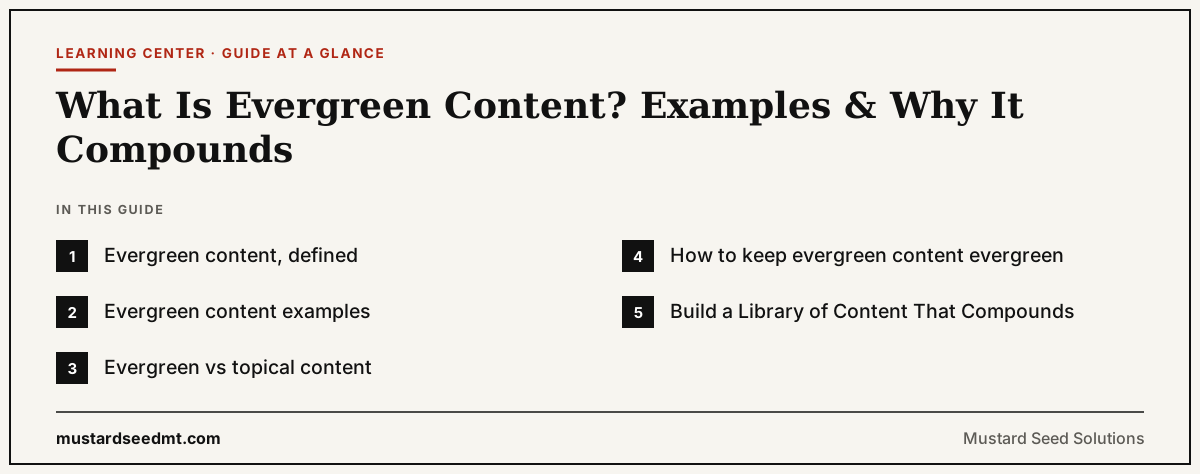
Evergreen content, defined
Evergreen content answers questions that people keep asking regardless of the date. 'What is a content calendar?' will be searched next year and the year after. 'This week's marketing news' will not. Because the demand is stable, evergreen pages can rank, attract backlinks, and earn AI citations steadily over a long period, rather than spiking once and dying.
That durability is what makes evergreen content compound. Every month it stays ranked, it earns more visits, more links, and more authority — which in turn helps it rank higher. A topical post gives you a burst; an evergreen post gives you an annuity.
Evergreen content examples
- How-to guides and tutorials that explain a process step by step.
- Definitions and 'what is' explainers for terms your audience searches.
- Checklists and templates people return to and share.
- Frequently asked questions and glossaries.
- Case studies that illustrate a durable principle rather than a fleeting trend.
Evergreen vs topical content
Topical content reacts to what is happening now — a product launch, a Google algorithm update, a seasonal event. It can drive a sharp spike of traffic and shows your audience you are current, but its value decays quickly. Evergreen content ignores the calendar and serves steady, ongoing demand.
You need both. Topical pieces capture attention and demonstrate relevance; evergreen pieces build the compounding foundation of traffic and authority. A healthy content mix uses timely posts to spike interest and evergreen posts to bank long-term value.
How to keep evergreen content evergreen
Evergreen does not mean 'never touch it again.' The best-performing evergreen pages are reviewed once or twice a year: statistics refreshed, examples updated, new questions added, and the publish date bumped when the update is substantial. This light maintenance signals freshness to search engines and keeps the page accurate for AI answer engines that increasingly favour current, well-sourced information.
Frequently Asked Questions
What is evergreen content?
Evergreen content is content that stays relevant and keeps attracting traffic long after publication because it answers questions with stable, ongoing demand. Examples include how-to guides, definitions, checklists, and FAQs.
What are examples of evergreen content?
How-to guides, tutorials, 'what is' explainers, checklists, templates, glossaries, FAQs, and case studies built around durable principles. These pieces serve demand that does not disappear when the news cycle moves on.
What is the difference between evergreen and topical content?
Topical content reacts to current events and drives a short traffic spike before its value decays. Evergreen content serves steady, ongoing demand and keeps performing for years. Most successful strategies use both.
Does evergreen content need to be updated?
Yes, lightly. Reviewing evergreen pages once or twice a year — refreshing stats, examples, and adding new questions — keeps them accurate and signals freshness to search engines and AI answer engines, which helps them keep ranking.
Related Resources
Content strategy
Build a Library of Content That Compounds
Mustard Seed Solutions helps teams identify the evergreen topics worth owning and build the pages that keep earning traffic, links, and AI citations for years — the compounding foundation under every good content program.
Request a Content Strategy Review