
GEO vs SEO: What Is the Difference?
GEO and SEO both help B2B companies get found. SEO targets traditional search engine rankings. GEO targets AI-generated answers. This guide explains the differences, where they overlap, and how to run both strategies in parallel.
Video transcript
Buyers find you two ways. A ranked link. Or a citation in an AI answer. SEO earns the ranking. It improves your visibility in search engines like Google and Bing. GEO earns the citation. It gets your brand into AI answers from ChatGPT, Perplexity and Gemini. One path ends in a click to your site. The other can convert with no click. The answer itself carries your brand. SEO targets rankings. GEO targets AI answers. SEO leans on keywords and backlinks. GEO leans on entity clarity and credibility. SEO is measured in rankings, traffic and clicks. GEO is measured in mentions and citations. And GEO results take months. Underneath, they share a foundation. Structured data, quality content, external credibility and a crawlable site help both. Most B2B teams should build the SEO foundation first, then layer in GEO. AI products should prioritize GEO early. Either way, you need both. Read the full GEO versus SEO guide at mustardseedmt.com.
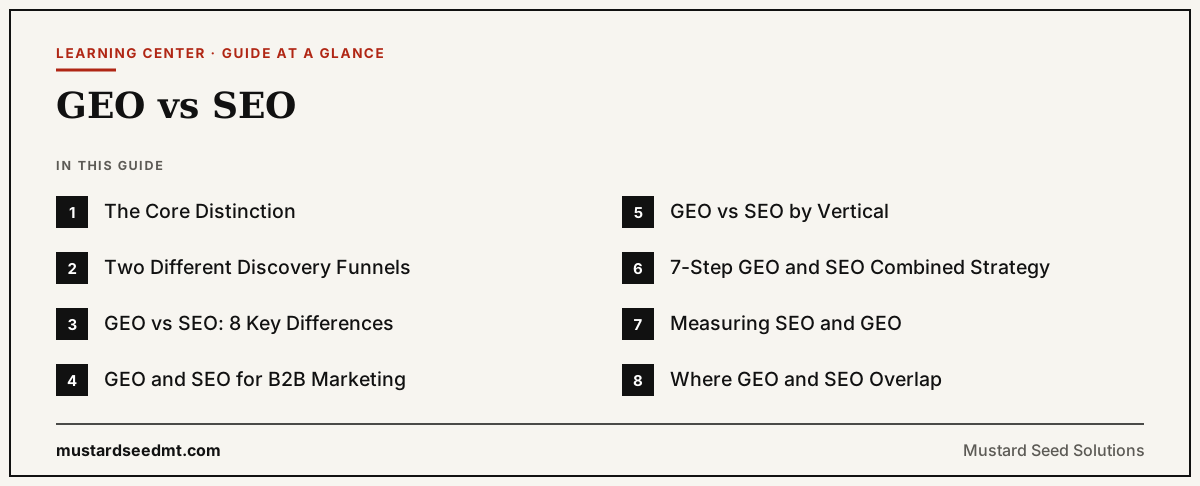
The Core Distinction
SEO
Search Engine Optimization
The practice of improving a website's visibility in traditional search engines — primarily Google and Bing. Success is measured by rankings, organic traffic, and conversions from keyword-based search.
GEO
Generative Engine Optimization
The practice of improving a company's visibility in AI-generated answers from tools like ChatGPT, Perplexity, Gemini, Claude, Microsoft Copilot, and Google AI Overviews. Success is measured by brand mentions, citations, and accurate representation in AI answers.
SEO has been the dominant digital marketing channel for over 25 years. GEO is an emerging discipline that is becoming more important as buyers shift toward AI-assisted research. Both remain relevant. B2B companies that understand the difference can prioritise correctly, allocate resources effectively, and build strategies that serve both discovery channels.
Two Different Discovery Funnels
SEO and GEO route a buyer to your brand through different mechanics — one ends in a click, the other ends in a citation.
The SEO funnel ends when a visitor clicks through to your site. The GEO funnel can convert without a click at all — the AI's answer itself carries your brand to the buyer.
GEO vs SEO: 8 Key Differences
| Dimension | SEO | GEO |
|---|---|---|
| What it optimises for | Search engine rankings on Google, Bing, and other traditional search engines | Visibility in AI-generated answers from ChatGPT, Perplexity, Gemini, Claude, Copilot, and Google AI Overviews |
| Primary ranking signal | Keyword relevance, backlinks, technical SEO, page authority, and click-through signals | Entity clarity, content accuracy, factual reliability, external credibility, and structured data |
| What success looks like | High search rankings, organic traffic, clicks, and impressions | Appearing in AI answers, brand mentions, citations, and accurate AI descriptions of your company |
| How it is measured | Rankings, organic sessions, impressions, click-through rate, conversions from search | AI visibility scores, brand mentions in AI answers, share of voice in AI, citation tracking |
| Content focus | Keyword-targeted pages, content clusters, long-tail queries, backlink-worthy content | Direct question-answering content, FAQ sections, entity definition, comparison and use case content |
| Technical requirements | Technical site health, crawlability, Core Web Vitals, page speed, structured data | Structured data, JSON-LD schema, consistent entity signals, clear content structure |
| External signal type | Backlinks, anchor text, referring domains, link authority | Press mentions, analyst citations, review platform presence, consistent brand descriptions, social profiles |
| Speed of results | Weeks to months for new content; faster for established pages | Months; AI system knowledge updates are not instant or predictable |
GEO and SEO for B2B Marketing
SEO focus areas for B2B
Keyword strategy
Target buyer-intent keywords for category, comparison, use case, and alternative searches
Content clusters
Build pillar pages with supporting content to establish category authority
Technical SEO
Ensure fast loading, crawlable pages, clean URL structure, and schema markup
Backlink building
Earn authoritative links from industry publications, partners, and relevant directories
Sales content for search
Create comparison pages, pricing pages, and case study content that ranks for high-intent queries
Local and regional search
For professional services, optimise for location-based and market-specific searches
GEO focus areas for B2B
Entity clarity
Define your company, product, category, buyer type, and market with precision across all content
AI answer content
Write direct, factual answers to buyer questions that AI systems can extract and use
Structured data
Implement JSON-LD schema for Organization, Article, FAQPage, and BreadcrumbList on all key pages
External credibility signals
Earn press coverage, analyst mentions, review platform presence, and consistent social profiles
FAQ and comparison content
Build FAQ sections and comparison pages that address AI-generated buyer research queries
Prompt monitoring
Regularly test AI tools with buyer prompts to track visibility and accuracy of brand representation
GEO vs SEO by Vertical
The balance between GEO and SEO investment varies by company type, buyer behaviour, and category maturity.
SaaS
SEO priority
Rank for category keywords, comparison searches, alternative queries, and integration searches that have clear buyer intent
GEO priority
Appear in AI vendor comparison answers, category definition responses, and tool recommendation queries
Recommendation
Run both. Buyers use both traditional search and AI tools throughout the research journey.
AI Products
SEO priority
Target emerging category terms, technical how-to content, and early-mover keywords before category search volume builds
GEO priority
Appear in AI tool comparison answers and category definition queries — especially important since buyers often use AI to research AI products
Recommendation
Prioritise GEO early. AI product buyers heavily use AI search for vendor research.
Cybersecurity
SEO priority
Rank for threat-type content, compliance-related searches, category comparison searches, and buyer education queries
GEO priority
Appear in AI-generated threat briefings, vendor comparisons, and compliance tool recommendations
Recommendation
Run both. SEO drives long-term discovery; GEO is growing rapidly in security buyer research.
Professional Services
SEO priority
Rank for local, regional, and expertise-specific searches that bring qualified leads from Google
GEO priority
Appear in AI answers to 'How do I find a [service] firm?' and 'What should I look for in a [service] provider?' queries
Recommendation
Prioritise SEO first. AI visibility grows more important as advisory buyers increasingly use AI for vendor shortlisting.
7-Step GEO and SEO Combined Strategy
For most B2B companies, GEO and SEO should be run together. Many foundational activities support both channels.
Build a strong SEO foundation first
GEO visibility often depends on a strong SEO foundation. AI systems frequently draw from high-quality web pages. If your site is not crawlable, does not have strong content, and does not earn external links, GEO improvements are harder to achieve.
Add structured data to all core pages
Structured data supports both SEO and GEO. JSON-LD schema helps search engines and AI crawlers understand your content. Start with Organization, BreadcrumbList, Article, and FAQPage schemas.
Define your entity across all surfaces
Write a consistent company description for your website, LinkedIn, Crunchbase, review platforms, and press materials. Inconsistent descriptions make it harder for AI systems to accurately represent your brand.
Answer buyer questions in content
Both SEO and GEO benefit from content that answers specific buyer questions. Long-tail SEO content and AI-optimised FAQ sections work together. Use question-format headings that buyers actually search and ask.
Build external credibility in parallel
SEO benefits from quality backlinks. GEO benefits from press coverage, analyst mentions, review platform presence, and social signals. Many link-building activities also build the external credibility signals GEO needs.
Create comparison and alternative content
Both SEO buyers and AI search users compare options. Comparison pages, alternative pages, and use case pages serve both channels. Build this content with strong SEO fundamentals and clear AI-readable structure.
Measure both channels separately but connect them
Track SEO performance with traditional tools (rankings, organic traffic, impressions). Track GEO performance with AI visibility monitoring. Look for content that performs well in both — it is usually your best combined investment.
Measuring SEO and GEO
SEO metrics and tools
GEO metrics and tools
Where GEO and SEO Overlap
Structured data
JSON-LD schema markup supports both traditional search engine understanding and AI system interpretation of page content.
Content quality
High-quality, accurate, well-structured content performs well in both traditional search rankings and AI answer extraction.
External credibility
Links from credible sources (SEO) and mentions in press, reviews, and analyst reports (GEO) often come from the same activities.
Technical site health
A crawlable, fast, technically sound website supports both SEO indexing and AI crawler access.
FAQ and question-answering content
FAQ sections marked with FAQPage schema support featured snippets in traditional search and direct extraction for AI answers.
Named author and E-E-A-T content
Content with named authors, demonstrated expertise, and factual credibility signals perform better in both traditional and AI search.
Category and comparison content
Comparison pages and category content serve keyword searchers (SEO) and AI-generated vendor comparison responses (GEO).
Internal linking
Strong internal linking helps search engine crawlers understand site architecture (SEO) and helps AI systems understand topic relationships (GEO).
Frequently Asked Questions
What is the difference between GEO and SEO?
SEO (Search Engine Optimization) focuses on improving rankings in traditional search engines like Google and Bing. GEO (Generative Engine Optimization) focuses on improving visibility in AI-generated search answers from tools like ChatGPT, Perplexity, Gemini, and Google AI Overviews.
Should B2B companies do GEO or SEO first?
Most B2B companies should build a strong SEO foundation first, then layer in GEO. Strong SEO fundamentals — crawlable content, structured data, quality external links — also support GEO visibility. For AI-focused companies, GEO may be higher priority earlier.
Can GEO replace SEO?
No. GEO and SEO serve different buyer moments. Traditional search engines still drive significant B2B website traffic. AI search is growing but has not replaced keyword-based discovery. Most companies need both strategies.
Does good SEO help with GEO?
Yes. AI systems frequently draw from high-quality web pages that rank well in traditional search. A strong SEO foundation — quality content, structured data, authoritative external links — supports GEO visibility in many cases.
How do you measure GEO performance?
GEO performance is measured by monitoring brand mentions in AI answers, tracking which competitors appear in the same prompts, analysing citations and sources, and measuring AI search share of voice. Manual prompt testing and dedicated GEO monitoring tools are used for measurement.
Is GEO the same as AEO?
GEO (Generative Engine Optimization) and AEO (Answer Engine Optimization) are closely related and often overlap. Both focus on appearing in AI-generated answers. AEO is a broader term that covers answer engines in general, while GEO specifically refers to generative AI search experiences.
What types of content help with both SEO and GEO?
Content that helps with both SEO and GEO includes: direct answers to buyer questions, FAQ sections with schema markup, comparison and alternative pages, case studies with clear outcomes, use case content, and technical how-to guides. This content serves keyword searchers and AI system knowledge bases.
Related Resources
What Does GEO Mean?
A clear definition of GEO, including how AI systems use web content and what GEO stands for.
GEO Tips for Beginners
15 beginner tips for improving brand visibility in AI-generated search answers.
Best GEO Tools
How to choose AI visibility tracking tools for product marketing and growth teams.
AEO Guide
Answer Engine Optimization — how to create content that AI systems extract and cite.
GEO Guide
The comprehensive guide to Generative Engine Optimization strategy for B2B companies.
E-E-A-T Guide
How Experience, Expertise, Authoritativeness, and Trust affect search and AI visibility.
SEO and GEO strategy
Need a GEO and SEO Strategy That Works Together?
Mustard Seed Solutions helps B2B technology and professional services companies build integrated SEO and GEO programs. If your team needs to improve traditional search visibility while also building AI search presence — and you want both to support each other — we can help you build a practical plan that covers content strategy, technical SEO, structured data, entity clarity, and AI visibility measurement.
Request an SEO and GEO Strategy Review