
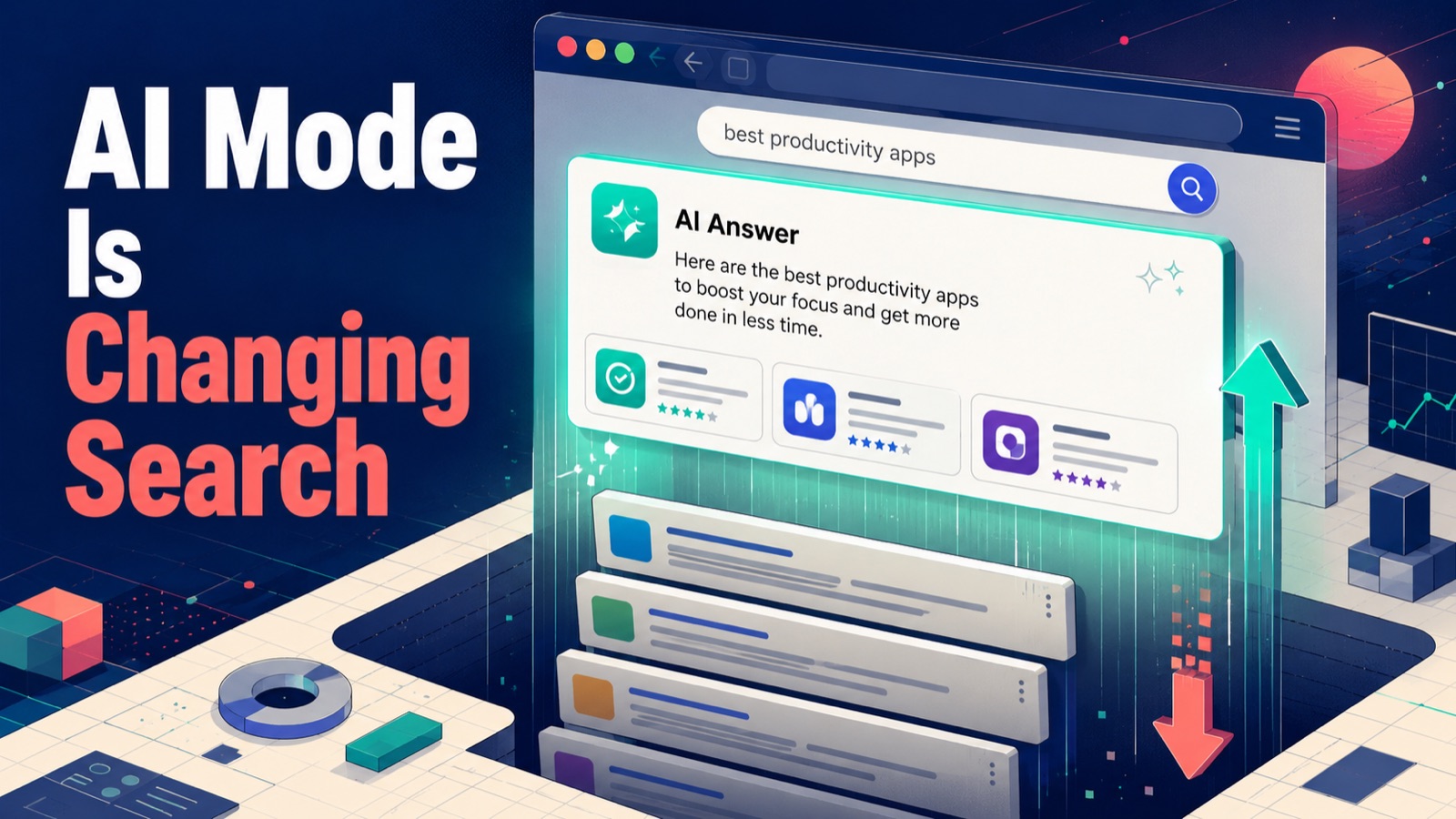
Google is testing and expanding search experiences where a fuller AI generated answer appears before traditional organic links. That does not make SEO irrelevant, but it changes the scarce resource marketers are competing for: attention before the user ever reaches the familiar list of results.
The Verge reported on August 28 that Google had begun automatically expanding some AI Overviews, replacing the previous need to click "Show more" in certain searches. When the answer occupies more screen space, traditional links can move further down the page.
What changed in Google's AI search experience?
The reported change is simple but consequential. For some queries, Google can show a more complete AI Overview immediately, followed by an "Ask anything" prompt, before the user reaches regular search results.
The Verge's report on auto expanded AI Overviews says Google describes the behavior as activating when its systems determine the fuller answer will be particularly useful. The exact triggers are not fully transparent.
This is part of a broader shift from search as a list of destinations toward search as an interactive answer environment. A user can read a summary, ask a follow up, narrow the question, and continue without leaving Google.
Why does this create a traffic problem for publishers?
Every extra layer above the organic results competes for the same user attention. If the first screen already provides a satisfactory answer, fewer people may feel a reason to scroll, evaluate multiple sources, or click through.
Publishers feel this most directly because traffic is often the product. A lower click through rate can mean fewer ad impressions, subscriptions, affiliate conversions, or opportunities to build a direct audience.
Brands face a more complicated picture. A company may lose a click but gain a mention inside the AI answer. That mention can still matter, especially in high consideration purchases, but it requires a measurement model that goes beyond rankings alone.
Does Google AI Mode make SEO obsolete?
No. AI answers still depend on information that has to be discovered, understood, compared, and trusted. Strong technical foundations, useful content, authority, clear entities, and reliable evidence remain valuable.
What changes is the definition of winning. Ranking well matters, but marketers also need to ask whether their brand appears in the answer, whether the answer describes the brand accurately, and whether the cited source is actually their site.
A modern AI visibility strategy should therefore track both classic search outcomes and how the brand appears across AI generated discovery experiences.
What content is more resilient when clicks decline?
Content becomes more resilient when it gives the user a reason to seek the original source. Generic explanations are easier to compress into an AI summary. Distinctive assets are harder to replace.
That can include:
- Original research with a transparent methodology.
- Calculators, templates, tools, and interactive resources.
- First party data that cannot be found elsewhere.
- Strong expert interpretation that adds judgment to the facts.
- Product evidence, examples, and detailed comparisons.
The goal is not to make content difficult for AI systems to understand. The goal is to make the original source valuable enough that summarization does not erase its reason to exist.
How should SEO reporting change?
Traffic and rankings should remain in the dashboard, but they should not stand alone. Marketers need to watch branded demand, assisted conversions, AI referral traffic where available, citation presence, direct traffic, and sales feedback.
A decline in organic clicks can mean several different things. It may reflect weaker rankings, stronger competitors, more zero click behavior, or a search interface that resolves more of the task before the click.
That makes attribution harder, but ignoring the change will not make the old model come back. Teams should document where visibility is being created and where commercial outcomes still occur.