
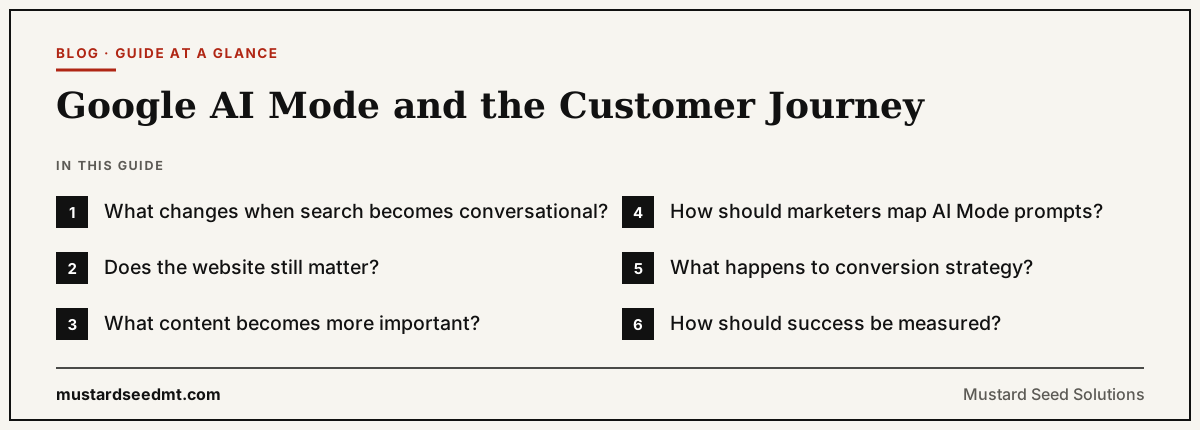
Google AI Mode compresses several stages of the buyer journey into a conversational experience. A user can ask, refine, compare, evaluate, and increasingly take actions without following the traditional sequence of clicking several blue links.
This matters because Google AI Mode customer journey is rarely a one factor problem. Website structure, authority, content, technical access, external evidence, and buyer intent can all shape the result.
The goal is to diagnose the system before applying isolated tactics. The sections below show what to check, what to improve, and how to connect the work to a useful commercial outcome.
What changes when search becomes conversational?
People can move from broad exploration to a specific shortlist through follow up questions. That means marketers need to understand the sequence of questions buyers ask, not only the first keyword that starts the journey.
Content should support the transitions between awareness, comparison, evaluation, and action.
Does the website still matter?
Yes, but its role changes. The site becomes a source of evidence, structured product and service information, proof, conversion paths, and authoritative material that search systems can use during the conversation.
Your website also remains the place where higher commitment actions often happen.
What content becomes more important?
Clear service definitions, comparison pages, pricing context, case studies, FAQs, specifications, location information, and evidence become more useful because they answer decision stage questions.
- Explain who the offer is for
- Address comparison criteria directly
- Provide proof close to commercial claims
How should marketers map AI Mode prompts?
Start with real buyer tasks such as finding options, comparing approaches, checking fit, estimating cost, assessing risk, and choosing a provider. Then map existing pages to those tasks and identify missing answers.
This is closer to journey design than classic keyword mapping.
What happens to conversion strategy?
CTAs need to match the stage of the conversation. A user arriving from an AI answer may already understand the category and need proof, a review, a consultation, or a specific next step rather than another generic introduction.
Review the Website Growth System so content, discovery and conversion work together.
How should success be measured?
Track AI referral traffic where available, branded search growth, service page engagement, consultation requests, assisted conversions, and prompt visibility around commercial stages. The goal is to remain present as the buyer moves from question to decision.
Do not evaluate AI Mode only by lost or gained clicks.