
A good Google Discover strategy is not traditional SEO with a louder headline. Discover is a push channel, which means Google puts content in front of people before they search for it. That changes almost everything: the audience, the headline, the image, the article structure, and the way success is measured.
Search is built around intent. Discover is built around interest.
That is why a blog can rank well in Google Search and still get almost nothing from Discover. It may answer questions, but it may not stop the scroll. It may be technically clean, but it may not feel timely, emotional, or specific enough for a feed.
This article breaks down the core ideas from a publisher focused on Google Discover at scale: consistent publishing, audience research, strong images, tight article structure, mixed traffic signals, and the difference between magnetic headlines and cheap clickbait.
What Makes Google Discover Different From SEO?
Google Discover is closer to a social feed than a search result page. People are not typing a query and comparing answers. They are scrolling on mobile, often casually, and deciding in a split second whether something feels worth opening.
That means the job of the article changes.
For SEO, the goal is often to satisfy search intent quickly. For Discover, the goal is to earn attention without misleading the reader. A strong Discover article still has to deliver value, but it also needs a hook, a story, and a reason to keep reading.
This does not make SEO irrelevant. Strong search traffic, brand recognition, direct visits, newsletter traffic, and social traffic can all support Discover performance. The point is that Discover needs its own strategy, not leftover blog posts with more dramatic titles.
Why Audience Comes Before Keywords
A Discover strategy starts with audience, not keywords. The transcript makes this point repeatedly: do not think only in terms of niche. Think about the people behind the niche.
For example, an air purifier site does not need to publish only about air purifiers forever. Its audience may also care about clean homes, indoor health, home maintenance, allergies, pets, or seasonal comfort. The right expansion comes from audience data, not random guessing.
Google Analytics can help here. User attributes, demographics, and interests can show what your existing readers already care about. From there, you can build a simple persona and publish for that person.
The goal is not to chase every topic. The goal is to understand what your audience would naturally want to read next.
Google Discover Strategy Depends On Consistency
Consistency matters more than raw volume. The suggested starting point in the transcript is roughly one article per day, though smaller publishers can still learn with a lower cadence if they stay consistent.
The key is rhythm.
Publishing once and hoping for a Discover spike is not a strategy. Discover needs repeated testing across angles, headlines, images, timing, and topics. Over time, patterns start to show up: which audiences respond, which subjects get ignored, and which article formats create stronger engagement.
More volume is not always better. If a publisher produces too much content and quality drops, Discover can punish that indirectly through weak click through rates, poor engagement, and missed audience fit.
What Actually Stops The Scroll?
The title and image do most of the early work. Discover is visual, mobile, and fast. If the headline is flat and the image feels generic, the article may never get the chance to prove it is useful.
The transcript describes a useful headline idea: one emotion, one promise.
That does not mean lying. It means making the reader feel a clear reason to click. The title should speak to the audience directly, create curiosity, and promise something the article can actually deliver.
Images matter just as much. Human faces, authentic scenes, movement, and imperfect real world visuals can sometimes outperform polished stock images. The image should complement the headline instead of repeating it.
| Discover Element | Weak Approach | Stronger Approach |
|---|---|---|
| Topic choice | Pick keywords only | Start from audience interests |
| Headline | Give a flat answer | Create curiosity with a clear promise |
| Image | Use generic stock visuals | Use authentic, story-driven images |
| Article structure | Long SEO-style guide | Short, readable, story-led article |
| Measurement | Look only at rankings | Track CTR, engagement, and win rate |
Clickbait Fails When The Article Breaks Its Promise
There is a difference between a magnetic headline and clickbait. A magnetic headline earns attention and then pays it off. Clickbait earns attention by wasting the reader’s time.
That distinction matters because Discover depends on engagement signals. If readers click, bounce, stop trusting the site, or ignore future articles from the same publisher, performance can fade.
A strong Discover headline should create tension, but the article needs to resolve it. Do not promise a shocking discovery if the content is ordinary. Do not imply proof if the article only has speculation. Do not use fear if the article cannot support the warning.
The best test is simple: would the reader feel satisfied after clicking?
How To Structure Discover Friendly Articles
Discover articles usually work better when they are easy to read and not too long. The transcript compares this to watch time on TikTok or other social platforms. If the article is too heavy, readers may not finish it.
That does not mean thin content. It means focused content.
A practical Discover article often has a strong intro, two or three main sections, a little storytelling, and a clean ending. It should not dump the answer in the first sentence the way some SEO articles do, but it also should not drag the reader through fake suspense.
A simple structure works best:
- Start with a hook that matches the headline
- Build the story around one clear audience problem
- Use short sections and plain language
- Add only the context needed to make the point useful
- End with a satisfying takeaway, not a hard sell
Why Mixed Traffic Signals Matter
Discover favors content that already shows signs of audience interest. That can come from search, direct visits, social media, newsletters, push notifications, Facebook pages, WhatsApp groups, Telegram communities, or other traffic sources.
The exact source matters less than the signal.
If nobody visits the site except through Google Search, the site may look less like a real audience brand. If people come from multiple places, return, share articles, and search for the brand, that can help create stronger trust signals.
This is why Discover is harder for brand new sites. It is not impossible, but it is harder than it used to be. Established sites with real audiences, steady publishing, and recognizable brands usually have a better starting point.
For a small business or solo publisher, this is where broader marketing work matters. A blog, newsletter, social presence, and clear positioning all support each other. That is also why SEO and audience building should not be treated as separate projects inside a practical marketing strategy.
What Metrics Should Publishers Watch?
The most important Discover metric is click through rate, especially because it shows whether the topic, headline, image, and audience fit are working together. A very low CTR may mean the angle is wrong, the image is weak, or Google is testing the article with the wrong audience.
Engagement matters too. If people click and immediately leave, the article is not doing its job. That could be because the page loads slowly, the intro disappoints, ads interrupt the reading experience, or the content does not match the promise.
Another useful metric is win rate: how many published articles actually get Discover traffic. If a publisher posts ten articles and only two get traction, something is off. The issue may be topic selection, technical setup, timing, creative quality, or audience mismatch.
What To Do When Discover Traffic Drops
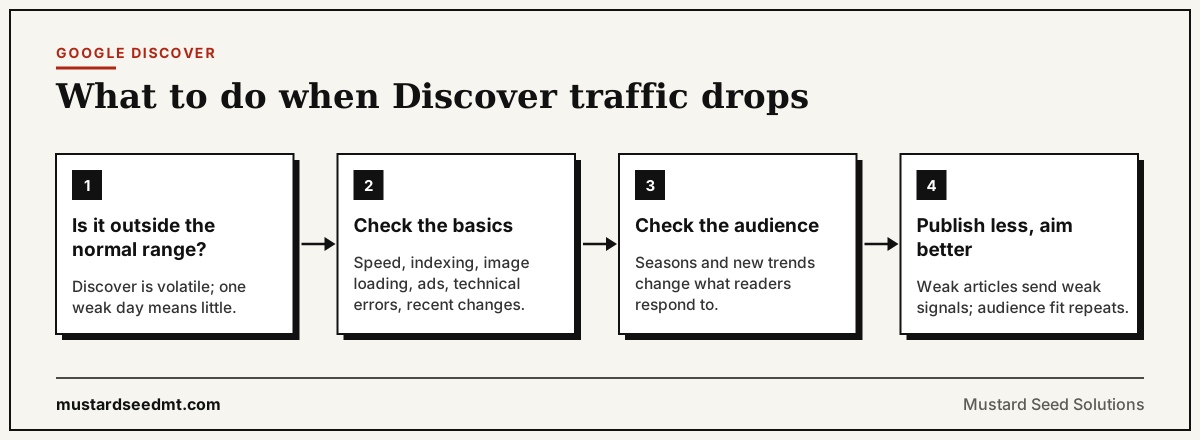
Discover is volatile by nature. A publisher can have a strong day, then a weaker day, even with good execution. That alone does not mean the site is broken.
The problem starts when traffic falls outside the normal range.
When that happens, check the basics first: page speed, indexing, image loading, ad issues, technical errors, and recent site changes. Then look at whether the audience has changed. A gardening audience may respond differently in spring than in autumn. A tech audience may shift when a new trend becomes dominant.
Publishing less and aiming better can be smarter than flooding the site with more content. Weak articles create weak signals. Stronger audience fit creates a better chance of repeatable Discover traffic.