
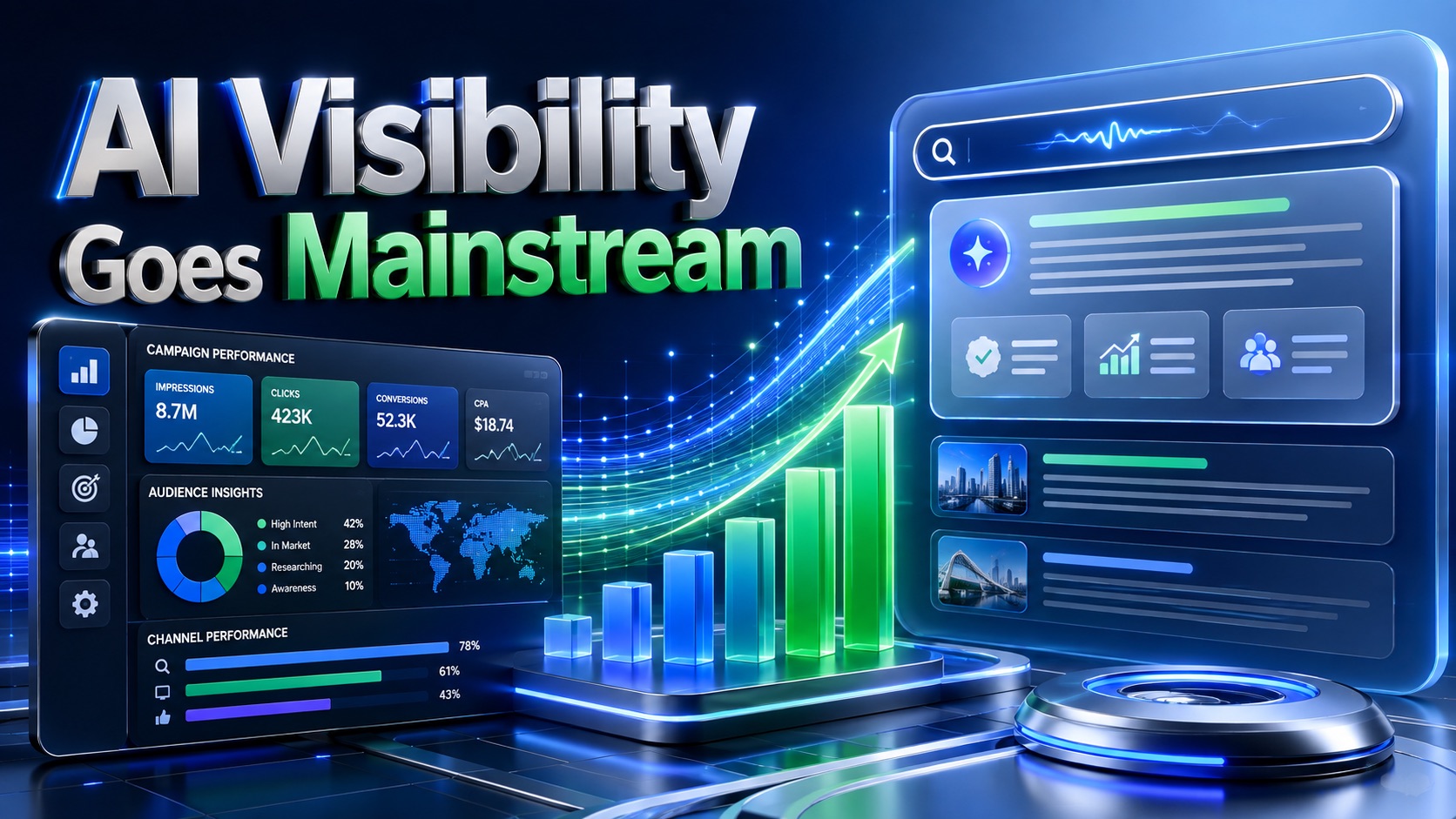
AI visibility is moving closer to mainstream marketing measurement. Microsoft's August 2026 advertising updates connect AI visibility signals with the same environment marketers already use for paid search, campaign testing, creative review, and performance analysis.
The shift matters because GEO has often been treated as a separate SEO experiment. Microsoft is making it easier to compare what AI systems retrieve and cite with the search terms, landing pages, and campaigns marketers already manage.
What changed in Microsoft Advertising's AI visibility reporting?
Microsoft's August 2026 product update expanded AI visibility reporting in Microsoft Clarity with Topic Insights. The feature groups AI citations around topics and gives marketers a more structured way to understand where a brand appears in AI generated answers.
Search Engine Journal's coverage also highlighted signals such as grounding queries, citation share, and share of authority. These metrics move AI visibility beyond manually checking a few prompts and taking screenshots of the results.
- Topic level reporting can reveal where a brand is associated with a subject.
- Grounding queries can show the search language used before an AI system assembles an answer.
- Citation data can expose gaps between brand content and competitor visibility.
Microsoft summarized the broader product changes in its August 2026 advertising newsletter.
Why does this matter for GEO marketing?
GEO becomes more useful when it can influence real marketing decisions. A brand may know that it appears in an AI answer, but that information has limited value unless the team can connect it to topics, buyer intent, content, and commercial priorities.
The new reporting direction makes that connection more practical. Teams can compare AI retrieval language with paid search terms, identify topics where competitors are cited more often, and decide which landing pages or resources deserve improvement. That is the same operating logic behind a broader AI visibility strategy.
How can paid search and AI visibility inform each other?
Paid search already gives marketers evidence about query demand, cost, conversion, and buyer behavior. AI visibility adds another layer: which brands and sources appear when an answer engine interprets that demand and generates a recommendation.
High converting paid terms can help determine which AI prompts deserve monitoring. Grounding queries can reveal language that has not yet been added to a campaign. Citation gaps can also show where a landing page or supporting article lacks the authority or clarity needed to become a useful source.
This creates a more connected marketing workflow because buyers do not experience SEO, PPC, and AI answers as separate departments. They experience one research journey.
What do the Performance Max updates add?
Microsoft also highlighted new Performance Max experiment types. Uplift experiments are intended to measure the effect of adding Performance Max alongside existing campaigns, while upgrade experiments compare existing Search or Shopping campaigns with Performance Max after migration.
That matters because AI powered campaign automation is easier to evaluate when marketers can test incrementality instead of accepting platform recommendations at face value. Microsoft also expanded Ad Preview Hub support for Performance Max, giving teams more visibility into automatically assembled creative before launch.
The broader pattern is measurement. AI visibility, automated campaigns, experimentation, and creative review are moving into one marketing operating system.
What should marketers measure next?
Marketers should resist turning AI visibility into a vanity metric. More citations are useful only when they improve discovery among buyers that matter to the business.
A practical measurement framework should connect AI visibility with topic relevance, branded demand, assisted conversions, landing page performance, and paid search intelligence. Teams that need to connect these signals across channels can use a broader marketing strategy rather than treating GEO as an isolated content program.
Attribution will remain imperfect because an AI answer can influence a buyer without producing a direct click. The goal is to build a stronger evidence chain between visibility and commercial outcomes, not to force every AI mention into a last click model.