
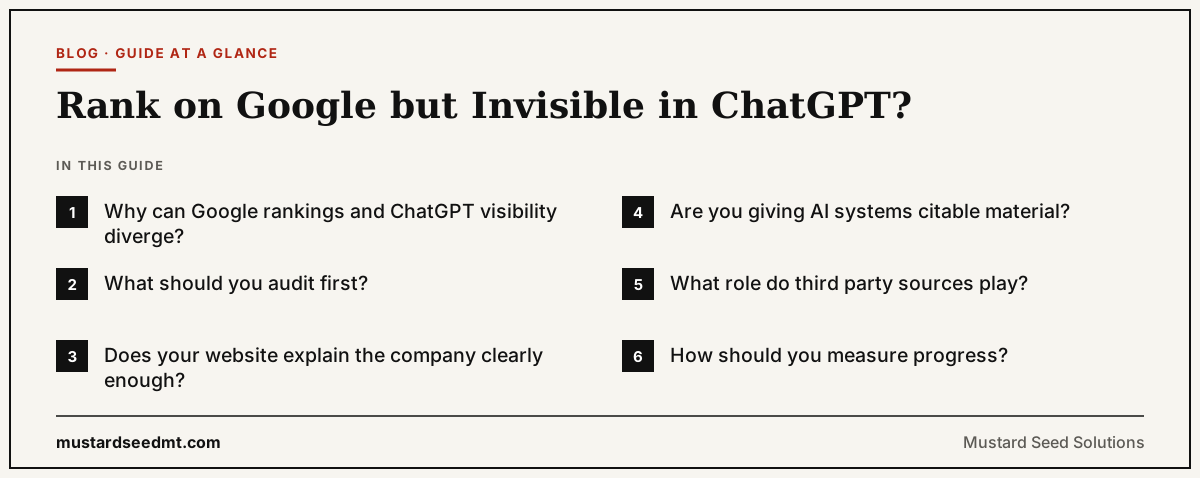
Yes, a company can rank well in Google and still be absent from ChatGPT answers. Search rankings and AI recommendations overlap, but AI systems also depend on entity clarity, citation patterns, third party authority, answerability, and access to content.
This matters because rank on Google but invisible in ChatGPT is rarely a one factor problem. Website structure, authority, content, technical access, external evidence, and buyer intent can all shape the result.
The goal is to diagnose the system before applying isolated tactics. The sections below show what to check, what to improve, and how to connect the work to a useful commercial outcome.
Why can Google rankings and ChatGPT visibility diverge?
Traditional search evaluates pages for queries, while AI systems assemble answers from multiple sources and may prefer information that is easier to extract, corroborate, and connect to a known entity. A high ranking page can therefore perform well in Google while contributing little to an AI generated recommendation.
That gap is especially common when a site has strong keyword targeting but weak brand evidence outside its own domain.
What should you audit first?
Start by testing realistic buyer questions, not just your brand name. Record whether the brand appears, which competitors appear, which sources are cited, and whether the AI describes your company accurately.
- Check commercial and comparison prompts
- Record citation URLs, not only mentions
- Compare ChatGPT with Gemini, Claude and Perplexity
Does your website explain the company clearly enough?
AI systems need consistent signals about what the company is, who it serves, what it offers, and why it is credible. Conflicting service labels, vague positioning, or pages that mix several audiences can make retrieval less reliable.
Strengthen the core entity definition across your homepage, service pages, author pages, case studies, and structured data.
Are you giving AI systems citable material?
Pages should contain concise definitions, direct answers, comparisons, evidence, examples, and clear headings. Long content can still work, but the useful information must be easy to isolate without reading an entire essay.
Mustard Seed typically combines this with SEO so the page remains useful for human visitors and traditional search.
What role do third party sources play?
AI systems often rely on external evidence when recommending a company. Industry publications, credible directories, reviews, partner pages, podcasts, expert contributions, and original research can strengthen the association between your brand and a category.
That is why GEO should include authority building, not only on page editing.
How should you measure progress?
Track brand mention frequency, citation frequency, citation URLs, prompt category coverage, competitor share of voice, AI referral traffic, and lead quality. A single visibility score is useful for trend monitoring, but it should not replace the underlying evidence.
An AI Visibility Audit can establish the baseline before changes are made.