
SEO tribalism is one reason SEO feels so confusing. Different people observe Google from different positions, then turn their experience into universal advice. The problem is that a large brand, a new website, a content writer, and a web engineer are not playing the same SEO game.
That does not mean SEO is random. It means advice needs context.
A site with strong authority can publish a page and see it indexed quickly. A new site may publish something useful and still watch it sit in “discovered” or “crawled” status with no real movement. Both people can be telling the truth. They are just observing different parts of the system.
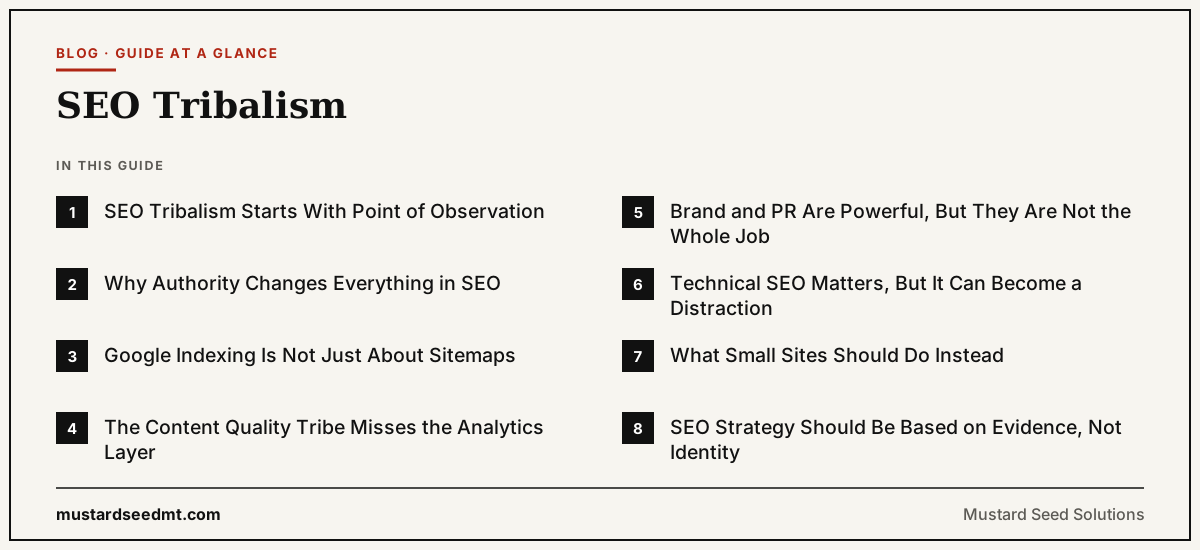
SEO Tribalism Starts With Point of Observation
SEO advice often reflects where someone sits in the market. A web engineer at a large company may see sitemaps read constantly, new pages discovered quickly, and crawl activity every day. A small business owner may see the opposite.
That difference creates bad advice.
Someone at a high authority domain might say, “Just publish good content.” For their site, that may appear true because the domain already has links, brand searches, traffic, and topic history. For a new or low authority site, the same advice can lead to months of frustration.
SEO is not only about what you publish. It is also about how Google discovers, prioritizes, tests, and validates that page.
Why Authority Changes Everything in SEO
Authority changes how fast pages are discovered, how often they are refreshed, and how much opportunity a new page has to compete. A useful way to think about Google is that it does not crawl the entire web evenly. It prioritizes.
Big domains, news sites, major brands, and pages with strong traffic signals tend to sit closer to the frequently refreshed part of the web. Smaller sites do not always get the same treatment.
That is why topical authority matters. When a site has already built trust around a topic, new pages in that topic can benefit from that existing authority. A new site writing about the same topic may need links, internal support, and real engagement before Google has enough reason to care.
This is where many SEO debates go wrong. People argue about tactics without first asking what kind of site they are working on.
Google Indexing Is Not Just About Sitemaps
Sitemaps help Google find URLs, but they are not magic. If a site has little authority, little traffic, and weak internal support, simply submitting or resubmitting a sitemap may not change much.
The transcript makes a blunt point: if your site is not important to Google yet, your sitemap may not be important either.
That may sound harsh, but it is useful. New pages need to be discovered in a way that gives them context. For smaller sites, that often means linking from existing pages that already get impressions, clicks, or crawl activity. A new blog post floating alone in a sitemap is weaker than a new blog post connected from a page Google already revisits.
This is especially important for solo businesses and small companies building their first serious SEO engine. The question is not only “Did we publish?” The better question is “Did we give Google a reason to test this page?”
The Content Quality Tribe Misses the Analytics Layer
Content quality matters to people. It helps readers understand, compare, trust, and act. But SEO content can go wrong when writers treat quality as something Google automatically rewards.
A well written page can fail if it starts too low in search results, receives too few impressions, or never gets enough clicks to prove itself. Traffic is shaped by authority, topic strength, query demand, page relevance, title fit, and the competitive set.
That means content teams need analytics, not just taste.
Writers should look beyond whether a page ranks first or gets more traffic than the last article. Those are surface metrics. A better review looks at impressions, click through rate, query match, scroll behavior, navigation behavior, and whether the page supports the next business step.
Tools like Microsoft Clarity, Google Search Console, and analytics platforms can show how people actually behave. That is more useful than arguing whether a heading structure “feels” right.
Brand and PR Are Powerful, But They Are Not the Whole Job
Another SEO tribe says the answer is simple: build a brand, publish strong content, and get PR. That advice is not wrong. It is incomplete.
Brand demand and media attention can make SEO easier. They create searches, links, mentions, trust, and discovery paths. But not every product will be covered by major publications. Not every useful company is famous. Not every good business is the category leader.
Small companies still need SEO mechanics.
They need a clear topic ladder, realistic keyword targets, internal links, technical accessibility, useful pages, and third party validation. Brand building helps, but it does not replace the work of earning visibility page by page.
For a founder, this matters. Waiting for PR before doing SEO is usually a slow path. A better approach is to build practical search assets while also creating signals outside the site.
Technical SEO Matters, But It Can Become a Distraction
Technical SEO has value. Pages should load, render, be accessible, and return the right status codes. A broken site will not perform well.
But technical SEO becomes a distraction when teams treat every technical detail as a ranking lever. Google does not reward a website just because the tech stack is fashionable, the sitemap is clean, or the schema is elaborate.
Relevance and authority still carry the work.
Page speed, structure, and crawlability support SEO. They do not replace the need for a page that matches search intent and has enough authority to compete.
| SEO belief | Common mistake | Better approach |
|---|---|---|
| Sitemaps | Assuming submission forces indexing | Link new pages from pages Google already values |
| Content quality | Judging content by writing quality alone | Review impressions, clicks, behavior, and intent fit |
| Brand | Thinking PR replaces SEO mechanics | Build brand signals and structured search assets |
| Technical SEO | Treating every technical issue as a ranking factor | Fix blockers, then focus on relevance and authority |
| Design | Making early choices by taste | Use data before redesigning key conversion pages |
What Small Sites Should Do Instead
Small sites need a more practical SEO strategy. They cannot copy what large brands do and expect the same result.
The first goal is not to publish endless content. The first goal is to build enough topical clarity, internal support, and external validation that new pages have a fair chance of being discovered and tested.
A useful small site SEO workflow looks like this:
- Pick a narrow topic cluster where you can build real authority
- Create pages that answer specific search intent, not broad generic topics
- Link new pages from older pages that already get impressions or clicks
- Improve titles, slugs, and introductions so the page matches the query quickly
- Track impressions, click through rate, scroll behavior, and conversion paths
- Use design and technical fixes to remove friction, not to avoid SEO fundamentals
This is where a practical marketing system beats random content production. You need a rhythm that connects publishing, analytics, internal linking, and lead generation.
SEO Strategy Should Be Based on Evidence, Not Identity
SEO tribalism runs on identity. People defend the part of SEO they know best. Writers defend content. Engineers defend technical structure. Brand marketers defend PR. Founders defend design choices. Everyone has a point, but no single point is the whole map.
Good SEO strategy asks better questions.
What kind of site is this? How much authority does it have? What topic does Google already associate with it? Which pages get crawled and clicked? Which pages are invisible? Which topics are realistic now, and which should wait?
That is how SEO becomes less emotional. It becomes a business process.
For small businesses, freelancers, and consultants, this matters because resources are limited. You cannot afford to spend months polishing pages that never get tested, or redesigning a site before you understand what visitors actually do.