
International SEO Consultant: What They Do & How to Choose One
An international SEO consultant helps a company become findable and credible in search across more than one country or language — which is a different discipline from domestic SEO, not a bigger version of it. The work centers on hreflang implementation, localized (not just translated) content, and understanding how search behavior and competitive landscapes differ market to market.
Why international SEO is a distinct discipline
Domestic SEO optimizes for one search engine's behavior, one language's search patterns, and one competitive set. International SEO multiplies every one of those variables — and gets it wrong in ways that are easy to miss until traffic data shows the damage months later.
- Hreflang is unforgiving. Missing return tags, incorrect language-region codes, or inconsistent implementation across a site's markets can cause Google to show the wrong-language page to visitors, or fail to index regional variants at all.
- Translation is not localization. A literal translation preserves words but often loses the search intent, tone, and cultural context that make content actually rank and convert in a new market.
- Search engines vary by market. Google dominates most Western markets, but Baidu leads in China, Yandex has meaningful share in Russia, and Naver matters in South Korea — each with different ranking factors and technical requirements.
- Competitive landscapes differ. A keyword that's low-competition domestically can be dominated by entrenched local players in a new market, and vice versa.
What an international SEO consultant does
International SEO consulting typically spans five connected areas of work:
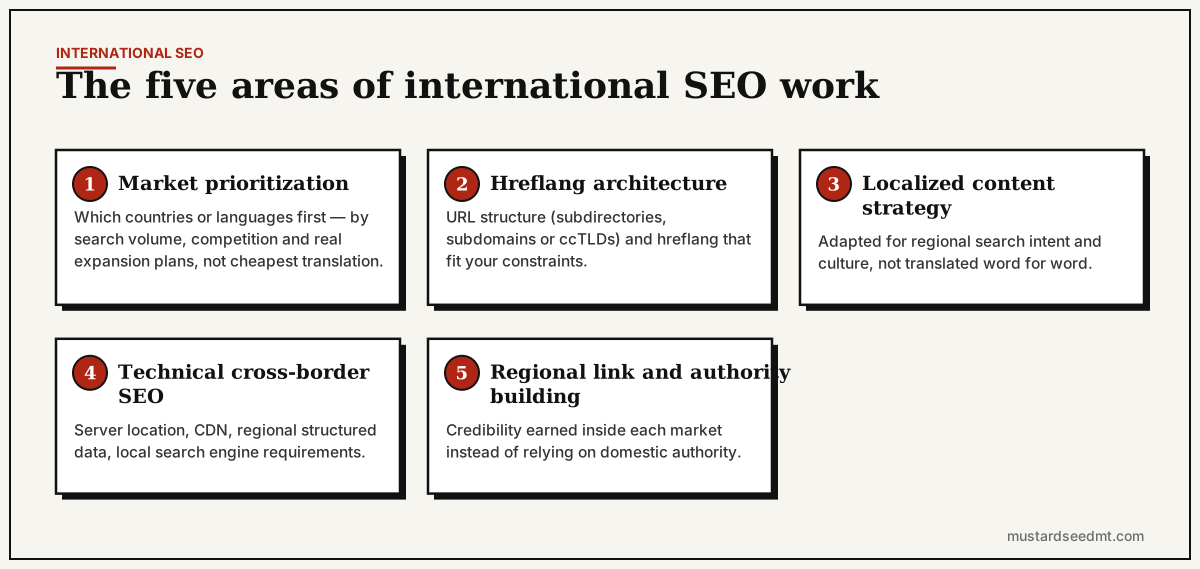
- Market prioritization. Which countries or languages to target first, based on search volume, competitive intensity, and the business's actual expansion plans — not just where translation is cheapest.
- Hreflang architecture. Designing and auditing the URL structure and hreflang implementation (subdirectories, subdomains, or ccTLDs) that fits the business's technical and organizational constraints.
- Localized content strategy. Directing content that's adapted for regional search intent and cultural context, not simply translated word-for-word.
- Technical cross-border SEO. Server location and CDN considerations, regional structured data, and compliance with local search engine requirements where they diverge from Google's standard.
- Regional link and authority building. Earning credibility signals within each target market rather than relying solely on domestic authority to carry over.
International SEO for China–Europe expansion
Companies expanding between China and Europe face a particularly sharp version of these challenges. Western SEO practices largely don't transfer to Baidu, which weighs site speed, ICP licensing, and domestic hosting differently than Google does. Meanwhile Chinese companies expanding into Europe need to navigate GDPR-aware content practices, genuinely localized (not machine-translated) messaging, and an entirely different set of buyer research habits across European markets.
This is where international SEO overlaps with go-to-market strategy more broadly — the technical SEO work matters, but it only pays off if it's built on the right market entry positioning to begin with.
How to choose an international SEO consultant
- Ask for market-specific examples. Not just 'we've done international SEO' — which specific markets, and what were the actual technical and content challenges encountered.
- Check hreflang literacy. Ask them to explain a hreflang edge case (e.g., x-default, regional variants without language variants). A consultant who can't discuss this concretely likely hasn't implemented it at scale.
- Verify they understand localization, not just translation. Good international SEO consultants either have in-market content partners or a clear process for adapting content beyond literal translation.
- Confirm technical range. Ask whether they've worked with non-Google search engines relevant to your target markets, if applicable.
International SEO consultant vs. specialist vs. agency
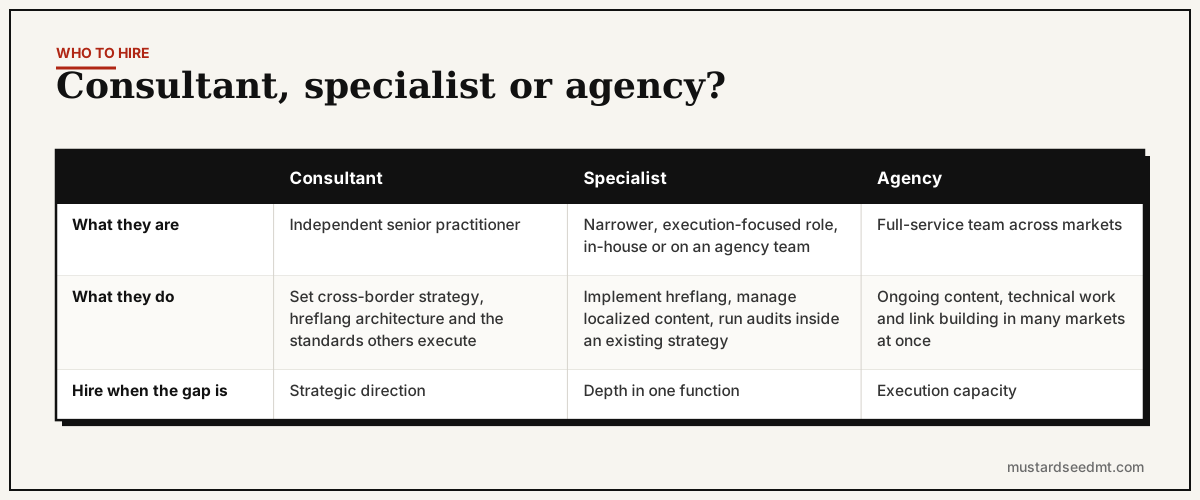
An international SEO consultant is typically an independent, senior practitioner brought in to set cross-border strategy — market prioritization, hreflang architecture, and the technical and content standards that other teams then execute against. This model fits best when the gap is strategic direction, not execution capacity.
An international SEO specialist is usually a narrower, execution-focused role, in-house or on an agency team, responsible for implementing hreflang tags, managing localized content, or running technical audits inside a strategy someone else already set. "Specialist" typically signals depth in one function; "consultant" typically signals breadth across market strategy and technical execution.
A full-service international SEO agency makes sense when the bottleneck is executing across many markets and languages at once — ongoing content production, technical implementation, or link building with a dedicated team — rather than senior strategic direction.
Frequently Asked Questions
What does an international SEO consultant do?
They help a company rank and convert across multiple countries or languages — designing hreflang architecture, directing localized (not just translated) content, and adapting technical SEO to regional search engines and competitive landscapes.
How is international SEO different from regular SEO?
It multiplies the variables: multiple languages, multiple search engines, different competitive sets per market, and technical requirements like hreflang that don't exist in single-market SEO at all.
What's the difference between an international SEO specialist and an international SEO consultant?
An international SEO specialist is usually an execution-focused role — implementing hreflang, managing localized content, or running technical audits within a strategy someone else has set. An international SEO consultant more often sets that strategy: market prioritization, hreflang architecture, and the technical and content standards a specialist or in-house team then executes against.
Should I hire an international SEO consultant or an international SEO agency?
Hire a consultant when you need senior strategic direction — market prioritization, hreflang architecture, technical standards — without building a full internal function. Hire an agency when the bottleneck is execution capacity across multiple markets and languages at once, such as ongoing content production or link building.
What is hreflang and why does it matter for international SEO?
Hreflang is an HTML/sitemap tag that tells search engines which language and region a page targets, and which other pages are its translations. Implemented incorrectly, it can cause the wrong-language page to be shown to visitors or prevent regional pages from being indexed correctly.
Do I need a different SEO strategy for China than for Europe?
Yes. Baidu weighs factors like site speed, ICP licensing, and domestic hosting differently than Google, and buyer research behavior differs meaningfully between Chinese and European markets — a strategy built for one rarely transfers directly to the other.
How much does international SEO cost?
It typically costs more than single-market SEO because of the added complexity — expect a premium over domestic rates, scaling with the number of markets and languages involved. Get a scoped quote based on your specific target markets.
China–Europe Go-to-Market
Expanding Across Borders? Get the SEO Foundation Right First.
Mustard Seed Solutions advises technology companies expanding between China and Europe — go-to-market strategy, positioning, and the international SEO and AI-visibility work that makes you findable in a new market.
Discuss Your Expansion