
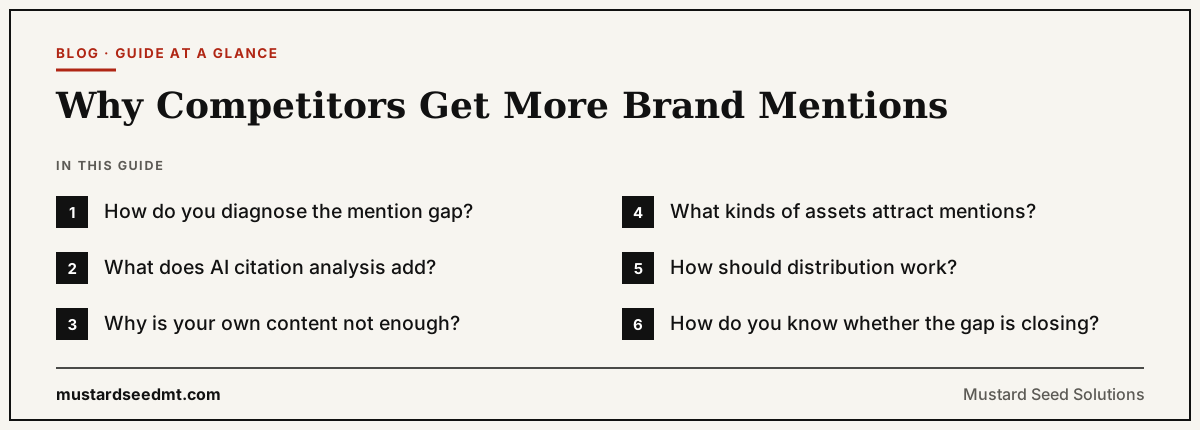
Competitors usually earn more mentions because they have built a broader evidence network around their brand: stronger category associations, more third party coverage, more useful assets, clearer expert entities, and more consistent distribution. Closing the gap requires understanding where those mentions come from and why the sources consider them worth referencing.
This matters because competitors get more brand mentions is rarely a one factor problem. Website structure, authority, content, technical access, external evidence, and buyer intent can all shape the result.
The goal is to diagnose the system before applying isolated tactics. The sections below show what to check, what to improve, and how to connect the work to a useful commercial outcome.
How do you diagnose the mention gap?
Start with important buyer prompts, Google results, industry publications, directories, podcasts, communities, partner ecosystems, and competitor backlinks. Record where competitors appear and what they are known for in each source.
Look for patterns rather than isolated mentions.
What does AI citation analysis add?
AI citations show which sources are shaping generated answers for your category. If the same publications or directories repeatedly support competitor recommendations, they become strategic authority targets.
- Track citation domains
- Identify recurring competitor descriptions
- Map sources to buyer topics
Why is your own content not enough?
Your website can establish expertise, but external sources provide independent validation. A brand with excellent content and almost no external footprint may still look less established than a competitor with broad credible recognition.
Authority has to travel beyond the domain.
What kinds of assets attract mentions?
Original research, benchmarks, tools, data studies, strong frameworks, useful comparisons, expert commentary, and distinctive case evidence are easier for journalists, partners, and other creators to reference.
Generic blog posts rarely create the same pull.
How should distribution work?
Plan distribution at the same time as content creation. Identify the audiences, publications, partners, communities, and sales conversations where the asset should appear.
Use the Learning Center as the home base, not the only place the idea exists.
How do you know whether the gap is closing?
Track quality mentions, referring domains, branded search, AI citations, prompt share of voice, direct traffic, and commercial enquiries. The objective is not fame in general; it is stronger category association with the buyers you want.
Prioritize sources that actually influence your market.