
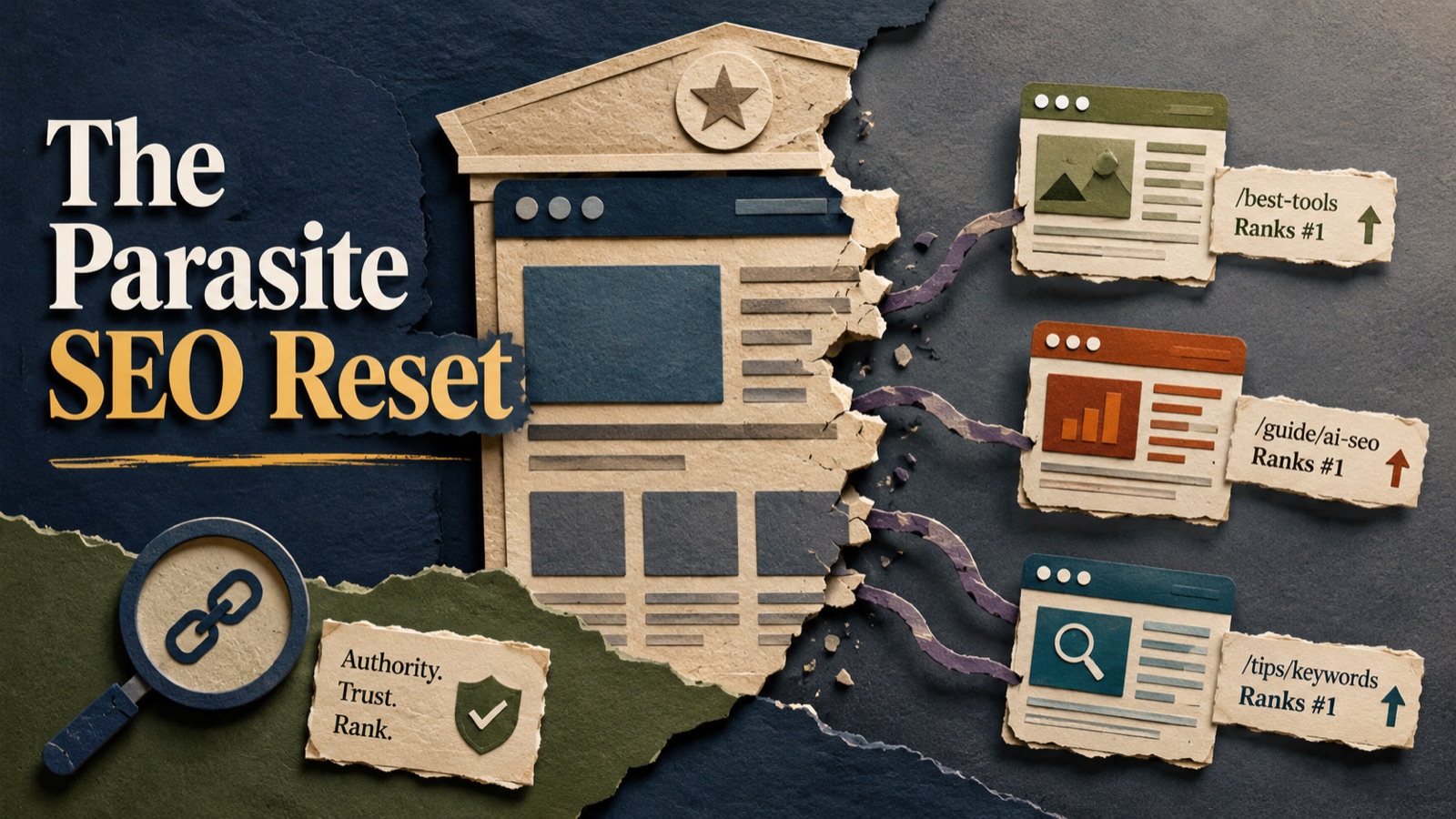
Google is changing how it handles site reputation abuse in the European Economic Area. Instead of relying on the same manual action approach, Google says affected sections can be ranked independently, creating a new enforcement model for a practice often described as parasite SEO.
The controversy is larger than a technical policy update. It raises a persistent question about search governance: when a trusted publisher hosts third party commercial content, how much of the publisher's reputation should that section inherit?
What changed in Google's site reputation abuse policy?
Search Engine Journal reported on August 28 that Google is phasing out site reputation abuse manual actions in the EEA and replacing them with a system that can rank affected site sections independently.
The report on Google's updated policy says Google also expanded its guidance about the factors it uses to identify site reputation abuse. The practical change is that enforcement can focus more directly on a section rather than applying the same manual action model.
For site owners, that makes architecture and ownership more important. A large domain may contain editorial content, partner pages, commerce sections, forums, user generated material, and sponsored content that deserve different treatment.
Why is parasite SEO so controversial?
Parasite SEO exploits the authority of a strong domain to rank content that might struggle on a weaker site. Critics argue that the practice lets third parties rent reputation rather than earn it.
Supporters of publisher partnerships point out that not every third party section is abusive. Media companies have long operated marketplaces, coupons, reviews, licensing partnerships, and sponsored sections that can provide legitimate value.
The difficult part is intent and control. A useful partnership and a reputation renting scheme can look structurally similar from the outside, especially when content sits on a trusted domain but is produced, monetized, or controlled by another party.
Does independent section ranking solve the problem?
It may be a more precise approach, but precision creates its own challenges. Search systems have to determine where one section ends, how independent it really is, and whether users expect the host site's reputation to apply.
If the system gets that wrong, legitimate sections could lose visibility or low value partnerships could still benefit from the host domain. There is no simple technical label that captures editorial responsibility.
For marketers, the safer principle is to avoid depending on borrowed authority as the main reason content should rank. A partnership should still offer useful information, transparent ownership, and a clear reason for the host site's audience to care.
What should publishers review now?
Publishers should inventory sections that differ from their core editorial or commercial purpose. That does not mean deleting every partnership. It means understanding who creates the content, who controls it, why it exists, and what reputation signals users may infer from the host domain.
Review:
- Third party commerce and affiliate sections.
- Sponsored or licensed content hubs.
- Partner produced guides and reviews.
- White label sections hosted on the main domain.
- Subdirectories that operate with separate ownership or incentives.
The key question is whether the section deserves visibility because it serves users well, or mainly because it inherited a domain advantage.
What should SEO teams do differently?
SEO teams should reduce dependence on tactics that only work while a platform accepts an ambiguous interpretation of authority. Sustainable visibility comes from content quality, technical accessibility, genuine expertise, and a clear relationship between the publisher and the material it hosts.
This is also a reputation issue. A site may gain short term traffic from a partner section while weakening trust if readers cannot tell who stands behind the content.
For companies that need a broader search strategy, Mustard Seed's Learning Center covers SEO, content, AI visibility, and demand generation without relying on one fragile ranking loophole.