Small businesses should use SEO when they can benefit from compounding organic visibility and use paid ads when they need controlled, immediate access to measurable demand. The right mix depends on search volume, competition, margins, sales cycle, landing page quality, and how quickly the business needs results.
This matters because SEO or paid ads for small business is rarely a one factor problem. Website structure, authority, content, technical access, external evidence, and buyer intent can all shape the result.
The goal is to diagnose the system before applying isolated tactics. The sections below show what to check, what to improve, and how to connect the work to a useful commercial outcome.
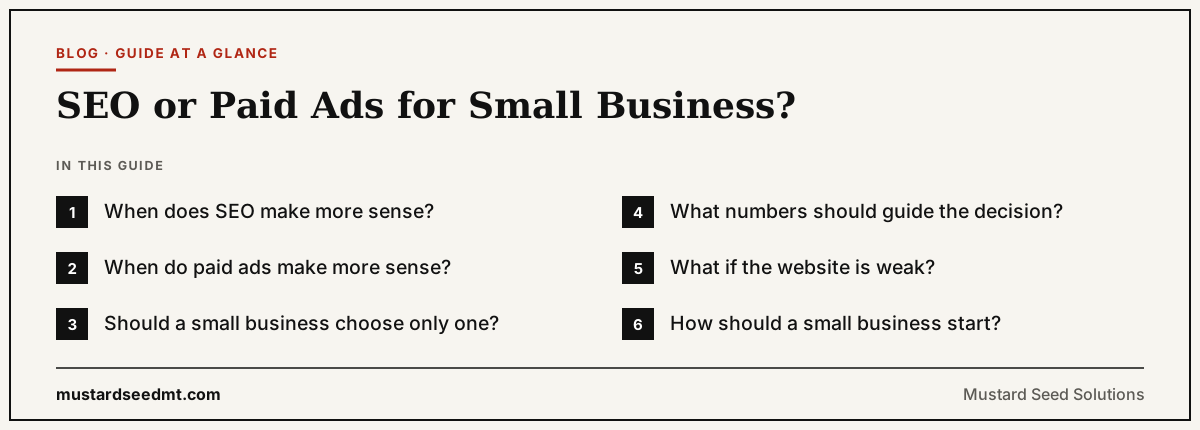
When does SEO make more sense?
SEO is attractive when customers repeatedly search for the service, the business can create strong pages, and it can wait for visibility to build. It also becomes more valuable when useful content can support trust and long term discovery.
Local and niche searches can be especially important for smaller businesses.
When do paid ads make more sense?
Paid ads are useful when the business needs faster demand testing, has a clear offer, and can afford the cost of acquiring a customer. They also provide rapid feedback on keywords, messaging, and landing pages.
Ads cannot compensate for an unclear offer or weak economics.
Should a small business choose only one?
Often the best strategy uses ads for immediate learning and SEO for compounding visibility. The balance depends on budget and the amount of search demand available.
- Use ads to test high intent messages
- Build SEO around proven buyer questions
- Share landing page insights across both channels
What numbers should guide the decision?
Know your average customer value, gross margin, close rate, lead to customer rate, acceptable acquisition cost, and the volume of relevant searches. Without these numbers, channel decisions become guesswork.
Simple economics matter more than marketing fashion.
What if the website is weak?
Fix the website before scaling either channel. Paid traffic sent to a confusing page wastes budget, while SEO traffic that cannot convert creates vanity metrics.
Mustard Seed’s Solo Business Marketing offer focuses on message, website, discoverability and enquiry paths.
How should a small business start?
Choose one or two high intent services, create strong landing pages, establish measurement, and test a manageable channel mix. Expand only after the business understands what produces qualified enquiries.
Consistency is more valuable than spreading a small budget across every platform.