
The Promise
MoviePass had existed since 2011 as a niche subscription service at prices that roughly covered its costs. The exhibit-worthy version began in August 2017, when analytics firm Helios and Matheson took a majority stake and cut the price to $9.95 a month for up to a movie a day in theaters — in major cities, less than the cost of a single ticket. The pitch to consumers was irresistible and honest; the pitch to investors was that MoviePass would become the habit layer of American moviegoing.
Growth validated the consumer side instantly and completely: from roughly 20,000 subscribers before the price cut to over a million within months, past three million by mid-2018. The stated strategy was to convert that scale into a second business — selling studios marketing and audience data, driving traffic to specific films, and negotiating revenue shares with theaters that would eventually make the math work.
The Entry
The unit economics were never a secret: MoviePass paid theaters full retail price for most tickets its subscribers used. Every heavy user was a pure loss, and an unlimited plan is a machine for attracting heavy users — the customers most likely to sign up were precisely the ones most expensive to serve. Growth didn't dilute the losses; it multiplied them. The bet was that scale would force the industry to the table before the cash ran out.
The industry declined to come to the table. AMC, the largest US chain, publicly attacked the model as unsustainable and then answered it directly by launching its own subscription, Stubs A-List, at a price designed to survive. The data-and-marketing revenue never arrived at anything like the required scale. By July 2018 MoviePass suffered a service outage it disclosed as an inability to pay for ticket fulfillment, took an emergency loan to restore service, and spent its final year in public retreat: surge pricing, blackouts of major releases, shrinking plan terms — each change breaking the promise that had acquired the subscribers in the first place.
MoviePass (Unlimited Plan): Why It Failed
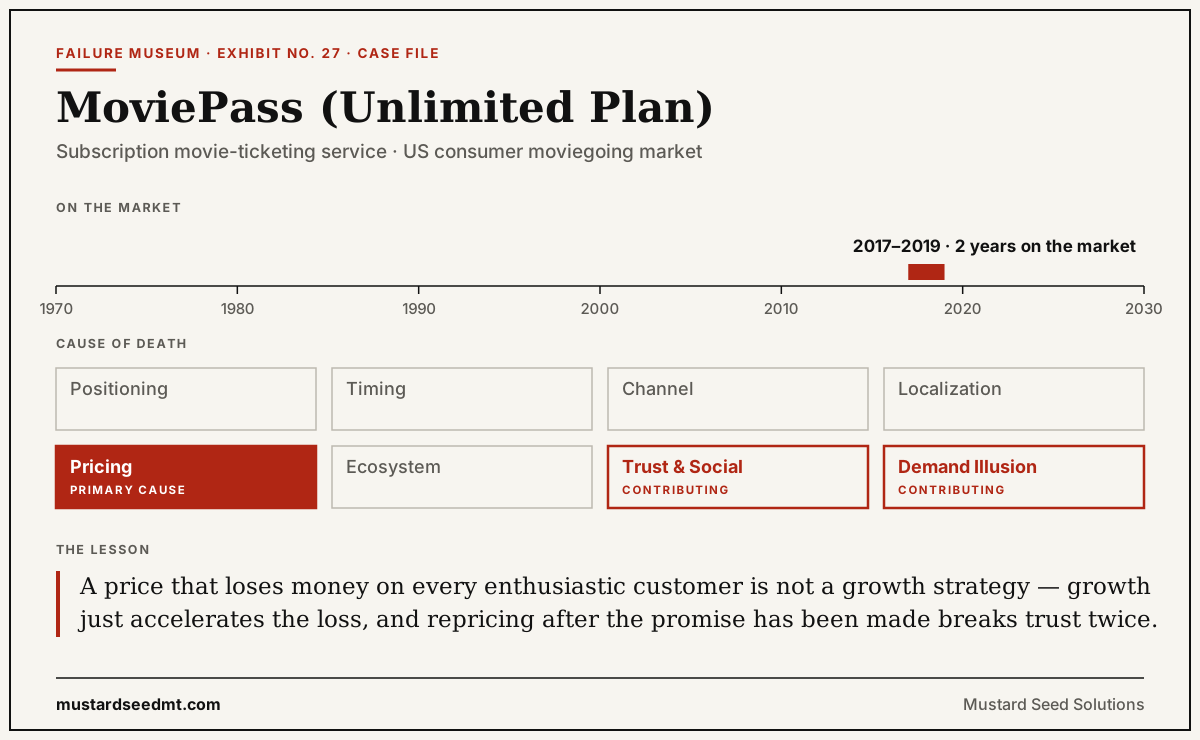
MoviePass failed because its price made every additional active subscriber a bigger loss: it charged $9.95 a month while paying theaters full price for tickets its heaviest users redeemed almost daily. The plan to convert scale into data sales and revenue-sharing assumed cooperation from theaters and studios that had no reason to cooperate — and when the product was repriced downward in kind through caps, blackouts, and surge pricing, the trust that had driven the growth reversed into churn and public anger.
The core failure is the purest pricing-and-packaging mismatch in the museum: the unit MoviePass charged for (a flat month) and the unit it paid for (every individual ticket, at retail) were structurally opposed, and the gap widened with engagement. Most subscription businesses want their customers to use the product more. MoviePass was the rare business whose best-case customer behavior — love the product, use it constantly — was its fastest route to insolvency. Adverse selection did the rest: an unlimited plan self-selects for exactly the users the economics can least afford.
Beneath the pricing failure sat a demand illusion, just not on the consumer side. Consumer demand was overwhelming and real; the illusory demand was for the second product — the data, marketing, and revenue-share business that theaters and studios were supposed to fund. Those buyers were the same parties MoviePass's scale was designed to pressure, and AMC's response demonstrated the incumbents' actual preference: rather than pay rent to an intermediary that had inserted itself with venture capital, they copied the mechanics at sustainable prices and kept the customer relationship themselves.
The endgame added a trust failure that made recovery impossible. Every corrective measure — surge pricing, blacking out the summer's biggest releases, changing plan terms on existing subscribers — was a public breach of the original promise, and the same word-of-mouth that had made MoviePass a phenomenon ran equally fast in reverse. The service shut down on September 14, 2019, and its parent company entered bankruptcy proceedings within months. By then, its one unambiguous achievement was visible in its competitors' lobbies: subscription moviegoing worked; it just couldn't work at that price.
What Survived
The behavior MoviePass proved survived at the incumbents: AMC Stubs A-List, Regal's and Cinemark's subscription programs all descend directly from MoviePass's demonstration that moviegoers will subscribe — priced by companies that own the seats and keep the margin. The industry kept the idea and discarded the subsidy.
The brand earned a second act its original economics never could: co-founder Stacy Spikes — who had built the original, sustainable version before the 2017 pivot — bought MoviePass back out of bankruptcy and relaunched it in 2022 on a credit-based model priced to survive, making this one of the rare exhibits whose own founder got to run the corrected experiment.
Era: 2010s
Where It Ended Up: Service shut down September 2019; parent Helios and Matheson Analytics went bankrupt in 2020; co-founder Stacy Spikes later bought the brand back and relaunched it in 2022 with a credit-based model
The Lesson
"A price that loses money on every enthusiastic customer is not a growth strategy — growth just accelerates the loss, and repricing after the promise has been made breaks trust twice."