
Legal, Tax, and Safety-Net Basics for Solopreneurs
Most solopreneurs make three big decisions with almost no guidance: whether to form an LLC, how self-employment tax actually works, and how to cover the health insurance and time off a traditional job used to provide. This guide explains the general concepts behind each — it is not legal, tax, or financial advice for your specific situation.
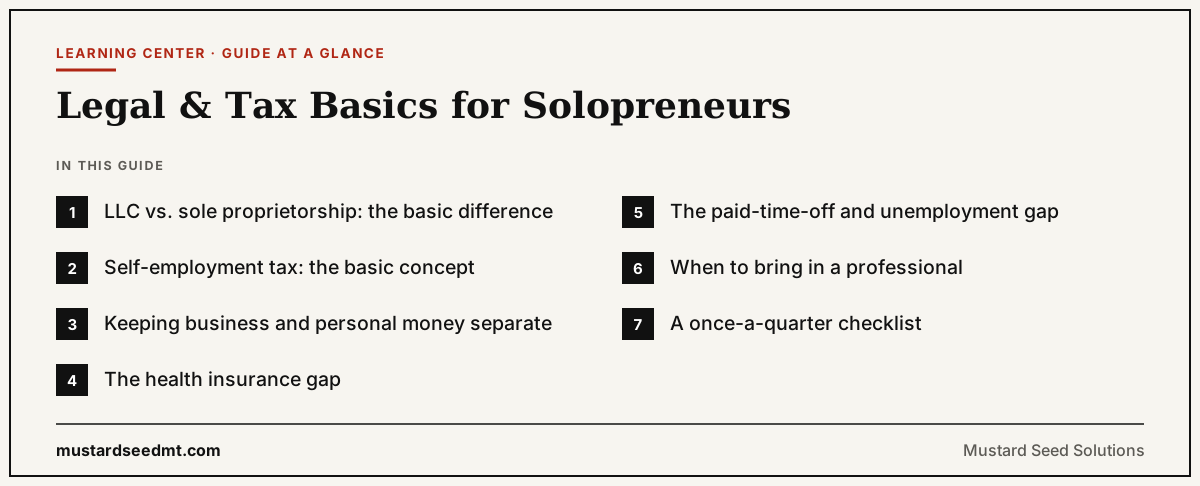
None of these decisions are one-size-fits-all, and getting them wrong is rarely dramatic — it's usually a slow accumulation of avoidable cost: a scam letter paid out of caution, a deduction claimed incorrectly, business and personal money left tangled together, a health insurance gap that turns into a real bill. None of it announces itself as urgent until it already is. The goal here is to make the concepts clear enough that you know what questions to bring to a licensed professional, and when to bring them — not to replace that professional's judgment with a guide's.
This is general information, not personalized advice. Laws, tax rules, and insurance markets vary by location and change over time. Nothing on this page should be treated as legal, tax, or financial advice for your specific circumstances — consult a licensed attorney, accountant, or financial advisor before making a decision.
1. LLC vs. sole proprietorship: the basic difference
Almost every solopreneur eventually asks whether they need to "become an LLC." The concept is simpler than the paperwork makes it feel — the confusion usually shows up around what the filing actually changes, not the filing itself.
- Sole proprietorship is the default: if you're doing business under your own name with no separate filing, you likely already are one — there's no legal separation between you and the business, which means your personal assets generally aren't shielded from business debts or claims
- An LLC (limited liability company) creates a separate legal entity through a state filing, which can help separate personal assets from business liabilities — the protection isn't absolute, but it's the main reason solopreneurs form one
- Forming an LLC doesn't automatically change how you're taxed — entity structure and tax election are related but separate decisions, and conflating the two is one of the most common points of confusion first-time filers run into
- New LLC filings attract scammers almost immediately — business owners describe receiving official-looking letters demanding urgent payment for things like "mandatory" labor law posters or annual-report "processing fees," often from a generic email address rather than an actual government agency, and sometimes timed to arrive within days of the filing becoming public record
- A common piece of advice from experienced owners: nothing a legitimate agency needs from you is ever so urgent it can't wait a day for you to verify it independently — one owner's rule of thumb after being targeted repeatedly is simply to wait, since real deadlines rarely require same-day payment
- Ongoing state requirements (annual reports, registered-agent fees) are often genuinely small and simple to file yourself — several owners note third-party services charge substantially more than the state's own filing fee for the same five-minute task
2. Self-employment tax: the basic concept
This is the part that surprises people leaving a traditional job the most — not the rate itself, but the shift in who's responsible for it, and how differently "deductions" work from how casual advice describes them.
- As a self-employed person, you're generally responsible for both the portion of payroll-style tax an employer usually pays and the portion an employee usually pays — a traditional employer would otherwise cover half of that cost without you ever seeing it
- Deductions (sometimes casually called "write-offs") reduce your taxable income — they don't generate a refund on their own, a distinction experienced owners note is widely misunderstood even among people who've run a business for years, and among friends and family giving well-meaning but incorrect tax advice
- Vehicle and mileage deductions are a common source of confusion specifically — the standard mileage rate is meant to cover a blend of fuel, depreciation, and wear on the vehicle, not just the cost of gas, which is why the per-mile figure looks larger than a simple fuel-cost calculation would suggest
- Consistent, documented business activity — real invoices, a business bank account, genuine effort to turn a profit — is generally what distinguishes a real business from something tax authorities might treat as a hobby, especially if you're claiming losses year after year
- Setting aside a portion of every payment for taxes as it comes in, rather than treating the full amount as spendable income, is a habit nearly every experienced solo owner adopts — usually after a bad quarter, or a surprising year-end bill, taught them why
3. Keeping business and personal money separate
This is less a legal requirement in every case and more a habit that quietly protects everything else — your liability protection, your tax records, and your own ability to tell whether the business is actually profitable.
- A dedicated business bank account (and card) makes it far easier to answer basic questions at tax time — what did the business actually earn, what did it actually spend — instead of reconstructing it from a personal statement months later
- If you've formed an LLC specifically for liability protection, mixing personal and business funds is one of the more common ways that protection gets undermined in practice — the separation has to be real, not just on paper
- Recurring software and subscription charges are easy to lose track of when they run through a personal card — several business owners describe discovering months of unexpected or auto-renewed charges only after specifically auditing their statements line by line
- A simple monthly habit — reconcile the business account, set aside the tax percentage, review recurring charges — catches small problems while they're still small, rather than at year-end when options are limited
4. The health insurance gap
Leaving a traditional job means leaving employer-subsidized health coverage behind — a cost new solopreneurs consistently underestimate until they're the ones paying the full premium.
- One former agency owner, describing relief after returning to a traditional job after seven years running a business, put it plainly: there's "something absolutely life-changing about... having health insurance that doesn't cost your firstborn"
- Group health rates — the kind available to businesses with employees — are typically out of reach for a true one-person operation; even employers who do offer group plans describe the cost as substantial, which explains why a solo policy purchased individually often carries a steeper relative price
- Options solopreneurs typically research include a national or regional health insurance marketplace, a spouse or partner's employer plan, professional-association group plans, or private individual policies
- Costs and available options vary significantly by location, age, and household situation — exactly the kind of decision a licensed insurance broker or benefits advisor should walk through for your specific circumstances, not a general guide
- Budgeting for coverage as a fixed monthly cost of doing business, the same as rent or software, tends to prevent the gap from becoming a crisis later — treating it as a discretionary expense to shop for "later" is how the gap tends to turn into a genuine emergency
5. The paid-time-off and unemployment gap
There's no employer-funded sick leave, vacation pay, or unemployment insurance backstop when you are the business — a structural gap solopreneurs describe feeling most acutely during a slow month or a health scare, precisely when income is already under pressure.
- One solopreneur described the defining surprise of self-employment as not the work itself, but "how unstable the money feels" — invoicing five clients one week, then refreshing email waiting on payments the next, with no separate PTO bank to draw from
- Even the emergency relief built for self-employed people during the COVID-19 pandemic drew criticism from business owners as too slow or too small to prevent real damage — one owner noted flatly that "tax credits are meaningless if you go bankrupt or lose your business," and others pointed out they needed cash immediately, not a credit against next year's taxes
- A slow month or a health issue reduces income directly and immediately — there's no separate leave balance absorbing the impact the way there would be at a traditional job, and the same week that revenue drops is often the week expenses don't
- Business owners who eventually returned to traditional employment after years of running something alone describe the predictability itself as a relief independent of the paycheck size — a fixed schedule, employer-sponsored coverage, and a floor under bad months, benefits that are easy to undervalue until they're gone
- Building your own safety net — a dedicated cash reserve, disability insurance, and disciplined saving during good months — functions as the PTO and unemployment insurance a traditional job would otherwise provide, and unlike a policy someone else administers, it only exists if you deliberately build it
6. When to bring in a professional
This guide covers concepts, not your specific numbers. A few situations are worth a licensed professional's time well before they become urgent — waiting until a problem is acute usually narrows your options and raises the cost of fixing it.
- Entity choice and tax elections interact with your specific income, state, and goals — an accountant can model the real tradeoff for your numbers in a way a general guide never can
- A contract dispute or unpaid invoice that self-help can't resolve is a signal to involve a lawyer, a collections process, or small-claims court rather than simply absorb the loss — business owners in exactly this situation have used a mechanic's lien, a collections agency, or a police report as real (if imperfect) next steps
- An annual check-in with an accountant, even for a very small or part-time business, tends to catch deduction and structure issues before they compound across tax years
- A lawyer's review before signing anything with real financial exposure — a lease, an equipment finance agreement, a contract with unusual terms — is generally far cheaper than untangling a bad clause after the fact, as owners who discovered a misrepresented interest rate only after signing can attest
- If something feels off — an unexpected official-looking letter demanding urgent payment, a deal that seems too good to verify — treat that instinct as data and confirm independently before paying or signing anything
The pattern worth remembering: almost none of the real damage in this area comes from a hard decision made carefully. It comes from an easy decision made under pressure — a scam letter that felt urgent, a deduction guessed at instead of confirmed, a coverage gap nobody budgeted for. Slowing down is usually the actual safety net our research into the 50 biggest solopreneur challenges found solopreneurs wish they'd built sooner.
A once-a-quarter checklist
None of this needs daily attention. A short review four times a year catches most of the problems solopreneurs describe discovering too late — a scam payment, a missed deduction, a coverage gap, an invoice nobody chased.
Structure
Confirm your entity and tax election still match your current income and risk — reassess yearly, not once and forever
Money
Reconcile the business account, confirm the tax set-aside is on track, and scan for surprise recurring charges
Coverage
Re-check health insurance and disability coverage options at least once a year — rates and options change
Reserve
Confirm your cash reserve still covers a real slow stretch, not just an optimistic average month
Frequently Asked Questions
Do I need an LLC to freelance or run a solo business?
No — you can operate as a sole proprietor with no separate filing at all, and many freelancers do exactly that when starting out. An LLC is a choice some solopreneurs make later for liability separation or perceived professionalism, not a legal requirement to start working. Whether it makes sense for you depends on your specific risk exposure and income, which is worth discussing with an accountant or attorney.
What's the real difference between an LLC and a sole proprietorship?
A sole proprietorship has no legal separation between you and your business — by default, that's what you are the moment you start doing business under your own name. An LLC is a separate legal entity created through a state filing, which can help separate personal assets from business liabilities. Forming one involves paperwork and often ongoing state fees, and it doesn't automatically change your tax treatment.
How does self-employment tax work, in plain terms?
As a self-employed person, you generally cover both the employer's and the employee's share of the payroll-style tax that a traditional job would otherwise split with you. This guide describes the concept only — actual rates, thresholds, and forms change and vary by jurisdiction, so confirm current figures with a licensed tax professional or your tax authority's official site.
Is this page legal, tax, or financial advice?
No. This is general educational information about concepts solopreneurs commonly encounter — it is not personalized legal, tax, or financial advice, and it doesn't account for your specific situation, location, or numbers. Consult a licensed attorney, accountant, or financial advisor before making a decision based on anything here.
What are solopreneurs' health insurance options?
Common paths include a national or regional health insurance marketplace, coverage through a spouse or partner's employer plan, group plans offered through professional or trade associations, and private individual policies. Which is realistic for you depends heavily on location, age, and household — a licensed insurance broker can compare actual options and costs for your situation.
Do solopreneurs get unemployment insurance or paid time off?
Generally, no — traditional employer-funded sick leave, vacation pay, and unemployment insurance don't extend to most self-employed people by default, and even emergency provisions created during the COVID-19 pandemic were widely criticized by business owners as insufficient. Most solopreneurs build the equivalent themselves through a deliberate cash reserve and, in some cases, private disability insurance.
When should I hire an accountant or lawyer instead of figuring it out myself?
Before choosing or changing your entity or tax election, before signing a contract with real financial exposure, and whenever a dispute (an unpaid invoice, a contract disagreement) goes beyond what a polite email can resolve. An annual check-in with an accountant, even for a small business, is generally worth the cost.
Do I really need a separate bank account for a small side business?
In practice, yes, even before it's legally required. A dedicated business account makes it far easier to track income and expenses at tax time, and if you've formed an LLC specifically for liability protection, mixing personal and business money is one of the most common ways that protection gets weakened. It also makes it much easier to spot forgotten subscriptions or surprise charges before they add up.
Related resources
Build the business side, not just the client work
Want a clear plan for growing your solo business?
Mustard Seed Solutions helps solopreneurs focus their marketing and positioning while the legal and financial fundamentals sit on a professional's desk, not yours.
Book a consultation