Free Tool
Schema Markup Generator
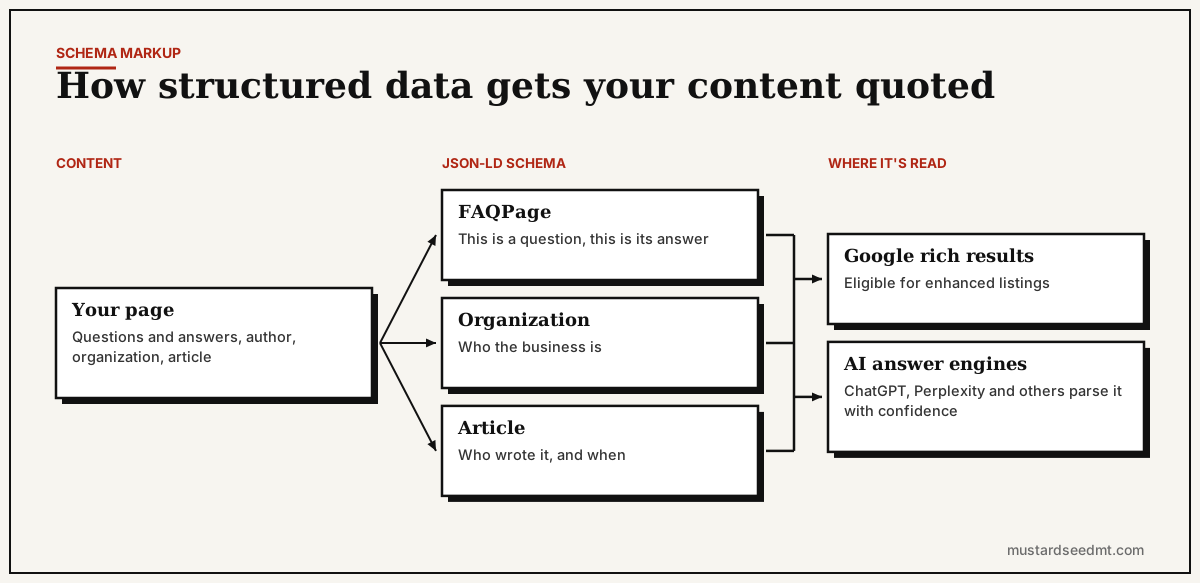
Structured data (JSON-LD) helps Google show rich results — and helps AI answer engines like ChatGPT and Perplexity understand and quote your content. Fill in the fields and copy ready-to-paste markup.
<script type="application/ld+json">
{
  "@context": "https://schema.org",
  "@type": "FAQPage",
  "mainEntity": [
    {
      "@type": "Question",
      "name": "What does AEO stand for?",
      "acceptedAnswer": {
        "@type": "Answer",
        "text": "AEO stands for Answer Engine Optimization — structuring content so AI answer engines can quote it directly."
      }
    },
    {
      "@type": "Question",
      "name": "Is llms.txt required?",
      "acceptedAnswer": {
        "@type": "Answer",
        "text": "No, it is optional and emerging, but it helps AI tools understand your site."
      }
    }
  ]
}
</script>
Paste this into the <head> of the matching page, then validate it with Google's Rich Results Test before publishing.
Why schema matters for AI answers
Search engines and AI answer engines both reward content they can parse with confidence. Schema markup removes the guesswork — it states plainly "this is a question and this is its answer," "this is the author," "this is the organization." FAQ schema in particular maps almost directly onto the way people prompt AI tools, which makes your content easier to quote.
It is one piece of a broader AI visibility strategy. Pair it with a clean llms.txt file and answer-first content.