
Plenty of solopreneurs can design, code, or produce a genuinely good product and still make almost nothing, because building and selling are different skills most makers never trained. Across dozens of Reddit threads, the same builder described the same wall: a finished product, and no idea how to get it in front of a single paying customer.
One post captured it in almost exactly those words. The poster listed off more than a dozen tools they'd built and abandoned — an astrology app, a restaurant order tool, a document search system that could parse images and video, an accounting tool, a mock-interview platform, and dozens more they'd lost track of. Every one of them sat there after launch. Nobody bought. Their own summary: they were a builder, they could ship literally anything, but they could not sell to save their life.
That thread wasn't an outlier. It's one of the clearest and most repeated patterns in the entire dataset, and it points at exactly what our marketing pillar guide exists to fix.
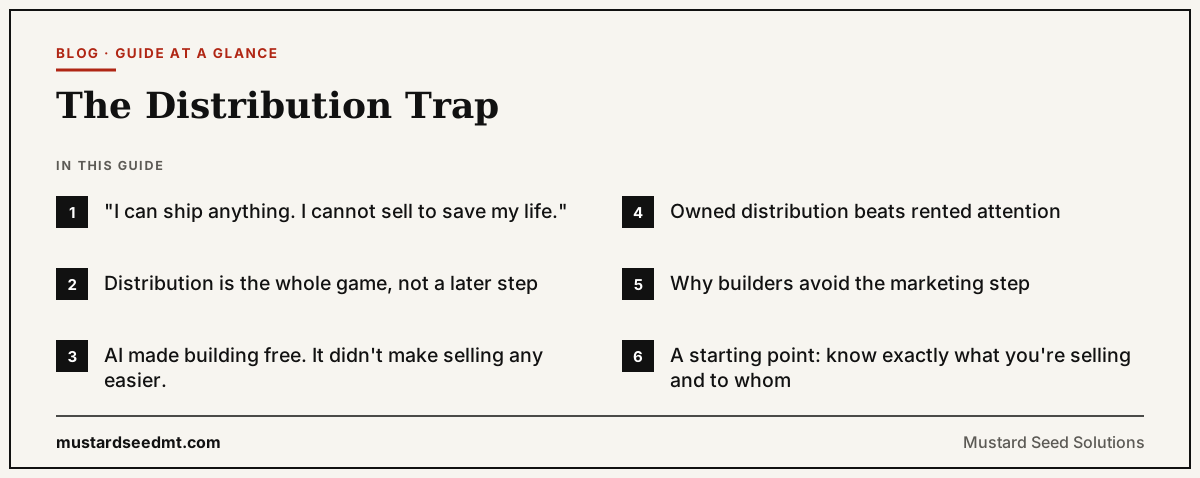
"I can ship anything. I cannot sell to save my life."
The builder above wasn't only stuck on marketing mechanics — they'd also been burned trying to solve it through partnerships, describing a repeated pattern where someone would offer to "handle the business side" in exchange for a cut, learn the entire product and its logic during that process, and then quietly disappear or build a competing version themselves. That experience left them distrustful of the most obvious workaround for a builder who can't sell: finding someone who can.
Replies to that post converged on a similar diagnosis: building and selling pull on completely different muscles, and most technical founders have only ever exercised one of them. Several suggested a specific fix — spend real time, daily, in the actual communities where a product's future customers already talk, answering questions and being useful before ever mentioning the product at all.
Distribution is the whole game, not a later step
A separate, widely shared post made the same case from the opposite direction — someone who'd spent time studying solo founders clearing five figures a month found none of them had a unique idea. What they shared was a specific, reachable audience picked before the idea itself. One founder chose an entire niche because they knew a single 15,000-member Facebook group contained every potential customer they'd need for the first year. Several charged money before the product was finished, using a landing page and a price to test real demand rather than guessing. And every one of them spent roughly half their working time on marketing, not ten percent, not "after the product is ready."
The single top-voted reply to that post said it in six words: distribution is the whole game, everything else is easy. A different reply put it just as plainly — choose distribution before you choose what you distribute.
Two other habits from that same research stood out. One founder had gotten eight paying customers for a scheduling tool before writing a single line of code, simply by describing the idea in two sentences on a landing page with a price attached and seeing who actually paid — those early payers became the first testimonials. And every founder in the group said no to new feature requests for roughly the first six months, on the logic that features rarely grow a product on their own; distribution does, and features mostly just keep existing users from leaving.
AI made building free. It didn't make selling any easier.
A third thread showed what happens when the building side gets fully solved and the selling side doesn't. A poster described two years of "vibe coding" full applications with AI assistance after leaving a job — six or seven shipped projects in total. The pattern repeated every time: total silence after launch, occasionally a brief spike in visitors after a single Reddit post, then nothing again within 48 hours. Not one of the projects produced a paying user.
The most upvoted reply agreed with the poster's framing only partway: the barrier genuinely wasn't technical anymore, AI had removed that excuse completely — but it also pointed out that this was now true for everyone at once, so the competition for the same buyer attention had gotten sharper, not weaker. Building stopped being the bottleneck. Getting noticed became the entire bottleneck. Even the poster's own second app made the point unintentionally — it picked up a few hundred visitors from a single Reddit post, but roughly half of the people who signed up never even confirmed their email, and the ones who logged in once never came back. Traffic, on its own, was never the missing piece.
Owned distribution beats rented attention
A fourth thread, framed as a lesson learned the hard way over several years, argued that the founders who treat "distribution is the new moat" seriously make a specific distinction: the audience you reach through a public post or a viral share is rented, not owned — the platform can bury it, change its algorithm, or simply move on. The fix the post argued for was converting that rented attention into something owned, typically an email list, as early as possible, by trading something genuinely useful for a way to stay in touch, rather than trying to sell to a crowd that just arrived and doesn't know you yet.
Why builders avoid the marketing step
One more thread named the emotional side of this honestly. A solo builder described spending three months building alone, then finding that posting a simple update publicly felt harder than building the product itself — not because the writing was hard, but because publishing meant they could no longer hide inside the build loop. For a lot of technical founders, that's the real block: the code is comfortable because it's controllable, and putting yourself in front of an audience is not.
A builder working through this same frustration a different way described it plainly: he could ship anything, but every time he asked people to validate an idea before building, he ran into the same wall — he didn't know where to find the right people to ask, or how much to say without giving the idea away, or how to turn a helpful comment into an actual customer. Building had a clear next step. Selling, for him, never did — and that gap, not a shortage of good ideas, was what kept the cycle of building and shelving projects going.
A starting point: know exactly what you're selling and to whom
Every version of this pattern gets easier once you can say, in one sentence, who you serve, what problem you solve, and why someone should pick you over the alternative. That single sentence is what determines which channel makes sense, what you post about, and whether a stranger in a community understands your product in five seconds or scrolls past it. Our positioning statement generator builds that sentence with you, along with a homepage headline and an elevator pitch to go with it — the same exercise we'd normally walk a client through directly.
Marketing and distribution being harder than building was one of the single largest patterns across the 270 threads behind our full solopreneur challenges report. If you've built something you're proud of and it's still sitting there quietly, you're in very good company — and the fix is rarely "build a better version."