
AI marketing becomes useful when it moves beyond experimentation.
The question for most B2B teams is no longer whether AI can generate text.
The more useful question is:
Where can AI save time, improve decisions, or increase the output of the team without reducing quality?
Here are 15 practical ways B2B marketing teams can use AI today.
1. Summarize Customer Interviews
Customer interviews contain valuable marketing insight.
AI can help organize transcripts and identify:
- 1Repeated pain points
- 2Common objections
- 3Buying triggers
- 4Customer language
- 5Desired outcomes
- 6Competitive alternatives
This can help product marketing and content teams find patterns faster.
The final interpretation should still be reviewed by someone who understands the customer and market.
2. Analyze Sales Call Notes
Sales teams often hold valuable information that never reaches marketing.
AI can help summarize call notes and identify themes such as:
- 1Frequent objections
- 2Common use cases
- 3Competitors mentioned
- 4Pricing concerns
- 5Feature requests
- 6Reasons for lost deals
This creates a tighter feedback loop between sales and marketing.
3. Build First Draft Buyer Personas
AI can help structure persona research into useful categories.
For example:
- 1Role
- 2Goals
- 3Challenges
- 4Buying criteria
- 5Objections
- 6Information sources
- 7Internal stakeholders
The danger is inventing details.
AI generated personas should be grounded in real customer and sales data.
4. Create Content Outlines
AI is particularly useful before writing starts.
A marketer can use it to:
- 1Structure an article
- 2Identify likely questions
- 3Compare possible angles
- 4Generate subtopics
- 5Organize research
- 6Create FAQ sections
This can reduce blank page time while keeping the final argument human led.
5. Repurpose Long Form Content
One strong article, webinar, podcast, or research report can become many smaller assets.
AI can help transform it into:
- 1LinkedIn posts
- 2Email copy
- 3Short videos
- 4Sales snippets
- 5FAQs
- 6Newsletter sections
- 7Social graphics copy
- 8Executive summaries
The best results come when the source material already contains original insight.
6. Improve Sales Enablement
Marketing teams can use AI to help create:
- 1Objection handling guides
- 2Competitor comparisons
- 3Follow up email drafts
- 4Discovery questions
- 5Industry specific talking points
- 6Meeting summaries
- 7Proposal support
This can reduce the gap between marketing content and actual sales conversations.
7. Analyze Competitor Positioning
AI can help organize publicly available competitor information.
Teams can compare:
- 1Homepage messaging
- 2Product claims
- 3Customer segments
- 4Use cases
- 5Pricing language
- 6Content topics
- 7Proof points
The output can help marketers identify where competitors sound similar and where differentiation opportunities exist.
8. Generate Campaign Variations
AI can help create multiple versions of:
- 1Ad headlines
- 2Email subject lines
- 3Landing page headings
- 4Calls to action
- 5Social copy
- 6Outreach messaging
The point is not to publish every variation.
The value comes from increasing the number of ideas available for testing.
9. Support SEO Research
AI can assist with:
- 1Topic clustering
- 2Search intent classification
- 3Content gap analysis
- 4Internal linking ideas
- 5Outline development
- 6FAQ generation
Traditional keyword tools and search data still matter.
AI should support SEO research, not replace the underlying evidence.
10. Support GEO and AI Search Visibility
B2B buyers increasingly use conversational AI tools to research categories, compare vendors, and understand solutions.
Marketing teams should therefore think about whether their content clearly communicates:
- 1What the company does
- 2Who it serves
- 3What problems it solves
- 4How it differs
- 5What evidence supports its claims
AI can help review content for clarity and identify where important entities, definitions, comparisons, and supporting evidence are missing.
11. Draft Reporting Commentary
Many marketers spend too much time turning dashboard numbers into slides.
AI can help summarize:
- 1What changed
- 2Which campaigns improved
- 3Which channels declined
- 4Where conversion moved
- 5Which metrics deserve attention
The marketer should verify every conclusion before sharing it.
This can reduce reporting time while improving the quality of discussion.
12. Identify Content Gaps
AI can compare your existing content against:
- 1Customer questions
- 2Sales objections
- 3Competitor themes
- 4Product use cases
- 5Funnel stages
This can uncover missing content.
For example, a company may have many awareness articles but almost no comparison pages, implementation guides, pricing explainers, or decision content.
Those gaps often matter commercially.
13. Personalize Account Based Marketing
Account based marketing can require significant manual research.
AI can help summarize:
- 1Company background
- 2Industry context
- 3Recent initiatives
- 4Likely business priorities
- 5Relevant case studies
- 6Potential messaging angles
This can help marketers create more relevant campaigns for priority accounts.
Human review remains important, especially for high value outreach.
14. Automate Repetitive Marketing Workflows
AI can reduce manual work across:
- 1Meeting notes
- 2Content tagging
- 3CRM summaries
- 4Brief creation
- 5Research summaries
- 6Translation first drafts
- 7Reporting
- 8Asset organization
The best automation targets repetitive processes with clear inputs and outputs.
Do not automate a process simply because the technology exists.
Automate where time savings create meaningful value.
15. Help Small Teams Operate at Greater Scale
This may be the biggest strategic impact.
A small B2B marketing team can use AI to increase its output without immediately increasing headcount.
For example:
Human team
- 1Marketing leader
- 2Marketing manager
- 3Specialist partners
AI support
- 1Research
- 2Ideation
- 3Analysis
- 4Repurposing
- 5Reporting
- 6Administrative workflows
This allows human time to move toward strategy, customer understanding, creative direction, and higher value decisions, and it is the structure most AI marketing consulting work is designed to put in place.
What Should B2B Marketers Avoid?
AI creates several risks.
Avoid:
- 1Publishing unverified facts
- 2Creating hundreds of generic articles
- 3Automating customer communication without review
- 4Using confidential data carelessly
- 5Replacing customer research with synthetic assumptions
- 6Treating AI recommendations as objective truth
- 7Producing content without a clear strategic purpose
More output does not automatically mean better marketing.
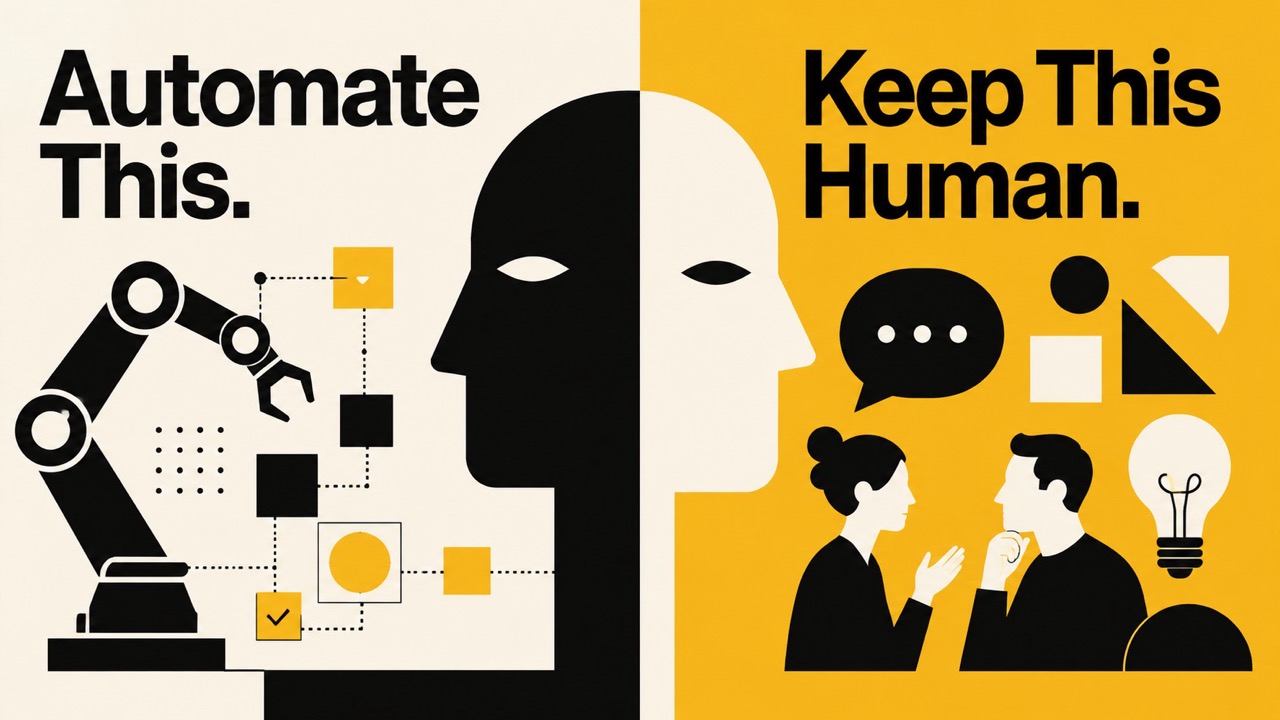
A Good Rule for AI Marketing
Use AI where it creates leverage.
Keep humans responsible for:
- 1Strategy
- 2Positioning
- 3Judgment
- 4Customer empathy
- 5Quality
- 6Final decisions
This balance allows B2B teams to gain efficiency without sacrificing credibility.
Final Thoughts
The strongest AI marketing use cases are often practical rather than dramatic.
AI can help B2B teams research faster, organize information, create first drafts, repurpose content, analyze performance, and automate repetitive work.
That can free marketers to spend more time on the work that creates differentiation.
Mustard Seed Solutions helps B2B technology companies integrate AI into practical marketing systems across content, GEO, demand generation, market entry, sales enablement, and marketing operations.