
Website authority describes the level of trust, recognition, and credibility that a website has developed around a subject or market.
It is not a single score that Google publishes. It is better understood as the combined result of many signals that suggest a website deserves attention.
These signals may include links from respected websites, brand mentions, original research, expert contributions, useful content, customer reviews, business history, and clear evidence that the organisation genuinely participates in its industry.
A website with authority is more likely to be discovered, referenced, and considered credible. This can support search visibility, but authority is not created through one technical change or one marketing campaign.
It develops over time through consistent and useful activity.
Website authority is not one metric
SEO tools often provide metrics called Domain Authority, Domain Rating, Authority Score, or similar names.
These measurements can be useful for comparing websites. However, they are estimates created by third party software companies.
They are not official Google scores.
Different tools use different databases and formulas, so the same website may receive very different authority scores depending on the platform.
Businesses should not treat these numbers as absolute truth.
A higher score does not guarantee that every page will rank. A lower score does not mean a website has no chance of competing.
The more important question is whether the website has earned credible recognition in the market it wants to serve.
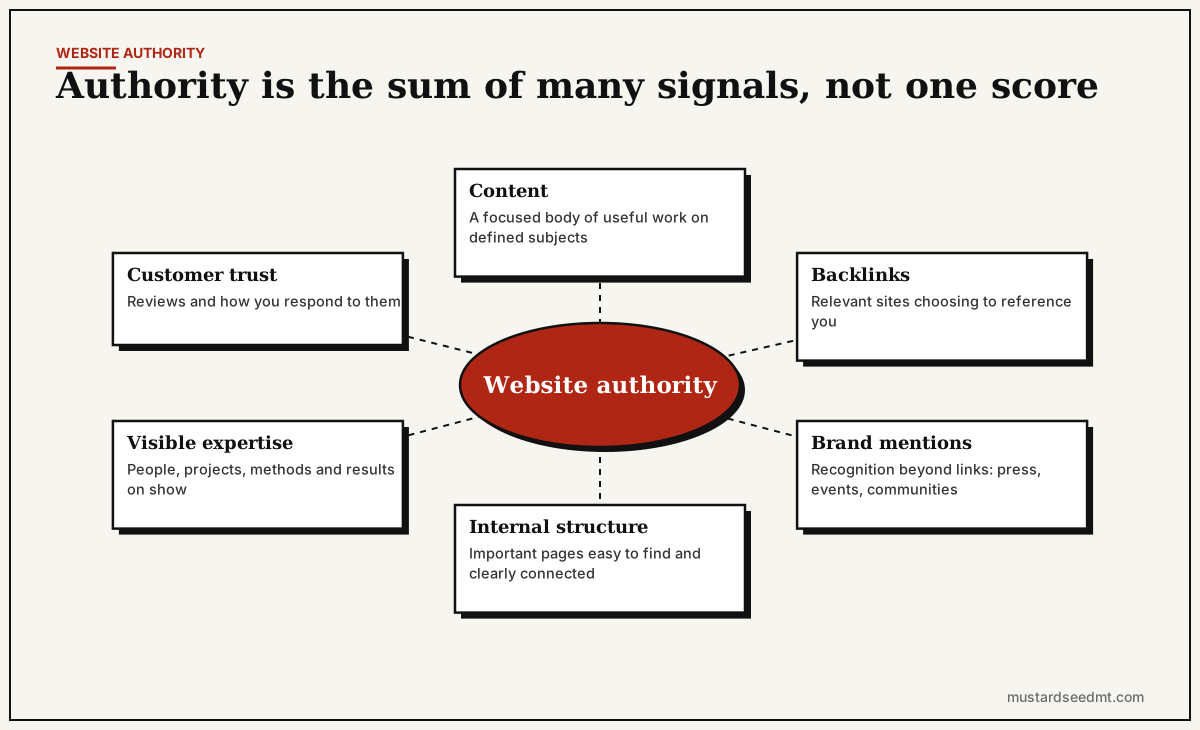
How search engines may recognise authority
Search engines need ways to separate credible sources from websites that make unsupported claims.
Any company can describe itself as an industry leader. Any writer can call themselves an expert. These statements are easy to publish and difficult to verify.
External evidence can provide stronger support.
When relevant publications, professional organisations, customers, researchers, partners, and other trusted websites mention or link to a company, they create signals beyond the company’s own marketing.
Search engines can analyse these relationships.
A business that is regularly referenced within its industry may appear more credible than a business that exists only on its own website.
This does not mean that every mention or backlink produces an immediate ranking improvement. Authority is created through patterns rather than isolated actions.
The relationship between authority and relevance
Authority must be connected to a topic.
A website may be highly trusted in one field but have little credibility in another.
For example, a respected financial publication may have strong authority for investing and business topics. That authority would not automatically make it the best source for advanced medical treatment advice.
This is why topical authority matters.
Topical authority develops when a website consistently provides useful information about a clearly defined subject.
A marketing consultancy may build topical authority by publishing detailed resources about SEO, analytics, paid advertising, content strategy, and customer acquisition.
A cybersecurity company may build authority through research reports, technical explanations, security alerts, case studies, and expert commentary.
The content should reflect real knowledge and business experience.
Publishing a large number of shallow articles on unrelated topics usually creates less value than building a focused body of useful work.
Content supports authority
Content gives a business the opportunity to demonstrate knowledge.
However, publishing articles does not automatically create authority.
The content must provide something useful.
It may answer important customer questions, explain a difficult process, present original research, compare options, or share practical experience.
Generic content often repeats information already available on hundreds of websites. It may be accurate, but it gives readers little reason to trust or reference the source.
Original value is more persuasive.
A company can publish data from its own work, anonymised customer trends, detailed case studies, industry observations, templates, tools, or clear explanations based on practical experience.
These materials are more difficult to copy and more likely to earn attention.
Backlinks contribute to authority
Backlinks are links from other websites to your website.
They can help search engines discover pages and understand which sources are being referenced by others.
Not all backlinks have equal value.
A relevant link from a respected industry publication may contribute more than hundreds of links from unrelated directories.
The reason for the link also matters.
A natural link exists because the page provides something useful. A manipulated link may exist only because someone paid for placement or created a network of low quality websites.
Businesses should focus on earning recognition rather than collecting the largest possible number of links.
Useful research, partnerships, public relations, interviews, events, podcasts, and expert contributions can all create natural opportunities for references.
Brand authority extends beyond backlinks
Website authority is connected to brand authority.
A recognisable brand may receive searches for its company name, mentions on social platforms, customer reviews, media coverage, and references that do not always contain a clickable link.
These signals show that the organisation exists beyond its own website.
A company with strong brand authority is easier for customers to remember and trust.
Search visibility and brand building can support each other.
SEO helps new audiences discover the brand. Strong brand recognition can increase the likelihood that users choose the company when it appears in search results.
This is why SEO should not operate separately from public relations, customer experience, social media, and business development.
Internal structure affects authority
Authority must be distributed clearly across the website.
A website may earn strong backlinks to its homepage or a popular article. Internal links can help connect that recognition to other important pages.
Service pages, product pages, and valuable resources should not be hidden deep within the website.
A clear navigation system helps users and search engines understand what the company does.
Related articles should link to each other when the relationship is useful. Informational content can link to relevant service pages. Important pages should receive more internal support than minor pages.
A structured website makes authority easier to understand.
Expertise must be visible
Businesses often possess more expertise than their websites demonstrate.
The company may have experienced specialists, successful projects, industry knowledge, and valuable customer insights. However, the website may contain only generic descriptions and sales claims.
Authority grows when expertise becomes visible.
Expert biographies, author information, case studies, customer results, certifications, research methods, and transparent explanations can help establish credibility.
The goal is not to fill every page with awards and promotional language.
The goal is to provide evidence.
A detailed case study showing the problem, process, decision, and result is more convincing than a statement claiming that the company delivers excellent results.
Customer trust supports authority
Authority is not only an SEO concept.
Customers also evaluate whether a website appears credible.
They may look for clear contact information, privacy policies, company details, reviews, transparent pricing, realistic claims, and professional presentation.
A website that hides important information may create uncertainty.
Businesses should make it easy for visitors to understand who operates the company, what it offers, where it is based, and how it can be contacted.
Trust can be damaged by exaggerated claims, fake reviews, copied content, unclear ownership, and aggressive sales tactics.
Authority depends on consistency between what the company says and what customers experience.
How to build website authority
Begin by defining the subjects for which the business wants to be known.
Create a focused content strategy around those subjects. Publish resources that answer real questions and demonstrate practical understanding.
Build relationships with relevant businesses, publications, associations, and professionals.
Look for opportunities to contribute useful commentary, participate in events, publish research, and collaborate on industry resources.
Improve the website structure so that important pages are easy to find and clearly connected.
Show evidence of expertise through people, projects, methods, and results.
Monitor customer reviews and brand mentions. Respond professionally when feedback requires attention.
Avoid shortcuts that create the appearance of authority without genuine substance.
Authority is earned over time
Website authority is not created by installing a plugin, increasing a tool score, or publishing fifty articles in one month.
It develops when a business repeatedly provides value and earns recognition from others.
Search engines want to identify sources that users can trust. Customers want the same thing.
The most sustainable authority comes from real expertise, useful content, credible relationships, strong customer experiences, and a clear position in the market.
SEO can help communicate and organise that authority.
It cannot manufacture credibility that the business has not earned.