
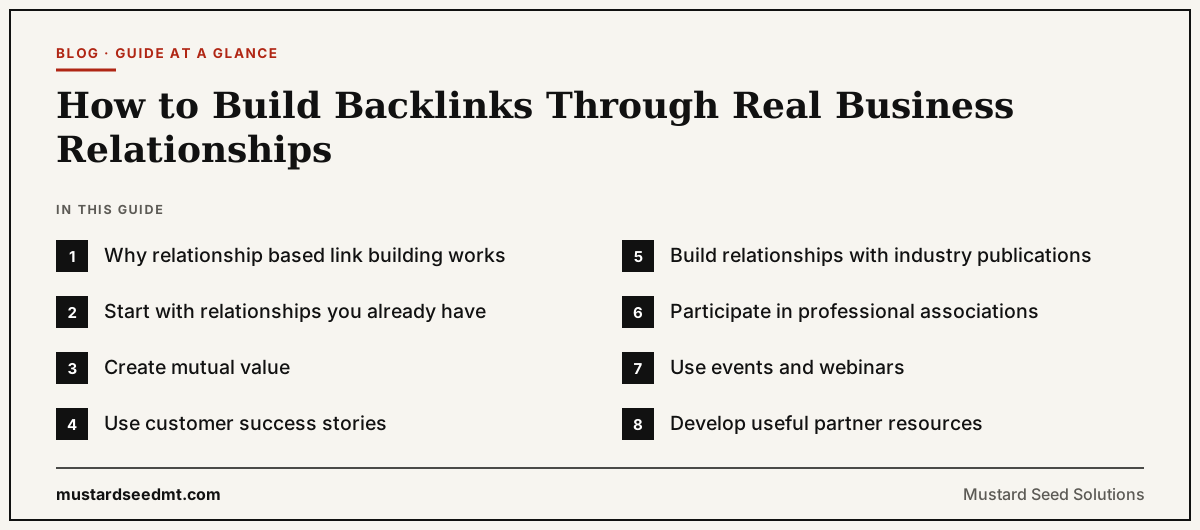
Link building is often presented as a technical SEO task.
A company creates a list of websites, sends hundreds of outreach emails, and asks strangers to add links to existing articles. The process is measured by response rates, placements, and the number of backlinks acquired.
This approach can produce occasional results, but it often creates weak links and wastes time.
A more sustainable strategy begins with real business relationships.
Partnerships, customers, suppliers, industry associations, journalists, event organisers, and professional communities can all create natural reasons for one website to reference another.
These links are valuable because they are connected to genuine activity. They can support SEO, referral traffic, brand recognition, and business development at the same time.
Why relationship based link building works
Search engines use links to understand how websites are connected.
A relevant link can indicate that another organisation considers a page, company, or resource worth referencing.
The strongest links usually have a clear reason to exist.
A partner may link to a joint project. A publication may reference original research. An association may list an active member. A supplier may publish a customer story. An event organiser may link to a speaker’s website.
These links make sense to readers.
They are different from links placed only because someone requested an SEO favour.
Relationship based link building works because the link is often a natural result of collaboration, recognition, or shared value — the raw material of website authority.
Start with relationships you already have
Many companies begin link building by contacting strangers. They overlook the organisations and people already connected to the business.
Review your existing network.
This may include clients, technology partners, suppliers, distributors, professional advisers, trade organisations, local groups, podcast hosts, conference organisers, and companies that use your product.
Look for situations where a website reference would be useful and accurate.
A software provider may list certified implementation partners. A professional association may maintain a member directory. A client may publish a case study about a successful project. A supplier may feature businesses using its services.
The objective is not to ask every contact for a backlink.
The objective is to identify genuine relationships that are not represented online.
Create mutual value
A request for a link is more persuasive when it benefits both sides.
Instead of asking, “Can you link to our website?” consider what you can create together.
You might produce a joint case study, interview an expert from the partner company, organise a webinar, publish shared research, or build a resource for a common audience.
A cybersecurity consultancy and a software provider could publish a guide to reducing security risks during implementation.
An accounting firm and a legal adviser could create a checklist for new companies.
A marketing agency and an analytics platform could present a joint customer success story.
Each participant gains useful content, exposure, and credibility. Links become a natural part of the project.
Use customer success stories
Customer relationships can create strong backlink opportunities when handled carefully.
A detailed case study provides value to both the service provider and the customer.
The provider demonstrates its work. The customer receives positive exposure and evidence of a successful project.
A strong case study should explain the situation, the challenge, the process, and the result. It should avoid exaggerated claims and include information the customer has approved.
Once published, the customer may reference the case study from its news section, partner page, or social channels.
The backlink is credible because it documents a real business relationship.
Not every client will want to participate. Confidentiality, internal policy, or competitive concerns may prevent public disclosure.
The process should always be voluntary and transparent.
Build relationships with industry publications
Journalists and editors need credible sources.
Businesses can earn links by becoming useful contributors rather than repeatedly sending promotional pitches.
Identify publications that cover your market. Read their work and understand the subjects they regularly discuss.
Offer practical commentary, data, examples, or expert explanations when relevant.
A strong contribution helps the journalist produce a better article.
The goal is not to force a link into every conversation. It is to build a reputation as a reliable source.
Over time, journalists may return for additional comments, include the company in industry coverage, or reference its research.
This type of media relationship can produce links, brand mentions, and wider trust.
Participate in professional associations
Trade associations, chambers of commerce, industry groups, and professional networks often provide opportunities for members to contribute.
Membership alone may result in a directory listing. More active participation can create stronger recognition.
A company might speak at an event, contribute to a report, join a working group, sponsor research, or provide educational material.
These activities may lead to links from event pages, member profiles, reports, and industry resources.
The value extends beyond SEO.
Professional participation can create introductions, partnerships, customer trust, and market knowledge.
Choose organisations that are relevant and active. A directory with no audience or editorial standards offers limited value even when it provides a link.
Use events and webinars
Events create multiple reasons for websites to link.
An event organiser may publish speaker biographies. Partners may promote the event. Participants may share recordings or summaries. Industry publications may include the event in a calendar.
Online webinars can create similar opportunities.
A company can invite customers, partners, or specialists to discuss a useful subject. Each participant has a reason to promote the event to their audience.
The event should provide real educational or professional value.
An event created only to manufacture backlinks is unlikely to attract meaningful participation.
Strong topics address a clear market problem and involve people with relevant experience.
Develop useful partner resources
Business partners often answer similar customer questions.
Creating shared resources can reduce duplicated effort and improve the customer experience.
For example, a payment provider may create implementation documentation for ecommerce platforms. A recruitment company may build a salary report with HR software partners. A local tourism business may create a visitor guide with nearby hotels and restaurants.
These resources connect complementary organisations.
Each participant may link to the shared material because it helps their own customers.
Useful partner content can continue attracting links long after publication.
Turn research into relationships
Original research is one of the strongest linkable assets.
However, research becomes more powerful when other organisations participate.
A company can survey customers, interview specialists, analyse industry data, or collaborate with an association.
Contributors may reference the final report because they helped create it.
Journalists may cite the findings when covering the subject.
Partners may share the report with their audiences.
The research must be credible. Explain how the data was collected, how many people participated, and what limitations apply.
Weak or misleading research can damage authority instead of building it.
Avoid transactional relationship building
Relationship based link building should not become disguised link buying.
Offering a partnership only because a company has a high authority score creates a shallow relationship.
People recognise when an outreach message is interested only in extracting SEO value.
A genuine relationship should have value even without a backlink.
The organisations may share customers, knowledge, distribution, research interests, or professional goals.
The link is one possible result, not the entire purpose.
This approach takes longer than purchasing placements, but it creates assets that are more difficult for competitors to copy.
Make linking easy
When a partner agrees to reference your company or resource, make the process simple.
Provide the correct page, company description, approved images, and any necessary context.
Do not insist on exact anchor text or unnatural wording.
The linking organisation should describe the relationship in a way that fits its audience and editorial standards.
A natural link is more credible than a sentence written only to include a target keyword.
You can suggest the most relevant destination page, but the publisher should maintain control over its website.
Measure more than backlink quantity
Relationship based links should be evaluated through several outcomes.
Track referral traffic, enquiries, brand searches, mentions, partnership opportunities, and the quality of the audiences reached.
A link that sends three qualified leads may be more valuable than a link that improves an SEO tool score but produces no business activity.
The relationship itself may also generate future opportunities.
A webinar partner may later introduce a client. A journalist may request another interview. An association may invite the company to contribute to a larger report.
These benefits do not always appear in a backlink report.
Build a repeatable process
Create a list of existing and potential relationships connected to your market.
Identify what each organisation values and where collaboration makes sense.
Develop a small number of strong projects rather than sending a large number of generic requests.
Document successful formats such as case studies, webinars, interviews, research projects, and partner guides.
Follow up professionally and continue supporting the relationship after the content is published.
The strongest backlink strategy is often a strong business relationship strategy.
When companies create useful work together, online references become a natural reflection of real credibility.