
The Promise
Google+ introduced several genuinely well-regarded product ideas at launch in 2011: "Circles" for organizing contacts into distinct groups with different sharing permissions (addressing a real, then-unsolved privacy nuance in Facebook's more flattened friend model), "Hangouts" group video chat, and tight integration across Google's existing services.
Google invested heavily and consistently over nearly a decade, including controversially tying Google+ profiles to other Google products (YouTube comments, for a period, required a Google+ account) — a level of sustained internal commitment few of this collection's other exhibits received.
The Entry
Despite genuine product features and Google's distribution muscle (able to prompt hundreds of millions of existing Gmail and YouTube users to create a Google+ profile), the platform never developed the habitual, daily-return usage pattern that defines a successful social network — users created profiles, often because Google required it for another service, but did not return to post, browse, or engage the way Facebook or Twitter users did.
Google's own leaked and later-reported internal engagement metrics, and public reporting on the platform's usage patterns, consistently described most Google+ profiles as largely inactive after initial creation — a signup number that looked impressive publicly but did not reflect the sustained attention a social network's business model actually requires.
Google+: Why It Failed
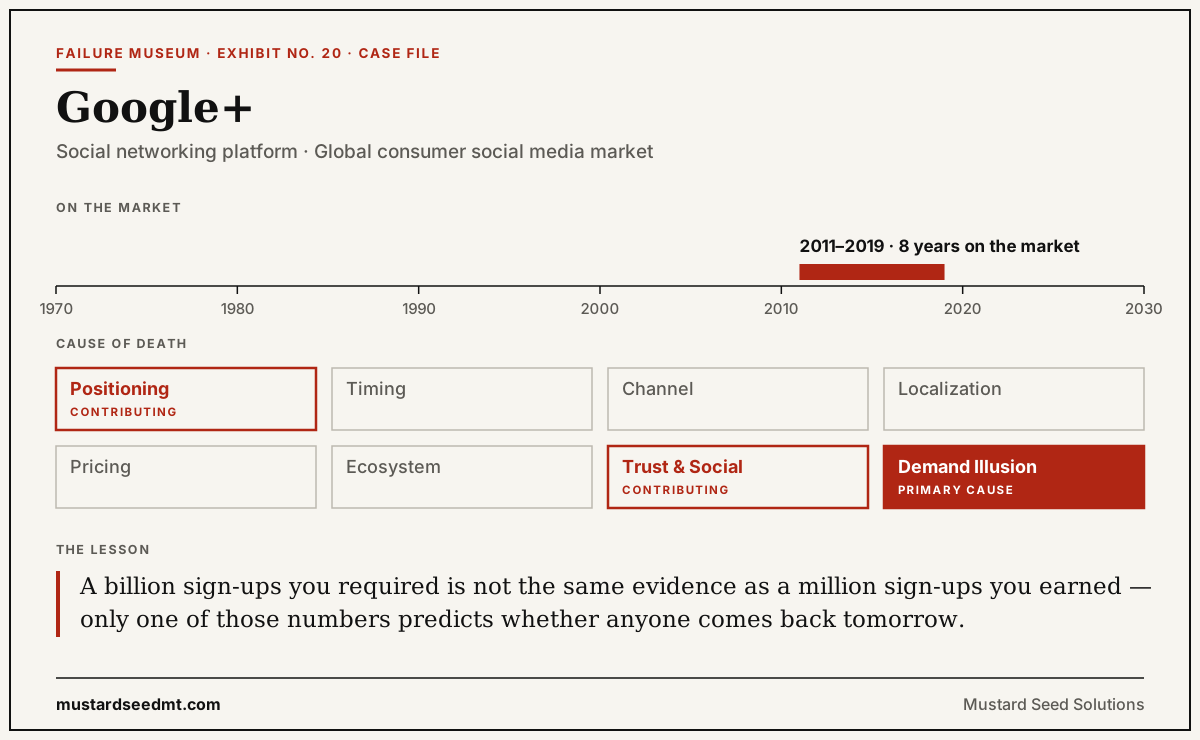
Google+ failed because the sign-up numbers Google could generate by requiring a profile to use other Google products (YouTube, Gmail-linked services) were never evidence of genuine demand for another social network — most users created a profile out of necessity for something else, then never returned, meaning the platform never developed the habitual daily engagement a social network's business model depends on.
The record suggests this is one of the collection's clearest demand illusions specifically because Google's own distribution power masked the underlying problem for years: forcing sign-ups through other products generated large headline user numbers that internally and publicly looked like traction, while the actual metric that matters for a social network — do people come back to use it as their social network — never materialized at meaningful scale.
Our read is that positioning compounded the demand problem: Google+ launched into a market where Facebook had already established itself as the default social graph for most users' friends and family, and Google+ never articulated a clear, different reason to also maintain a second, separate social presence there — it offered better privacy controls (Circles) to a market that, in practice, valued convenience and network presence (where your friends already are) over granular privacy management.
The eventual 2018 discovery and disclosure of a data-exposure bug affecting the Google+ API — and the accelerated shutdown timeline that followed — added a late-stage trust and social failure on top of years of demand illusion, giving Google a clean opportunity to end a program that internal engagement data likely already argued for winding down.
What Survived
Several individual features built for or alongside Google+ persisted as genuinely successful standalone products after the core social network was shut down: Google Photos (originally Google+'s photo backend) became one of Google's most widely used consumer products, and Hangouts persisted for years as a messaging and video product before eventually being folded into Google Meet and Chat.
Google+ is now widely cited, alongside this museum's Google Wave exhibit, as one of two cautionary internal case studies frequently referenced (including by former Google employees in public commentary) when evaluating whether new Google consumer social or communication products have genuine organic demand versus platform-forced adoption.
Era: 2010s
Where It Ended Up: Consumer version shut down in 2019 following a data-exposure disclosure; some features (Google Photos, Hangouts) survived as standalone products
The Lesson
"A billion sign-ups you required is not the same evidence as a million sign-ups you earned — only one of those numbers predicts whether anyone comes back tomorrow."
Sources
Related Exhibits
Quibi
A perfectly engineered answer to a question nobody, especially during a lockdown, was asking.
Juicero
$120 million to discover that hands could squeeze a juice pack just fine, thank you.
Clubhouse
Ten million people downloaded the room. Almost nobody came back once the world reopened.