
The Promise
Google Wave combined email, instant messaging, wikis, and real-time collaborative document editing into a single unified communication object called a "wave" — multiple people could edit the same conversation thread simultaneously, watch each other type character by character, embed rich media, and replay the entire history of how a conversation evolved.
The underlying real-time collaborative-editing technology (Operational Transformation) was a genuine, hard technical problem solved well, and the team behind it (largely the same engineers who had built Google Maps) had real credibility. Google unveiled it at its 2009 developer conference to a famously enthusiastic standing ovation.
The Entry
Wave launched as an invite-only preview in 2009, generating enormous initial demand for invitations — but when users actually got in, most found an interface that combined the mental models of email, chat, and document editing into something that resembled none of them cleanly, with no obvious answer to "what do I use this for, instead of what I already use."
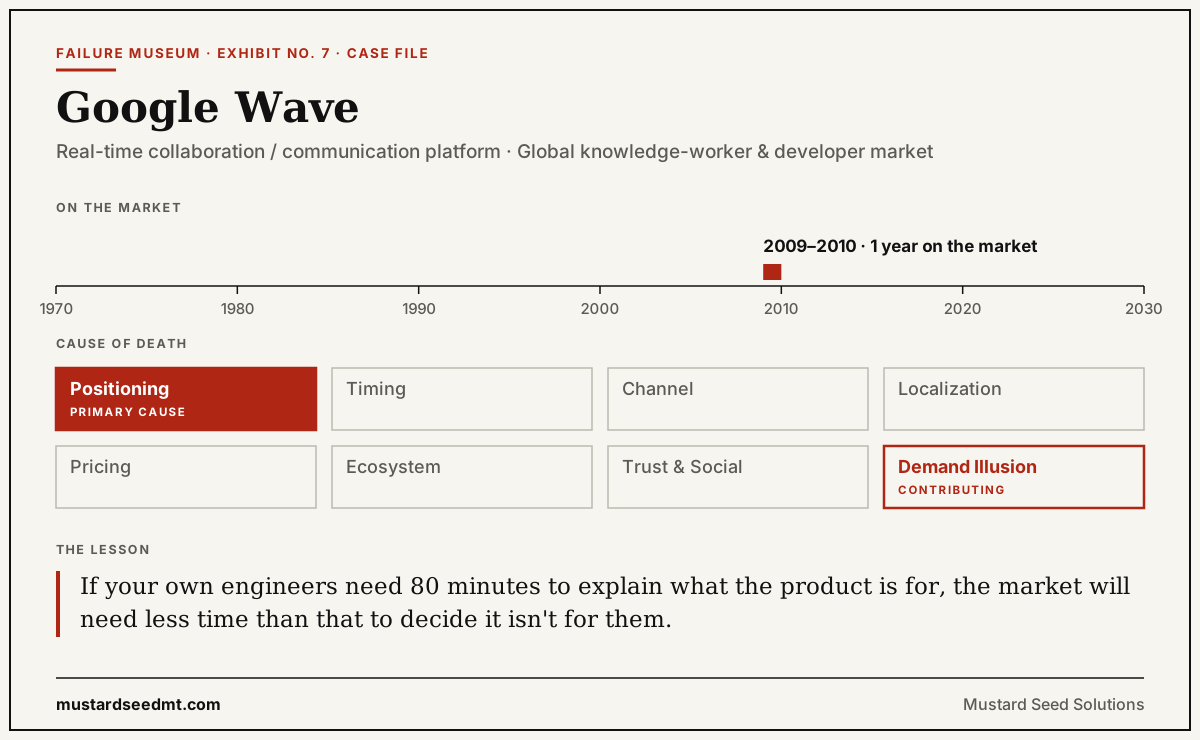
Google's own developer-conference demo, while technically dazzling, spent most of its 80 minutes explaining the product's mechanics rather than demonstrating a clear, everyday use case — a structure that, in retrospect, foreshadowed the product's core problem.
Google Wave: Why It Failed
Google Wave failed because it was positioned and explained as a technical achievement (real-time collaborative editing across a unified communication object) rather than as a solution to a specific problem users already recognized, leaving both the invited early users and the broader market unable to say what job the product was for or why they should replace email, chat, or docs with it.
The record suggests the product's own famous ambiguity was baked in from the initial pitch: internally and externally, Wave was described by what it technically did (merge email, IM, wikis, and documents into one real-time object) rather than by what problem it solved better than the tools already doing each of those jobs separately. A tool trying to replace three familiar things at once needs to be dramatically better at the job each one already does, or it needs a genuinely new job none of them do — Wave never clearly established either.
Our read is that the initial invite scarcity actively worsened the positioning problem: intense pre-launch demand for invitations created an expectation of something transformative, and when actual users arrived to a confusing, hard-to-onboard interface with no obvious first task to complete, the gap between hype and first-use experience became the dominant story, the same dynamic later seen (at much larger scale) in the Quibi exhibit.
Demand illusion played a secondary role: strong developer and tech-press enthusiasm for the technical achievement was mistaken, internally, for evidence of a broad user need — but developers being impressed that something is possible is not the same as ordinary users having a job they need it to do.
What Survived
Google shut down Wave as a standalone product roughly a year after its full public launch, but the Operational Transformation technology underneath it — the hard part, technically — was folded directly into Google Docs' real-time collaborative editing, which today is one of the most widely used features in Google's entire product suite and a direct technical descendant of Wave.
Wave's broader concept (a unified, real-time collaborative object blending chat, documents, and structured content) reappeared piecemeal in the years after in products like Slack threads, Notion's collaborative blocks, and Figma's multiplayer editing — each solving a narrower, more clearly positioned version of the same underlying idea Wave tried to solve all at once.
Era: 2000s
Where It Ended Up: Shut down as a standalone product in 2010; core real-time collaborative-editing technology (Operational Transformation) lives on inside Google Docs and other collaboration tools
The Lesson
"If your own engineers need 80 minutes to explain what the product is for, the market will need less time than that to decide it isn't for them."