
The Promise
The Fire Phone was a technically ambitious device: a "Dynamic Perspective" 3D display using four front-facing cameras to track the user's head position and create a parallax effect, plus "Firefly," a real-time object- and text-recognition feature that could identify products, books, and barcodes through the camera and let the user buy them instantly on Amazon.
Amazon had real hardware credibility going in, from the commercially successful Kindle e-reader line, and real motivation: a Amazon-controlled smartphone would remove any dependency on Apple's or Google's app stores and put Amazon shopping one tap away from the home screen at all times.
The Entry
Launched in mid-2014 exclusively on AT&T at a premium price ($199 on contract, matching flagship iPhone and Samsung Galaxy pricing), the Fire Phone entered a mature smartphone market where buyers already had strong incumbents and were evaluating photos, apps, and everyday usability — not primarily shopping convenience.
The phone's marketing and defining features (Dynamic Perspective, Firefly) were almost entirely about novel interaction gimmicks and shopping convenience, rather than about the core smartphone experience (camera quality, app selection, everyday usability) that buyers actually weighed a $650 unlocked purchase against.
Amazon Fire Phone: Why It Failed
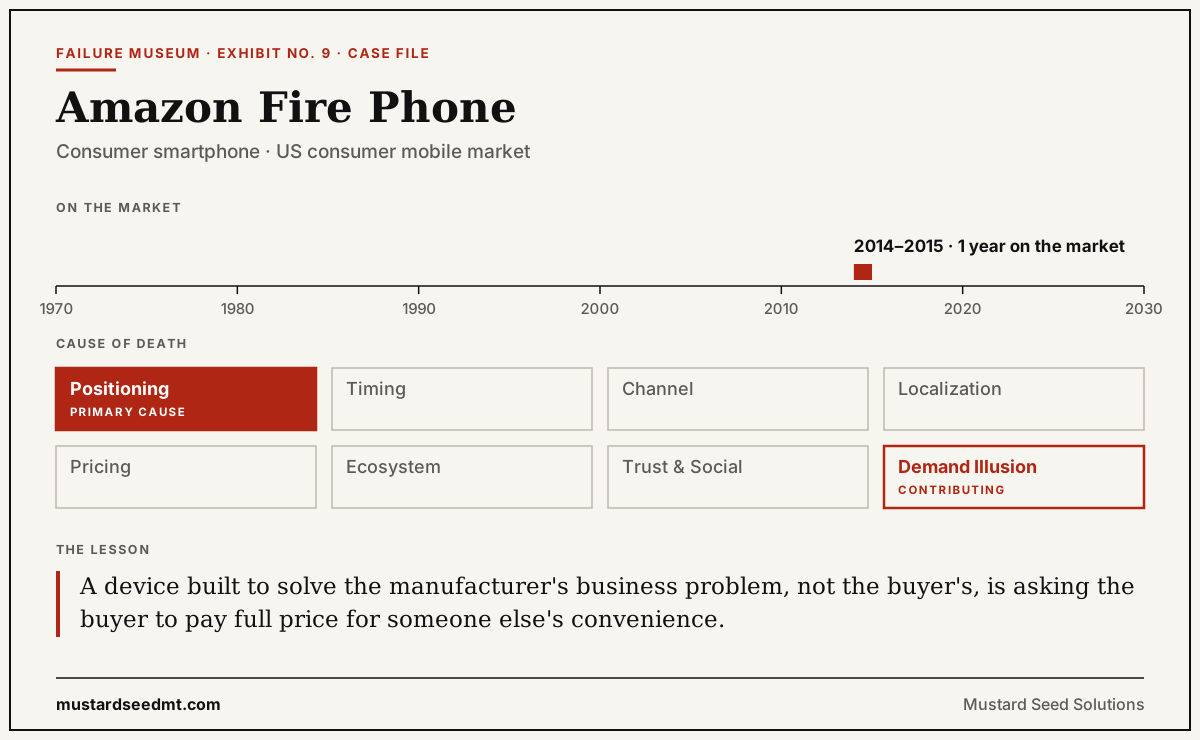
The Fire Phone failed because it was built and marketed to solve Amazon's problem (getting a dedicated shopping device into customers' pockets) rather than a problem smartphone buyers actually had, and priced at flagship levels against iPhone and Galaxy despite lacking their core strengths (app ecosystem, camera, everyday polish).
The record suggests the product's defining features reveal whose problem it was actually solving: Dynamic Perspective and Firefly are both, at their core, mechanisms for driving Amazon purchases and engagement, not general-purpose smartphone improvements — a strategy that made sense for Amazon's business model but gave an ordinary buyer, comparing phones on camera quality and app availability, little reason to choose it.
Our read is that the app-ecosystem gap made the positioning problem fatal rather than survivable: the Fire Phone ran Amazon's Fire OS (an Android fork without Google Play access), meaning it launched with a materially smaller app catalog than a mainstream Android phone or iPhone — a genuine ecosystem-failure element layered under the positioning problem, similar in shape to the exhibit on Windows Phone.
Pricing compounded both problems: at full flagship price with a smaller app ecosystem and features most buyers didn't ask for, the Fire Phone asked customers to pay an iPhone-level price for a phone that was, on the dimensions non-Amazon-obsessed buyers actually cared about, a step down from their existing options.
What Survived
Amazon wrote down roughly $170 million in unsold Fire Phone inventory within months of launch and never released a second-generation device, but the underlying computer-vision and object-recognition technology from Firefly was folded into later Amazon products, including visual search inside the Amazon Shopping app.
The Dynamic Perspective 3D-tracking hardware team's work informed Amazon's subsequent device efforts, and the broader lesson — that Amazon's hardware strength is in narrow, single-purpose devices (Kindle, Echo, Fire TV) rather than general-purpose smartphones competing directly with Apple and Samsung — visibly shaped Amazon's device strategy in the years after, with no second attempt at a general smartphone since.
Era: 2010s
Where It Ended Up: Discontinued after roughly one year on sale; the hardware team's computer-vision and 3D-display work was reabsorbed into other Amazon device projects
The Lesson
"A device built to solve the manufacturer's business problem, not the buyer's, is asking the buyer to pay full price for someone else's convenience."
Sources
Related Exhibits
Segway (Personal Transporter)
It was supposed to redesign the city. It became the official vehicle of mall security.
Google Wave
Nobody could explain what it was — including the people who built it.
Essential Phone
A premium phone from a celebrated founder, with no carrier and no brand trust behind it.