The Promise
The Segway's self-balancing gyroscopic technology was, and remains, a genuinely impressive engineering feat — a two-wheeled platform that reads the rider's weight shifts and balances itself using motors and sensors faster than a human could consciously manage. It was smooth, quiet, and unlike anything on the market when it was unveiled.
Inventor Dean Kamen and early boosters (including Steve Jobs and Jeff Bezos, in accounts from the period) reportedly believed it could be as transformative as the automobile — redesigning how cities were built around pedestrian-scale personal transport, replacing short car trips, and reshaping urban infrastructure itself.
The Entry
The launch, in December 2001, was preceded by nearly two years of secretive hype under the code name "Ginger," fueled by leaked claims that it would "change the way the world works." That framing set an expectation of civilizational significance that no single consumer product could satisfy on delivery.
It launched at $4,995 — priced like a used car, not a scooter — aimed initially at consumers with no clear regulatory framework yet for where it could legally be ridden (sidewalk? road? bike lane?), a question individual US cities took years to sort out inconsistently.
Segway (Personal Transporter): Why It Failed
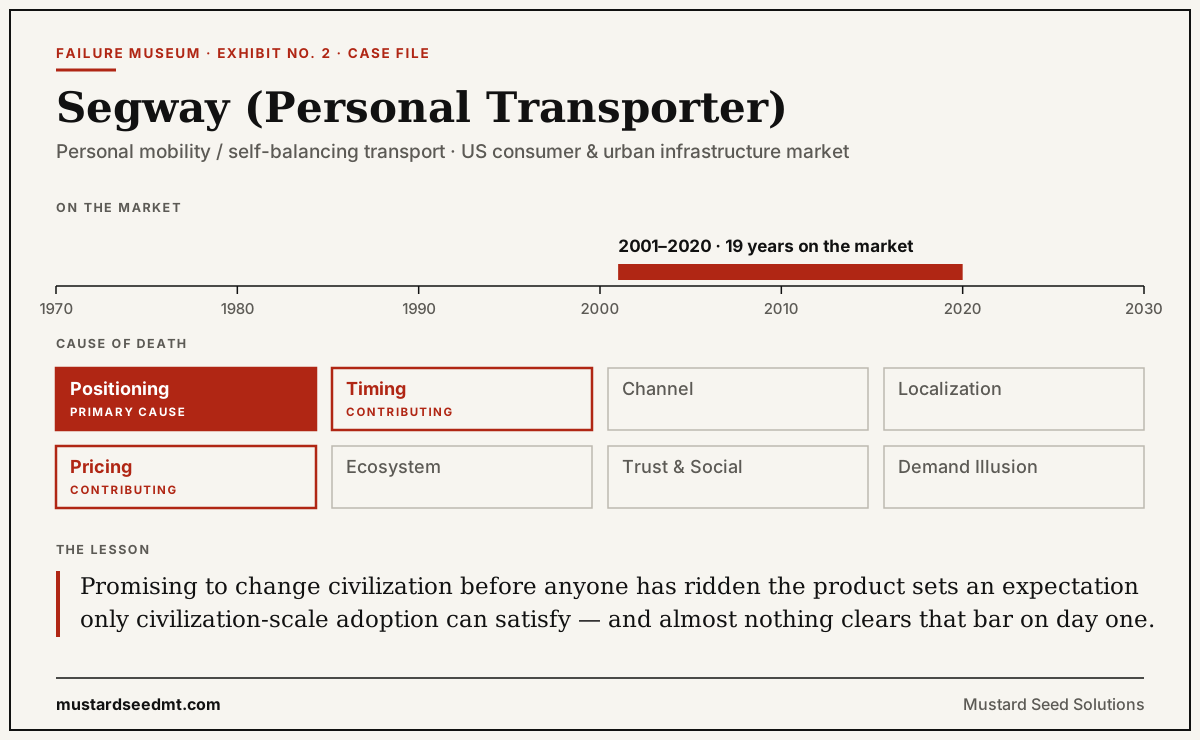
The Segway failed primarily because its positioning promised a transformation of cities and transportation, while the actual product that shipped was an expensive novelty scooter with no resolved answer for where it was legal to ride or who, specifically, needed one enough to pay $5,000.
Our read is that the two years of pre-launch secrecy actively worked against the product: expectation-setting language ("change the way the world works") primed press and public alike to judge the actual device against a claim of civilizational significance, rather than against its real, more modest value as a novel way to get around a corporate campus or a warehouse. When the reveal landed as "an expensive scooter," the gap between promise and delivery became the story, crowding out any discussion of what it was actually good at.
The pricing and positioning failures reinforced each other: at $4,995, a Segway was priced for someone replacing a car, but its actual use case — short-distance personal transport, mostly on sidewalks — competed with a bicycle costing a fraction as much, or simply walking. Nothing about the buying decision made $5,000 rational for the trip lengths and terrain the product was actually good at.
Regulatory ambiguity compounded the problem in a way the company could not fully control: without a settled legal answer for sidewalks versus roads versus bike lanes across different US cities, consumers faced real uncertainty about whether they could legally use the thing they'd just bought outside private property, which further narrowed the addressable buyer to institutions (campuses, warehouses, police departments) rather than the mass consumer market the launch narrative had promised.
What Survived
The Segway found a genuine, if far more modest, niche in tourism (Segway city tours became a fixture in many downtown areas), mall and campus security patrol, warehouse logistics, and industrial settings — precisely the bounded, private-property use cases where the regulatory ambiguity didn't apply and the price could be justified as institutional equipment rather than a personal purchase.
The self-balancing technology's real legacy is arguably the entire personal electric mobility category it indirectly seeded: hoverboards, electric scooters (Bird, Lime), and one-wheel personal transporters all descend conceptually from the balancing and motor-control problems Segway solved first, even though nearly all of that later category succeeded at a fraction of the Segway's price point.
Era: 2000s
Where It Ended Up: Production ended 2020; brand and IP now owned by Chinese manufacturer Ninebot
The Lesson
"Promising to change civilization before anyone has ridden the product sets an expectation only civilization-scale adoption can satisfy — and almost nothing clears that bar on day one."