
The Promise
The Zune, by most contemporary and retrospective reviews, was a genuinely well-built portable media player: a larger, sharper screen than the iPod of its era, a subscription-based "Zune Pass" model years before Spotify normalized music subscriptions, and social features (wireless song-sharing between devices) that were ahead of their time.
Microsoft brought real engineering and marketing resources to the launch in November 2006, intending to establish a genuine second option in portable media players against Apple's dominant iPod.
The Entry
By the time Zune launched in late 2006, the iPod had already been on the market for five years, had sold tens of millions of units, and had become the default cultural association with "portable music player" — complete with an enormous accessory ecosystem (car integrations, docks, cases) built specifically around iPod's connector and form factor.
Zune entered as a technically comparable or superior alternative, but the market had already made its choice and built years of ecosystem lock-in (iTunes libraries, accessories, habit) around the incumbent — a timing gap Zune's product quality alone could not close.
Microsoft Zune: Why It Failed
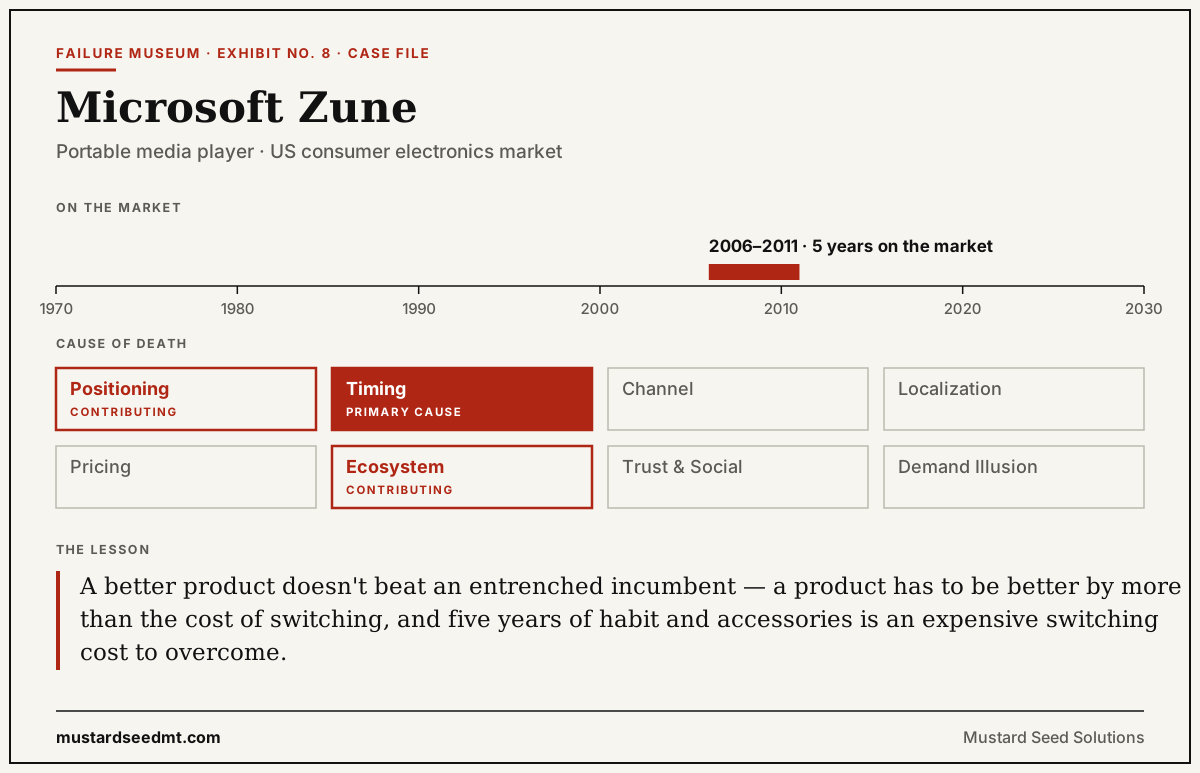
The Zune failed primarily because it entered the portable media player market five years after the iPod had already established itself as the default choice, with an accessory and software ecosystem built specifically around it — meaning Zune had to be not just competitive but dramatically better to justify switching costs that, for most consumers, weren't worth paying.
The record suggests being late to a category with strong network and habit effects requires being obviously, not marginally, better — and reviews of the era generally described Zune as comparably good rather than clearly superior. "As good as the iPod" is not a strong enough claim to move a market that has already sunk cost into the incumbent's accessories and libraries.
Our read is that Microsoft's own ecosystem strategy compounded the timing problem: Zune's software and marketplace were disconnected from Microsoft's broader Windows and Xbox properties in the early years, meaning Zune had to build its own ecosystem gravity from zero while iPod's was already backed by the enormous, unrelated success of iTunes.
The subscription-based Zune Pass model, while genuinely ahead of its time, arrived years before broadband penetration and consumer comfort with "renting" rather than owning music was ready — a secondary timing failure layered on top of the primary one, similar in shape to the Iridium exhibit's decade-early satellite phone bet.
What Survived
The Zune Pass subscription model — pay monthly, stream and download unlimited music — is now recognized as a genuine precursor to Spotify (founded 2006, same year as Zune's launch, but not reaching the US until 2011) and the entire streaming-subscription category that now dominates recorded music consumption.
Microsoft's later Xbox Music, Groove Music, and ultimately its investment in Spotify integration on Xbox all trace conceptual lineage back to the subscription and social-sharing ideas Zune introduced years before the market was ready to reward them.
Era: 2000s
Where It Ended Up: Discontinued in 2011; software and services (Zune Pass, social features) partly folded into Xbox Music and later Groove Music
The Lesson
"A better product doesn't beat an entrenched incumbent — a product has to be better by more than the cost of switching, and five years of habit and accessories is an expensive switching cost to overcome."
Sources
Related Exhibits
Webvan
Grocery delivery for a world that wasn't online yet, built at a scale that assumed it already was.
Sony Aibo (1st Generation)
A robot companion for a home the market wasn't living in yet.
Nintendo Virtual Boy
Virtual reality, twenty years early, in one color, bolted to a tabletop tripod.