
Your First Hire: When and How to Delegate
The right time for your first hire isn't when you're merely busy — solopreneurs are always busy. It's when your own hourly output on low-value tasks is worth less than what a VA or contractor would charge to take them off your plate. This guide covers that real signal, why delegating feels harder than it should, VA vs. contractor vs. employee tradeoffs, and a first-hire framework that actually works.
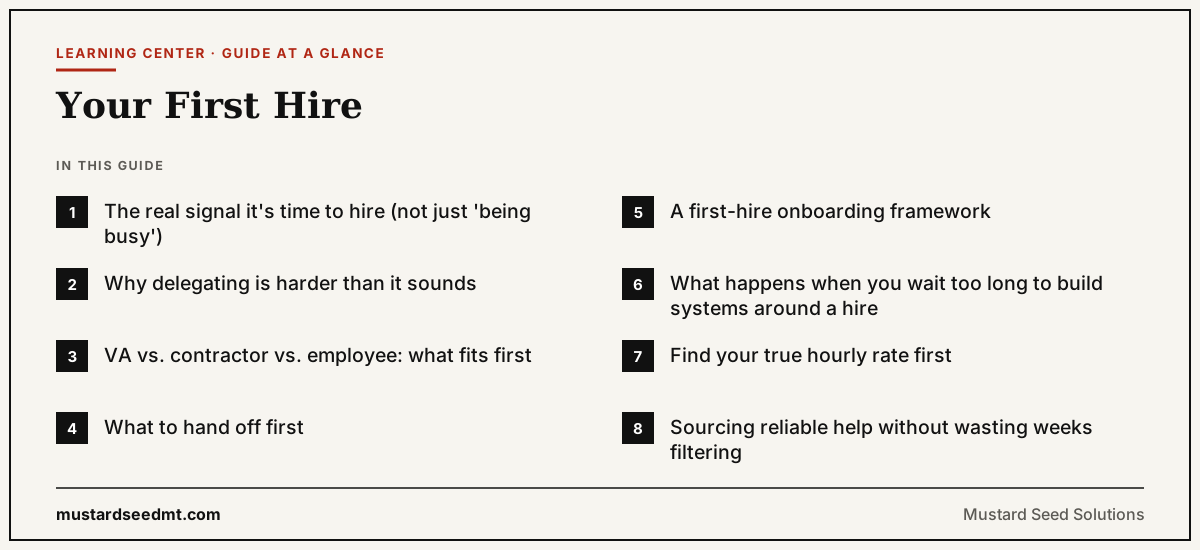
Most solopreneurs don't delay their first hire because they can't afford it — the research shows the delay is usually psychological, not financial. This guide covers both sides: the practical signal that it's time, and the identity hurdle that keeps people from acting on it long after they should have.
1. The real signal it's time to hire (not just 'being busy')
Busy is the default state for a solopreneur, which makes it a useless trigger for hiring — by that standard, everyone should have hired months ago. The signal that actually holds up: the tasks eating your week are worth less per hour than what it would cost to hand them off. One founder described 16-hour days consumed largely by an email backlog, with progress on the actual business barely moving. A criminal defense lawyer put off hiring for months while a stack of paperwork slowly buried the work he was actually trained and paid to do.
- Being 'too busy' is constant for solopreneurs and doesn't, by itself, mean it's time to hire
- The real question: is your hourly value on this task lower than what it costs to delegate it?
- Recurring admin, inbox management, and paperwork are the most common tipping points in practice
- If the backlog keeps growing regardless of how many hours you add, more of your own hours isn't the fix
2. Why delegating is harder than it sounds
One founder described losing sleep over the hiring decision for months, even while comfortably able to afford it and visibly buried in busywork. Once he finally hired, the relief was immediate — the backlog of paperwork was gone and he spent the whole next day doing the work he'd actually built the business to do — but he admitted he didn't know why he'd put it off for so long. That gap between the obvious upside and the actual delay is common: solopreneurs often build an identity around doing everything themselves, and handing off a task can feel like giving up part of that identity, not just freeing up time.
- Delay often has nothing to do with affordability — it's a psychological hurdle, not a financial one
- The 'lean and mean, no employees' identity can quietly become a reason to avoid hiring past the point it makes sense
- The relief after finally delegating is consistently described as immediate and larger than expected
- One business owner reframed it well: hiring and delegating is buying back your freedom, not losing control of the business
3. VA vs. contractor vs. employee: what fits first
A virtual assistant or contractor is the lower-commitment starting point for most solopreneurs: no payroll overhead, easy to scale up or down, well suited to defined, recurring tasks like inbox triage, scheduling, or bookkeeping cleanup. An employee is a bigger step — more cost and more commitment, but appropriate once a function is core to the business, ongoing, and needs real oversight or growth over time, as one long-tenured hire described in the research: reliable, dependable, and kept on for years. Finding reliable freelance help is itself a real friction point — several people in the research found general marketplaces like Fiverr and Upwork noisy and inconsistent, with referrals and niche communities producing better long-term fits. There's no rule that says you can't start with a contractor and convert them to an employee later, once the working relationship has already proven itself.
- VA or contractor first for anything defined, recurring, and not core to your specific expertise
- Employee once a function needs ongoing oversight, training, or growth — not just task completion
- General freelance marketplaces work, but expect to filter through a lot of noise; referrals and niche communities perform better for long-term fits
- A short trial period works for either arrangement and de-risks the commitment on both sides
4. What to hand off first
The pattern in the research is consistent: the first things solopreneurs delegate are the tasks they actively dislike doing and that don't require their specific expertise — not the most interesting work, the most draining and lowest-leverage work. One founder specifically named admin tasks as what he'd always hated, and hiring a VA to handle them was, in his words, a game-changer that freed him to focus on what he was actually good at. The lawyer's first hire went straight after the paperwork pile, not client work.
- Admin and paperwork are the single most common first delegation across the research
- Inbox and calendar management often quietly consume more hours than solopreneurs realize until they're tracked
- Anything repeatable and well-documented is a better first delegation than anything judgment-heavy
- Delegate what you dislike and that isn't your differentiator — not necessarily what takes the most time
5. A first-hire onboarding framework
Start with one narrow, well-defined role rather than a vague 'help me with everything' hire — it's easier to evaluate and easier for the new hire to succeed at. Document the process before handing it off, even roughly; you can't delegate what only exists in your head. One commenter's approach to a new part-time hire: set clear hours up front, reassess formally at one month, then again at three months, treating even a 'wasted' first month as useful information rather than a failure. Whoever you hire, expect and want them to be assertive and to grow — one widely-discussed comment pushed back hard on the idea of wanting a passive, uncomplaining hire, arguing that a good employee should have a spine, not just compliance. Another commenter framed the boss's actual job simply: help the person you hired grow into something better, rather than trying to keep them small and easy to manage.
- Pick one narrow role for the first hire — not a catch-all assistant for everything at once
- Write down the process, even roughly, before you hand it off; an undocumented process can't be delegated well
- Set a short, explicit trial period with a real reassessment date, not an open-ended 'let's see'
- Treat your first hire as someone to help grow, not someone to keep compliant and small
What happens when you wait too long to build systems around a hire
One founder's dev shop went from a simple goal — make $5,000 a month to cover bills — to crossing $250,000 in a single year, with no team and no systems in place while the growth happened. He tried the commonly recommended approach of building in public: sharing updates, numbers, and lessons publicly while simultaneously fielding client calls, onboarding, and delivery alone. The combination pushed him to the edge, and he disappeared from public view for eight months to actually fix the business — hiring a small team, setting up an LLC, and putting basic systems in place for the first time. His own conclusion afterward was blunt: growing fast without systems is brutal, and the fix wasn't working more hours, it was finally building the structure a hire needs to succeed.
Contrast that with the criminal defense lawyer who hired his first employee after months of hesitation, purely to clear an admin backlog. The difference wasn't the size of either business — it was timing. The lawyer hired before the backlog became unmanageable and got an immediate, clean win. The agency founder hired only after growth had already outpaced what one person could sustainably run, and paid for the delay in burnout before the fix landed. The signal was available to both long before they acted on it; the cost of waiting is what differed.
Your delegation signal, in one number
Find your true hourly rate first
If your true hourly rate — what you actually earn per hour once every non-billable task is counted — is lower than what a VA or contractor would charge for that same task, that's your delegation signal. Run the numbers before you decide.
Calculate Your True Hourly RateSourcing reliable help without wasting weeks filtering
Finding the first hire is its own obstacle, separate from deciding to hire at all. One founder's experience trying to source ongoing help was typical: starting with Fiverr and Upwork because "that's what everyone recommends," then finding it genuinely hit-or-miss — a lot of time lost filtering low-quality profiles and overpromising applicants before finding anyone reliable. The responses that got the most agreement pointed the same direction: stop treating general marketplaces as the main source, and lean on referrals and niche communities specific to your industry instead. Once you find one good person, the advice went, ask who they know — good people tend to know other good people, and that compounds over time in a way cold marketplace searches don't.
It's also worth knowing the marketplaces themselves carry real platform risk once you do find someone good. One experienced freelancer described losing their top-rated status after a single difficult client dispute — even with support agreeing the dispute was unfair, the negative feedback stuck by policy, quietly hurting their visibility to future clients. The practical takeaway for a solopreneur hiring through a marketplace: a strong profile today isn't a guarantee of the same visibility next month, which is one more reason a direct relationship, once you've found someone reliable, is worth protecting outside the platform that introduced you.
The reframe that helps most: hiring isn't giving up control of your business — it's buying back your own time so you can spend it on the parts of the business only you can do. The solopreneurs in the research who delayed longest weren't protecting quality; they were protecting an identity.
A quick gut check before you commit
Before posting a job ad or messaging a freelancer, it's worth answering three questions honestly, in this order. First: is the task actually recurring, or a one-time project that doesn't justify an ongoing relationship? Second: is it documented well enough, even roughly, that someone else could follow it without you sitting next to them the first week? Third: is your own time on this task genuinely worth more spent elsewhere — not in theory, but based on what you actually earn per hour once every non-billable task is counted. The founders in the research who delegated successfully could answer all three clearly before they hired. The ones who struggled afterward usually skipped straight to posting the job ad.
Related resources
Frequently Asked Questions
How do I know it's time to hire my first employee?
Not simply when you're busy — solopreneurs are busy by default. The clearer signal is when your own hourly value on a task is worth less than what it would cost to hand off, and the backlog keeps growing no matter how many hours you add. Recurring admin and paperwork are the most common tipping points in practice.
Should my first hire be a VA, a contractor, or an employee?
For most solopreneurs, a VA or contractor is the right starting point — lower commitment, no payroll overhead, and well suited to defined, recurring tasks. An employee makes sense once a function is core to the business, ongoing, and needs real oversight or growth, not just task completion.
Why is delegating so hard for solopreneurs, even when they can afford help?
It's often psychological, not financial. One founder described losing sleep over the decision for months despite clearly being able to afford it and visibly overwhelmed by the task backlog. A 'lean and mean, I do it all myself' identity can make handing off work feel like a loss, even when it obviously isn't.
What tasks should a solopreneur delegate first?
The most consistent first delegation in the research is admin and paperwork — the tasks people actively dislike and that don't require their specific expertise. Inbox and calendar management are close behind, often eating more hours than realized until they're tracked.
How do I find a reliable freelancer or VA?
General marketplaces like Fiverr and Upwork can work but tend to be noisy, requiring real filtering to find someone dependable. Referrals from people you already trust and niche communities specific to your industry consistently produced better long-term fits in the research than cold marketplace searches.
What should a first-hire trial period look like?
Set clear hours and expectations up front, then reassess formally at a defined point — one month is a common first checkpoint, with a second review at three months. Treat even a rough first month as useful information about fit rather than a verdict on the hire.
Is hiring a VA worth it if I can technically do the task myself?
That's exactly the point where delegation pays off. If your true hourly rate on the task is below what a VA or contractor would charge to do it, handing it off is a financial win even though you're personally capable of doing it — the goal is freeing your highest-value hours, not proving you can do everything.
How do I write an SOP before I've ever delegated anything?
Write down the steps roughly as you actually do the task, even as a simple checklist or a short screen recording — perfection isn't required, a usable starting point is. The founders in the research who delegated successfully documented the process first; an undocumented process is very hard to hand off cleanly.
Marketing is usually the first thing worth delegating
Hand off the hat that isn't your strength
For most solopreneurs, marketing is exactly the kind of recurring, non-core work worth delegating first. Mustard Seed's Solo Business Marketing advisory gives you a direction and does the work, built specifically for one-person companies.
Book a consultation