Solopreneur Burnout, Isolation, and Mental Health
Solopreneur burnout comes from doing a job's worth of work without a job's built-in supports — no colleague to notice you're struggling, no manager to force a day off, no scheduled boundary on when work stops. Isolation compounds it: going it alone isn't just unpleasant, it removes the outside perspective that normally catches a bad decision before it compounds. Peer contact, fixed routines, and real boundaries are the countermeasures that actually held up.
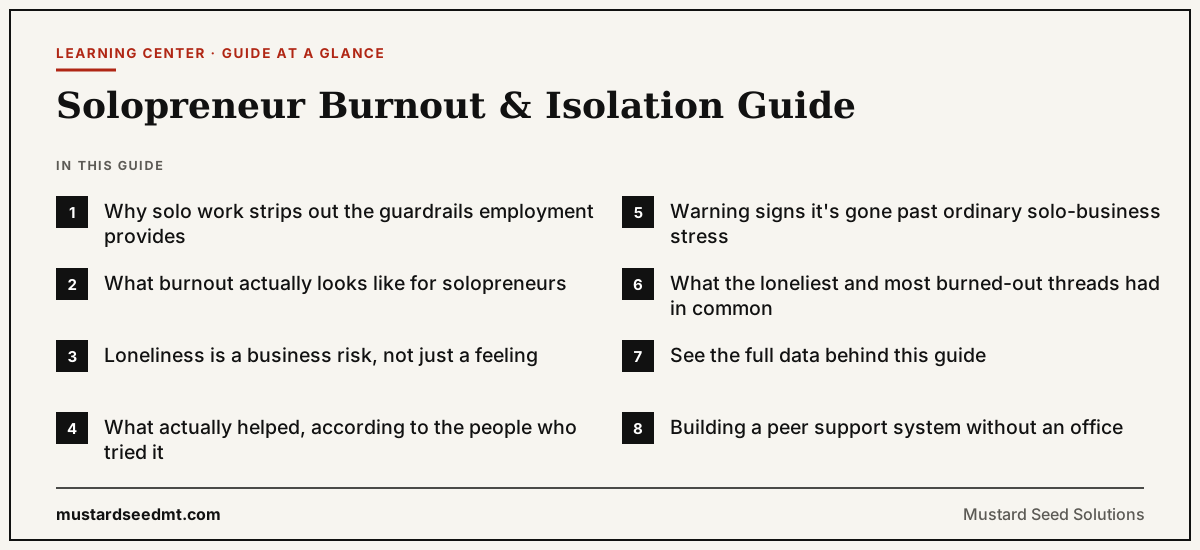
This guide draws on real founder discussions — the honest kind, not the highlight reels — to cover why solo work removes structural supports most people don't realize they had, what burnout and isolation actually look like in practice (not the dramatic version, the ordinary one), and what specifically helped the people who worked through it. If you're in the middle of this right now, you are not the only one; the research behind this site exists partly because of how often this exact topic came up.
1. Why solo work strips out the guardrails employment provides
A job comes with structure you stop noticing until it's gone: a colleague who clocks that you look wiped out, a manager who tells you to take the day, HR policies that put a floor under bad weeks, sick leave you don't have to invent yourself. Solopreneurs lose all of it at once, and the loss is silent — there's no exit interview for the support system, it just isn't there on day one.
- No colleague notices when you're underwater — there's no one else in the room
- No manager forces a day off; the only person who could is the one who's burned out
- No HR floor: sick time, mental health days, and PTO all have to be self-granted
- The business doesn't have an 'off' switch because the business is you
2. What burnout actually looks like for solopreneurs
The specific hours vary, but the pattern in founder discussions is consistent: one described 16-hour days spent mostly answering email and still feeling behind; another described 60-hour weeks stacked on top of childcare and eldercare with no time left to exercise; another sustained 12-hour days for a decade before closing the business. The number matters less than the direction — hours keep climbing because there's no one else to hand the work to, and nothing external forces a stop.
- Working weekends has quietly become the default, not the exception
- You catch yourself imagining relief at the thought of a normal job again
- You're still thinking about the business away from the desk — one long-time owner described never fully switching off, even after 20 years
- Physical basics (sleep, food, exercise) are the first things to slip, and the last things to get fixed
- You're running on stimulants and adrenaline rather than rest
3. Loneliness is a business risk, not just a feeling
One of the most upvoted posts in the research put it plainly: running a business is lonely, because friends and family support you without getting it, former coworkers don't understand why you left a stable paycheck, and when things go wrong at 11pm it's just you and the books. That isolation isn't only unpleasant — it's operationally dangerous. A bad decision made alone has no one to catch it before it compounds. A warning sign that would get flagged by a colleague instead goes unnoticed for weeks. One commenter, 18 years into running a business, called it simply lonely at the top.
- Decisions go unchallenged when nobody else is close enough to see them being made
- Problems fester in silence instead of surfacing early, because there's no one to vent to or sanity-check with
- Isolation removes the outside perspective that normally catches small mistakes before they're expensive ones
- A steady diet of other founders' highlight-reel posts (inflated overnight-MRR flexes) makes the isolation feel worse, not better — several people in the research explicitly asked for fewer performative wins and more honest conversation
4. What actually helped, according to the people who tried it
The countermeasures that showed up repeatedly weren't wellness-brand advice — they were specific, boring, and mechanical. One founder who went from broke to six-figure contracts described treating his energy like infrastructure: fixing sleep one variable at a time (a sunrise alarm, phone out of the bedroom), building exercise up gradually rather than overhauling everything at once, and auditing where his attention went — cutting short-form video specifically because it was fragmenting his focus without him noticing. On the people side, he pulled back from relationships that led nowhere and invested in one real mentor relationship, which he said was worth more than every course he'd bought combined. Someone drowning in a 16-hour-day email backlog found that simply tracking where the hours went for three days, then batching communication into two fixed blocks instead of answering in real time, cut the chaos dramatically.
- Fix one physical routine at a time (sleep, then food, then movement) instead of trying to overhaul everything at once
- Build one real relationship with someone who understands the pressure — a single mentor or peer, not a whole network, is often the highest-leverage move
- Batch communication into scheduled blocks instead of staying reachable all day; most 'urgent' messages can wait a few hours
- Audit where your attention actually goes for a few days before deciding what to cut
- Actively seek out other business owners to vent to and compare notes with — several people in the research said this was the single thing that broke the isolation
5. Warning signs it's gone past ordinary solo-business stress
Some level of stress is baked into running something alone. But a few patterns in the research went further than ordinary strain: panic attacks tied directly to the work (one founder described them happening in a bathroom before she eventually walked away from a high-paying job that was causing them), a self-employed founder of 37 years describing his mental health flatly as a disaster, and people who closed a business describing real anxiety and depression afterward, not just disappointment. If any of that sounds familiar, the next right step isn't a productivity system — it's a licensed therapist. This guide can help with the structural and business-side causes; it isn't a substitute for professional mental health care, and nothing here should be read as medical advice.
- Persistent dread about ordinary work tasks, not just the hard ones
- Panic attacks, chest tightness, or other physical symptoms tied to work
- Withdrawing entirely from friends and family, not just cutting back
- Using more work as the way to avoid feeling anything
- If this is where you are, talk to a licensed professional — that's the appropriate next step, not another routine change
What the loneliest and most burned-out threads had in common
Read enough of these discussions and a pattern emerges that has little to do with how well the business is doing. A software engineer who walked away from a well-paid, high-status job described panic attacks in the office bathroom before she ever made her first soap sale — the burnout came from the old job, not the new business, and by her own account she was happier making $47 in a day at a farmers market than she'd been in years at her desk. On the other end, a founder who scaled a clothing brand for a decade, working twelve-hour days the whole way, closed it and described feeling like "just a failure" — until the community's response reframed a decade of paying rent from an idea as an achievement most people never attempt, not a decade wasted. Neither story is really about revenue. Both are about how much of the emotional weight a solopreneur carries gets carried completely alone, simply because there's no one else on the org chart.
A third pattern shows up in people who acquired or scaled past the struggling stage entirely and still describe the same exhaustion. One owner who closed a multi-million dollar acquisition after running out of cash asked the community directly how others had worked through the anxiety and depression that followed — not how to raise more money, which is telling. Another, twenty years and twenty-two employees into a business, said bluntly that he still carries the weight of the world and rarely feels fully present, even as a father. Isolation and burnout in this research aren't stages you graduate out of by hitting a revenue number. They're a structural side effect of running something alone, and they show up at every size of business represented in the data.
You are not alone in this
See the full data behind this guide
Every pattern above came from a wider study of real founder discussions — 270 threads from r/Solopreneur and r/smallbusiness, ranked into the 50 challenges solopreneurs actually raise most. Burnout, loneliness, and mental health are among the highest-signal topics in the entire dataset. If it helps to see you're not the only one dealing with this, the full breakdown is worth a look.
See the 50 Biggest Solopreneur ChallengesBuilding a peer support system without an office
None of this requires a big network. The founders in the research who broke out of isolation did it with small, deliberate moves — not a community with thousands of members.
Start with one person
Find a single other business owner to talk to regularly — someone doing the work, not commenting from the sidelines. One real mentor relationship outperformed every paid course for the founder who tried it.
Make it recurring
A standing call or coffee, even monthly, beats an open-ended 'we should catch up sometime.' Recurring contact is what breaks the isolation loop; one-off venting doesn't.
Pick substance over hype
Several people in the research specifically asked for less performative posting and more honest conversation. Seek out spaces built around real numbers and real setbacks, not highlight reels.
Say the hard thing out loud
The posts that got the most genuine, useful responses weren't the wins — they were the plain admissions that this is lonely, or that a decision didn't work out. Silence is what lets problems fester.
A note on this guide: this covers the structural and business-side causes of solopreneur burnout and isolation — the things a schedule change, a peer relationship, or a boundary can actually fix. It is not medical advice and isn't a substitute for a licensed therapist. If the warning signs above sound like where you are right now, that's the next right call to make.
The version of this nobody posts about
Most of what's visible about solo business online is a highlight reel — a launch, a revenue milestone, a "quit my job and never looked back" post. The discussions this guide draws from are less polished: someone admitting the business feels lonely as hell, someone asking strangers how they got through the anxiety after a hard close, someone quietly relieved to go back to a regular paycheck and weekends after years of running something alone. None of that is a sign you're doing it wrong. It's closer to the actual median experience — just the part that rarely gets a highlight-reel post of its own.
Related resources
Frequently Asked Questions
Why do solopreneurs experience more burnout than employees?
Employment comes with built-in guardrails a solopreneur doesn't have: colleagues who notice fatigue, a manager who can order a day off, HR policies that set a floor on sick leave and PTO. When you work alone, all of that has to be self-generated, and it's easy to simply never get around to it. The research shows hours climbing steadily for exactly this reason — there's no external force telling anyone to stop.
Is entrepreneur loneliness really a business risk, or just an emotional issue?
Both, and the business risk is concrete. Isolation removes the person who would normally catch a bad decision before it compounds, or flag a warning sign early. Multiple founders in the research described problems festering in silence specifically because there was no one else close enough to the situation to notice.
What are the warning signs of solopreneur burnout?
Weekend work becoming the unquestioned default, catching yourself wishing for the relief of a normal job, being unable to switch off even away from the desk, and physical basics like sleep and exercise slipping first and getting fixed last are the patterns that showed up repeatedly. None of these are dramatic on their own, which is part of why they're missed.
How can a solopreneur build a support network without coworkers?
The people in the research who found this useful didn't build a large network — they built one or two real relationships with other business owners who understood the pressure, deliberately sought out, rather than left to chance. A single mentor relationship was described by one founder as worth more than every paid course combined.
Do successful solopreneurs still struggle with burnout and isolation?
Yes. Some of the clearest accounts in the research came from founders well past the struggling-to-survive stage — one owner 20 years and 22 employees in still described carrying the weight of the business constantly. Revenue solves the money problem, not the structural absence of colleagues, a manager, or scheduled time off.
What should a solopreneur do about genuine burnout, not just ordinary stress?
If it's gone past ordinary strain — panic attacks, persistent dread, pulling away entirely from the people in your life — the next step is a licensed mental health professional, not a new routine or productivity tool. This guide addresses the structural, business-side causes of burnout; it isn't a substitute for professional care.
Can peer groups or informal founder communities actually help with isolation?
The evidence points to quality over quantity. Deliberately finding other business owners to talk to — even just one — showed up repeatedly as the thing that broke the isolation, more than joining a large but shallow community. Several people specifically wanted less performative posting and more honest, substantive conversation.
Is it normal to consider going back to a full-time job after running a solo business?
It's common enough that it shows up clearly in the research. One founder who returned to full-time employment after seven years running a business described the relief as taking a 200-pound backpack off — and pointed out that a W-2 job with regular hours, a set paycheck, and weekends is a genuine trade-off, not a failure.
You don't have to carry every hat alone
One less function to run solo
Marketing is one of the hats burning solopreneurs out fastest — and one of the easiest to hand off. Mustard Seed's Solo Business Marketing advisory takes it off your plate so there's one less thing running on your own energy alone.
Book a consultation