
A chargeback can erase a job's entire profit in seconds — even when a solopreneur has photos, signed receipts, ID verification, and security footage proving the work was delivered — because card networks are built to protect the cardholder, not the merchant. Understanding that asymmetry, not just fighting harder, is what actually protects a one-person business.
A small auto glass shop took an over-$2,200 windshield replacement job for a new luxury car. The owner did everything a cautious business could reasonably do: matched the customer's photo ID to the card used, had him sign multiple receipts in person, recorded the VIN and temporary plate, and captured him on the shop's security video the entire time he was there. A month later, the customer disputed the charge with his bank. The chargeback pulled the money out of the shop's account with no advance notice — and when the owner submitted every piece of that evidence, it wasn't enough. The dispute process didn't accept in-person photos or video as valid proof for a transaction that had been paid through an online payment link.
That gap — between evidence that would obviously convince a person and evidence that satisfies a card network's rules — is one of the sharper examples of the power imbalance covered in Mustard Seed's platform risk research. A solopreneur can do the diligence right and still lose, because the rules were never written with a one-person shop's evidence in mind.
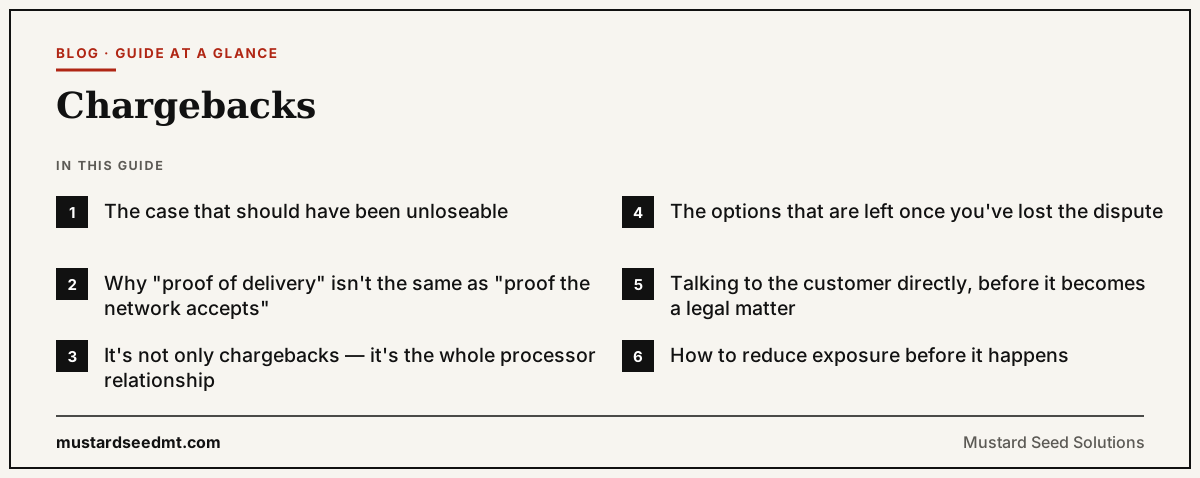
The case that should have been unloseable
Every safeguard the auto glass owner used is the kind of thing merchants are routinely told to do to protect themselves: verify ID against the card, get a signature, keep video, document the vehicle. None of it mattered once the transaction type — a payment link rather than a card physically swiped or inserted in front of the merchant — determined what evidence the dispute process would even look at.
The replies to that story from other business owners weren't surprised. One described losing $1,500 on a separate dispute despite proper documentation, and offered a blunt read on the process: the belief, shared by several commenters, is that reviewers don't meaningfully examine the evidence at all — they wait out the review window, collect the chargeback fee, and default to the customer by policy, especially once a transaction lacked a chip-based card presence.
Why "proof of delivery" isn't the same as "proof the network accepts"
This is the part that catches solopreneurs off guard: the review isn't asking "did this happen?" It's asking "does this specific transaction meet the documentation standard for this specific payment method?" A remote, card-not-present payment carries a different evidence bar than an in-person, chip-read transaction — and photos or video of the customer physically present, ironically, aren't part of that bar for a payment that was processed as if he weren't.
None of this makes the paperwork worthless. It makes it necessary for the next step, rather than sufficient for winning the chargeback itself.
It's not only chargebacks — it's the whole processor relationship
The same power imbalance shows up even without a disputed charge. One merchant ran a single, larger-than-usual $3,300 transaction through Stripe after their primary processor went down — and had the funds held for at least 120 days, with reports from other users that the hold can extend in 30-day increments indefinitely. The merchant described being unable to reach a live phone line, receiving templated email replies from different, unconnected support agents each time, with no ticket number tying the conversation together.
A separate small business had its Square account closed on a Saturday afternoon with zero notice and zero chargebacks in two years of processing — funds frozen for months, the owners describing a real risk of missing payroll and rent as a direct result. Square's only explanation was a boilerplate reference to sections of its own terms of service.
Neither of these situations involved a customer doing anything wrong. They're a reminder that a solopreneur's cash flow can be interrupted by the processor itself, not just by a bad-faith customer — which is exactly the kind of structural exposure the 50 Biggest Solopreneur Challenges research treats as its own category, separate from ordinary client-management problems.
The options that are left once you've lost the dispute
Losing a chargeback dispute isn't necessarily the end of the matter — it only removes that one payment method as a path to collection. Other business owners in the same situation described several remaining avenues, worth knowing before you need them:
- Small claims court, which several commenters described as a comparatively easy win once there's a signed receipt and documented work — the chargeback doesn't erase the underlying debt.
- A mechanic's or service lien, where the type of work supports one, as leverage tied to the asset itself.
- A police report treating the dispute as fraud or theft of services, particularly when the customer stops responding entirely.
- Reporting the uncollectible amount to the IRS as taxable income to the non-paying party, a route one commenter described as a longer-term consequence for the customer even without direct repayment.
None of these are fast. All of them exist because the chargeback decision and the underlying legal debt are two separate things — a lesson most solopreneurs only learn the first time it happens to them.
Talking to the customer directly, before it becomes a legal matter
Before escalating to court or a police report, several commenters on the auto glass owner's story suggested a more direct step first: contacting the customer plainly, explaining that the work is owed regardless of the chargeback outcome, and that continuing to refuse payment for completed work can constitute fraud rather than a simple billing dispute. In that case, the customer stopped answering his phone entirely, which was itself read by other business owners as confirmation the dispute had never been about a legitimate billing error.
Other merchants in similar threads described chargebacks as "normal these days" precisely because they're difficult for a business to win at the network level — but consistently added that the underlying debt remains valid and collectible through other means. That distinction is worth stating to a customer directly: losing the card dispute is not the same as the business having no legitimate claim to the money.
How to reduce exposure before it happens
- Reserve online payment links for smaller, lower-risk transactions, and use in-person, chip-based payment for large or first-time high-value jobs whenever the work allows it.
- Require a deposit or full prepayment on large or unusual orders — several merchants in similar disputes said afterward they wished they'd asked for payment further upfront before starting the work.
- Keep documentation anyway, even knowing it may not win a card-network dispute — it's exactly what wins in small claims court.
- Avoid concentrating all payment volume in a single processor where possible, so a hold or account closure doesn't freeze the entire business at once.
- Watch for the transaction sizes and patterns that tend to trigger processor reviews — a charge well above your account's normal average is the single most common trigger described by merchants who've been flagged.
None of this guarantees a chargeback never happens. It shifts the odds, and it makes sure that when one does, the business isn't also discovering these rules for the first time under pressure.