
Getting Paid: Contracts, Deposits, and Collections
Getting paid reliably starts before the invoice: a clear contract, a deposit or milestone structure, and a defined escalation path for late payment. When a client still won't pay, the realistic options are collections, small claims, or a write-off — and even a signed judgment doesn't guarantee the money actually arrives.
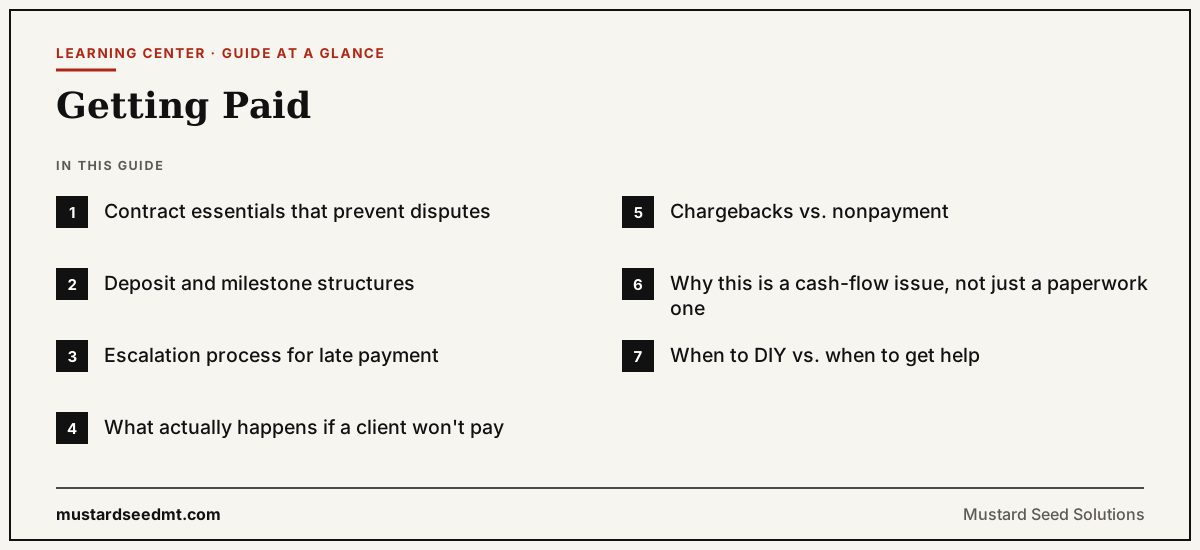
This guide is built from real disputes: a contractor's post about a $14,200 unpaid invoice that drew well over a thousand responses, and a detailed account of a chargeback that a payment processor refused to reverse in the business's favor. Both threads converge on the same honest conclusion — prevention beats collection, and collection beats hoping.
1. Contract essentials that prevent disputes
Almost every payment dispute traced back through these accounts starts the same way: something that was never written down clearly, so both sides genuinely believed they were right.
- A defined scope and a plain description of what counts as 'done' — one freelancer's dispute came down to a client genuinely believing the project 'isn't done until I say it's done'
- A stated revisions cap and an hourly rate for anything beyond it, agreed before the first request arrives, not negotiated mid-project
- A full payment schedule spelled out — deposit percentage, milestone amounts, and due dates — not just a total price
- A late-payment or finance-charge clause stated upfront; contractors who added this after being burned once describe it as something that should have been there from the start
- A written record of every change request, however small, so scope disputes can be resolved by looking at a timeline instead of two different memories
2. Deposit and milestone structures
The clearest pattern in the data: the bigger the final payment relative to the total project, the more exposed you are. Solo operators who got burned on a large final invoice consistently describe restructuring toward smaller, more frequent payments afterward.
- Require a deposit before starting — sized to your actual risk; a common local pattern for project-based work is 100% of materials plus a third of labor upfront
- Break larger engagements into milestone payments instead of one lump sum — one contractor's fix after a bad experience was splitting an 8-week job into 8 roughly equal weekly payments, so no single missed installment could sink the project financially
- Keep the final payment small relative to total project value — several accounts describe the final invoice being the one most likely to go unpaid
- Treat pushback on a reasonable deposit request as information, not just an inconvenience to smooth over
Free tool: Late Payment Calculator
See what a late invoice is actually costing you — and what a late fee should realistically be.
3. Escalation process for late payment
The solo operators who describe eventually getting paid on a stuck invoice almost all followed a similar, fairly unemotional sequence — and the ones who describe never even starting the process are the ones still owed the money months later.
- A fixed reminder cadence, not ad-hoc chasing — polite email, firmer email, a call, then a short written demand, on a schedule you decide in advance
- Know your state's lien and filing deadlines before you need them — contractors describe explicit windows (one example: filing a mechanics lien once an invoice passes 45 days past due, ahead of a 60-day state limit)
- A short, unemotional demand letter is frequently the point where a client actually starts paying — several accounts describe it working faster than expected once sent
- Decide your walk-away threshold (when you file a lien, sue, or write it off) in advance, so that decision isn't made in the heat of the moment two months in
4. What actually happens if a client won't pay
This is the part most advice skips: winning a judgment and actually collecting the money are two different problems, and the accounts here are candid about the gap between them.
- Winning in small claims court is described repeatedly as the easy part — 'good to win small claims, hard to collect' is close to a consensus view in these threads
- A small claims judgment is typically only enforceable in the state where you filed — collecting from an out-of-state client can mean re-filing there, an extra step many people don't anticipate
- A mechanics lien (for property-based work) is a real path to payment, but usually only when the property sells or refinances — not an immediate fix for this month's cash flow
- Collections agencies and contingency-fee lawyers reduce your upfront cost and improve the odds of recovery, but they take a meaningful cut of whatever comes back
- Formally writing off the debt — with your accountant, sometimes via an IRS Form 1099-C for larger amounts — is a realistic, unglamorous end point for a genuinely uncollectable invoice, not a personal failure
5. Chargebacks vs. nonpayment
A chargeback and a nonpayment dispute look similar from the outside but work very differently — one detailed account of a disputed $2,200 payment shows exactly where the confusion happens.
- A card-network chargeback decision is not a legal ruling on whether you're actually owed the money — several commenters were explicit that the underlying debt is still valid even after a lost chargeback
- Keep signed work orders, ID verification, and photos regardless of whether the payment processor accepts them as evidence — they're still useful for small claims court even when a chargeback review ignores them
- A reversed or lost chargeback is a strong signal to tighten how you take payment going forward (ID verification, in-person signature, deposits) rather than just accepting the loss and moving on
- Document everything at the time of service — evidence assembled after a dispute starts is consistently described as too late to change the processor's decision
The judgment reality check: the most repeated piece of hard-won wisdom in these accounts is blunt: it's good to win in small claims court, hard to actually collect. A judgment is a piece of paper that says you're right — not a mechanism that moves money into your account on its own.
Why this is a cash-flow issue, not just a paperwork one
One contractor described a $14,200 unpaid final invoice as the exact difference between being "fine this quarter" and not — and openly admitted the real barrier to pursuing it wasn't confidence in the case, it was the time and money required to chase money already owed. That gap between being owed money and having money is precisely why the deposit and milestone structures above matter more than any collections process: the best collections strategy is rarely needing one.
Getting paid reliably is one of the recurring themes in our research into the 50 biggest solopreneur challenges — and it compounds directly with the cash-flow and client-concentration risks covered in our cash flow management guide.
When to DIY vs. when to get help
Contract templates, deposit structures, and a reminder cadence are things you can put in place yourself this week. Where solo operators most often want outside help is earlier still — attracting and pricing for clients who don't need heavy collections processes in the first place.
Want fewer payment headaches to begin with? Mustard Seed's Solo Business Marketing advisory helps solopreneurs position and price their services to attract clients who pay on time and respect the agreement.
Solo Business MarketingFrequently Asked Questions
What should every freelance contract include?
A defined scope with a plain description of what 'done' means, a stated revisions cap with an hourly rate for anything beyond it, a full payment schedule (not just a total price), and a late-payment clause. Real disputes traced back through solo-business accounts almost always come down to one of these being missing or left informal rather than written down.
How much deposit should I ask for?
Enough to cover your actual out-of-pocket risk at minimum — a common pattern for project-based work is the full cost of materials plus roughly a third of labor upfront. For larger engagements, breaking the total into milestone payments (so no single installment is large enough to sink you if it's missed) is described repeatedly as safer than one big deposit plus one big final payment.
What do I do if a client won't pay an invoice?
Follow a fixed escalation cadence rather than chasing ad hoc: a polite reminder, a firmer one, a call, then a short written demand. If that doesn't work, know your options in advance — a mechanics lien for property-based work, small claims court, or a collections agency — and decide your walk-away point before you're two months into an unpaid invoice, not during it.
Is it worth suing a client in small claims court?
Often yes for the win itself — small claims is frequently described as straightforward to win, especially with a signed contract. The catch is collection: a judgment doesn't enforce itself, and 'good to win small claims, hard to collect' is a near-consensus view among people who've actually done it. Go in expecting to need a follow-up collection step, not expecting the judgment to produce a check automatically.
Can I actually collect a small claims judgment?
Sometimes, but it takes more than winning. A judgment is typically only directly enforceable in the state where you filed, so an out-of-state client may require re-filing there. Wage garnishment or bank levies are the usual next steps, but they depend on knowing where the person banks or works. Some business owners hire a collections lawyer who works on a percentage of what's actually recovered, which shifts the effort (and some of the risk) off you.
How do I handle a chargeback dispute?
Submit whatever evidence you have (signed work orders, ID verification, photos) even though processors sometimes reject it as insufficient — that same evidence still matters in small claims court. Remember that losing the chargeback only means the card network won't reverse that specific payment method; the underlying debt is still legally valid, and small claims court remains an option even after a lost chargeback.
Should I use milestone payments instead of one lump sum?
For anything beyond a small, short project, yes. The consistent pattern in real accounts is that a single large final payment is the one most likely to go unpaid. Splitting a project into several milestone payments — roughly matched to weeks of work or delivery stages — means a missed payment costs you a fraction of the project instead of all of it.
When should I just write off an unpaid invoice?
When the cost of pursuing it (your time, legal fees, the emotional toll) genuinely exceeds the realistic odds of collecting, given what you know about the client's assets and location. This is a normal, common outcome, not a moral failure — some business owners formally write off larger uncollectable debts with their accountant, sometimes using an IRS Form 1099-C, which converts the loss into a straightforward tax matter instead of an open-ended chase.
Related resources
Fewer disputes, faster payment
Want clients who pay on time in the first place?
Mustard Seed Solutions helps solopreneurs position, price, and screen for clients who respect contracts and pay on schedule — so collections stays the exception, not the routine.
Book a consultation