
For years, B2B marketers built digital discovery around search engines.
A buyer had a problem.
They searched for a keyword.
They opened several results.
They compared vendors.
They downloaded content.
They contacted sales.
AI assistants introduce a different behavior.
Instead of typing a short keyword, a buyer can ask a detailed question and receive a synthesized answer.
For marketers, this creates an important shift.
The buyer may begin forming an opinion before visiting a vendor website.
ChatGPT vs Traditional Search at a Glance
| Area | AI Assistant | Traditional Search |
|---|---|---|
| Query style | Conversational | Keyword driven |
| Output | Synthesized response | List of links |
| Comparison | Can combine multiple sources | Buyer compares manually |
| Follow up | Conversational | New searches |
| Website visit | May happen later | Usually central |
| Marketing priority | Authority, clarity, citation worthiness | Rankings, clicks, relevance |
| Optimization focus | GEO and AI visibility | SEO |
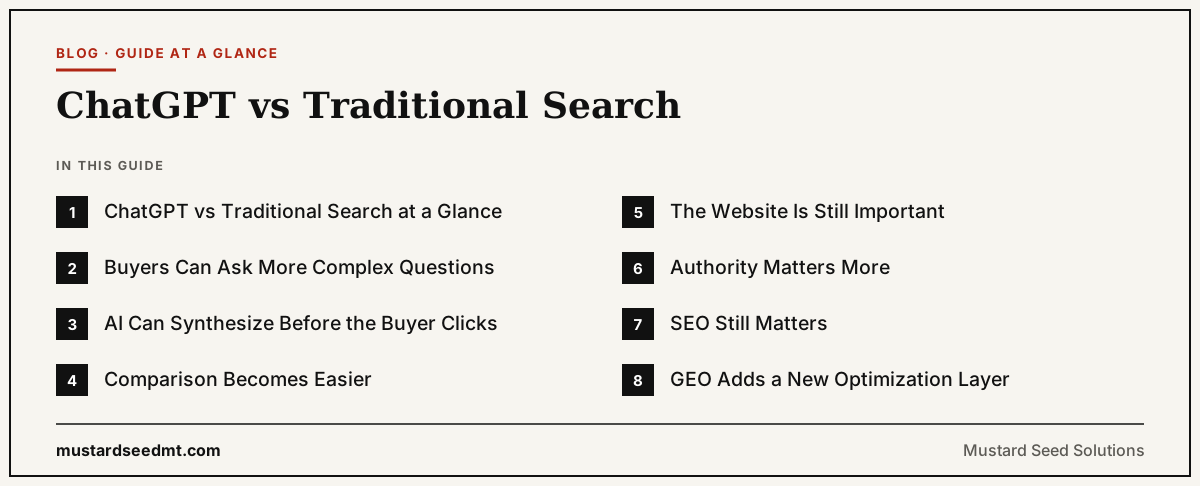
1. Buyers Can Ask More Complex Questions
Traditional search often encourages short queries.
For example:
best CRM for manufacturing
An AI assistant allows a more detailed question:
What CRM platforms are suitable for a mid sized manufacturing company with a long B2B sales cycle, European operations, and an existing Microsoft environment?
That changes the type of content brands need.
Generic pages may be less useful than detailed content that explains:
- 1Use cases
- 2Tradeoffs
- 3Comparisons
- 4Industry fit
- 5Implementation
- 6Pricing logic
- 7Limitations
2. AI Can Synthesize Before the Buyer Clicks
Traditional search gives buyers options.
AI can give buyers an interpretation.
That means a brand's influence may occur even if the buyer never clicks its website during the first research step.
This creates a new visibility challenge.
Marketers need to think about whether their brand and expertise can be understood and surfaced within AI generated answers, which makes visibility inside AI assistants a marketing objective in its own right.
3. Comparison Becomes Easier
B2B buyers often need to compare:
- 1Vendors
- 2Technologies
- 3Approaches
- 4Pricing models
- 5Implementation options
- 6Service providers
Traditional search requires opening multiple tabs and building that comparison manually.
AI can summarize the comparison directly.
That increases the value of publishing clear comparison content.
Pages such as:
- 1Product A vs Product B
- 2Agency vs in house team
- 3Fractional CMO vs full time CMO
- 4SEO vs GEO
- 5Platform comparison guides
can help search engines, AI systems, and buyers understand the differences.
4. The Website Is Still Important
AI search does not make the website irrelevant.
The website remains an important source of:
- 1Product information
- 2Positioning
- 3Customer evidence
- 4Pricing
- 5Case studies
- 6Expertise
- 7Contact information
The difference is that the website may not always be the first place a buyer encounters the brand.
That means consistency matters.
Your website, third party mentions, articles, directories, reviews, and expert content should reinforce the same company story.
5. Authority Matters More
If an AI system is synthesizing information from multiple sources, simply publishing large volumes of content may not be enough.
Brands need signals of credibility.
These may include:
- 1Original research
- 2Expert commentary
- 3Customer case studies
- 4Clear company information
- 5Third party mentions
- 6Useful definitions
- 7Strong comparison content
- 8Consistent expertise
In other words, content needs to be worth referencing.
6. SEO Still Matters
AI search does not eliminate traditional search.
B2B buyers will continue to use search engines, websites, communities, analyst research, social networks, peers, and sales conversations.
SEO remains important because it helps companies:
- 1Get discovered
- 2Build topical authority
- 3Answer buyer questions
- 4Earn links
- 5Improve website structure
- 6Create useful content
The stronger approach is to think about SEO and GEO together.
7. GEO Adds a New Optimization Layer
GEO, or Generative Engine Optimization, focuses on improving the likelihood that a brand or its content can be understood and surfaced within AI generated answers.
That may involve:
- 1Clear entity information
- 2Structured explanations
- 3Strong definitions
- 4Comparison content
- 5Evidence
- 6Original insights
- 7Third party authority
- 8Consistent brand information
The goal is to make the company's expertise easier for both humans and machines to interpret.
8. Buyer Education Moves Earlier
AI assistants can explain complex topics quickly.
A buyer may enter a sales conversation with more context than before.
They may already understand:
- 1Category definitions
- 2Competitor differences
- 3Common pricing models
- 4Implementation risks
- 5Evaluation criteria
Sales conversations may therefore begin later in the educational process.
Marketing needs to provide deeper content for buyers who have already completed basic research.
9. Zero Click Influence Becomes More Important
Traditional digital marketing often values the click.
AI discovery creates more situations where marketing can influence a buyer without generating an immediate website visit.
This makes measurement harder.
A buyer may:
- 1See your company mentioned in an AI answer
- 2Search your brand later
- 3Read a review
- 4Visit your website
- 5Contact sales
The original influence may be difficult to attribute.
Marketing teams will need to look beyond last click measurement.
10. Content Strategy Needs to Change
A strong B2B content strategy should increasingly include:
- 1Definitions
- 2Comparisons
- 3Buyer guides
- 4Original research
- 5Case studies
- 6Expert commentary
- 7FAQs
- 8Industry specific pages
- 9Implementation guidance
- 10Decision criteria
These formats help buyers make decisions.
They also make the company's expertise easier to understand.
What Should B2B Marketers Do Now?
Start with five actions.
1. Audit How Clearly Your Company Is Described
Can a visitor quickly understand:
- 1What you do
- 2Who you help
- 3Which problems you solve
- 4Where you operate
- 5Why you are different
2. Publish More Decision Content
Create content around:
- 1Comparisons
- 2Alternatives
- 3Pricing
- 4Implementation
- 5Use cases
- 6Buying criteria
3. Strengthen Evidence
Use:
- 1Case studies
- 2Customer examples
- 3Data
- 4Expert quotes
- 5Original research
4. Build Third Party Authority
Brand visibility outside your own website matters.
Look for credible mentions, partnerships, expert contributions, and industry references.
5. Treat SEO and GEO as Complementary
Do not abandon traditional search.
Build content that performs well for search engines while also being clear, useful, and reference worthy for AI systems.
Final Thoughts
The B2B buyer journey is becoming more conversational and more synthesized.
Traditional search gives buyers a list of places to investigate.
AI assistants can help buyers interpret the market before they ever visit a vendor.
That means B2B marketers need to think beyond rankings and clicks.
The new question is:
When a buyer asks AI about your category, is your company part of the answer?
Mustard Seed Solutions helps B2B technology companies improve both traditional search visibility and AI search visibility through SEO, GEO, authority building, comparison content, and practical buyer education.