
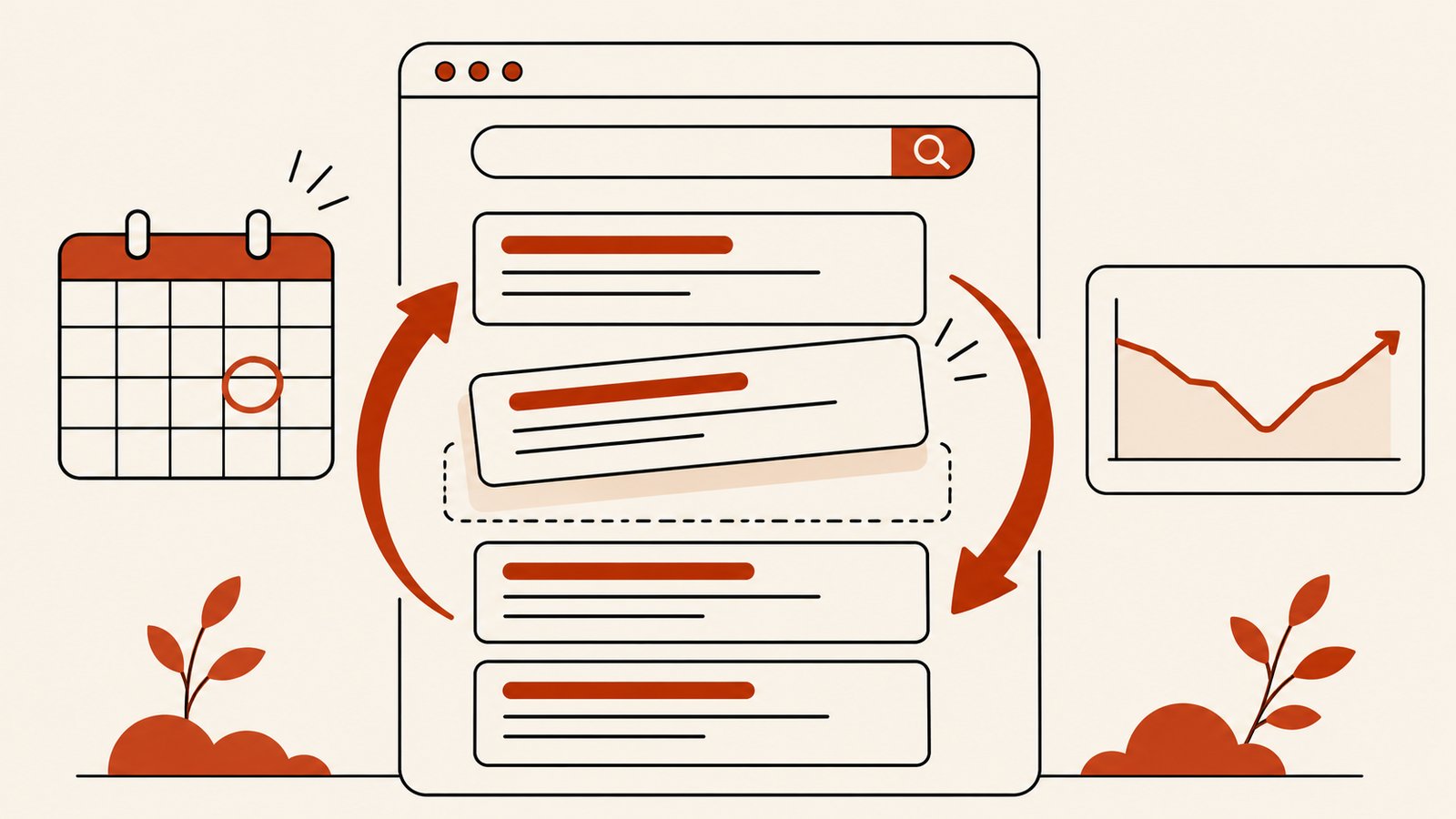
Google released the November 2026 core update on 10 November 2026, and its Search Status Dashboard says the rollout may take up to two weeks. For a B2B tech marketer the plan is short: write down the start date, keep changes to your best pages on hold, and run a clean Search Console comparison one week after Google marks the rollout complete.
What Google announced
The Google Search Status Dashboard lists the incident as "November 2026 core update", affecting Ranking, starting at 10:06 Pacific time on 10 November 2026. The note posted a minute later says the update applies globally and to all languages, and that the rollout may take up to two weeks.
Search Engine Roundtable reported the announcement at around 1:07 pm Eastern time and quoted Google's description: "a regular update designed to better surface relevant, satisfying content for searchers from all types of sites." Barry Schwartz added that some people had noticed ranking shifts earlier in the week that looked core related.
This is the third confirmed core update of 2026. Search Engine Roundtable's list dates the March 2026 update from 27 March to 8 April and the May 2026 update from 21 May to 2 June, so both finished in under two weeks.
Search interest jumped as the news spread. Google Trends shows searches for "november 2026 core update" up 4,249% over the last seven days compared with the 83 days before.
What a core update changes
Google's core updates documentation describes them as broad changes to ranking systems. They do not target single pages or sites and are not penalties. Google's own comparison is a list of your 20 favourite restaurants written in 2019: when you update it years later, some entries move down because better places opened, without the old ones getting worse.
Search Engine Roundtable notes that core updates also affect Google Discover and features such as featured snippets, so a drop can show up outside the main web results.
What to do while it rolls out
Rankings move around during a rollout, and changes made in those two weeks make it hard to tell later what caused a gain or a loss. Google's documentation warns against "quick fix" changes, such as removing a page element because someone said it was bad for SEO, and recommends leaving pages that already perform well alone.
Use the two weeks to keep a dated log. Note product launches, site releases, new content and anything else that could move traffic, so your later comparison has context. If leadership asks for a reaction, the honest answer is that the data will not be readable until the rollout ends.
How to measure the impact afterwards
Google recommends waiting at least a full week after the update completes before analysing your site in Search Console, then comparing that week with a week before the rollout started. With a start on 10 November 2026, the "before" week ends on 9 November.
Then look at how far pages moved. Google's documentation treats a small drop, such as position 2 to 4, as something that does not need drastic action. A large drop, such as position 4 to 29, calls for a deeper look at the affected pages. It also suggests checking each search type separately (Web, Images, Video mode, the News tab) to see where the loss happened.
Recovery can be slow. Google says some changes take effect in a few days, while its systems may need several months to confirm that a site as a whole produces helpful, people-first content.
How it ties to AI Overviews and AI Mode
Technical software companies now care as much about citations in AI answers as about blue links. Google's AI features documentation says a page only needs to be indexed and eligible to show with a snippet to appear as a supporting link in AI Overviews or AI Mode. There are no extra technical requirements or special markup.
Both features may use "query fan-out", issuing several related searches across subtopics to build an answer. Traffic from them is counted in the Search Console Performance report under the Web search type, so the same before and after comparison covers it. Google also says clicks from results pages with AI Overviews are higher quality, meaning visitors tend to spend more time on the site.
The practical point for B2B teams: the content that does well after a core update is the same content AI features pull from. Clear explanations of what your product does, for whom, and how it compares, are worth more than any change aimed at the update itself.
If your pages drop
Wait for the rollout to finish and the comparison week to pass first. If a large, sustained drop remains, Google suggests reviewing the affected pages honestly, even asking someone outside the company whether they find the content helpful and reliable. For a technical company, that often means checking whether a page adds original detail or mostly repeats what vendor documentation and competitors already say. Google treats deleting content as a last resort for pages made mainly for search engines.