
Cause of Death · 4 exhibits
Demand Illusion
What is a demand illusion?
A demand illusion is when a pain point is real to the team building the solution but not urgent enough for real buyers to change their behavior or pay to solve it — the product validates in the lab, in user interviews, and in press coverage, but never validates in the wallet. This is the cause of death most easily disguised as success in the early stages, because qualitative signals (enthusiastic user interviews, strong press interest, high sign-up numbers for something free) can be strong even when the underlying willingness to pay or change behavior is near zero. The tell is almost always a gap between stated interest and revealed preference: people say the problem matters, but don't act like it does once a real cost — money, time, switching effort — is attached to solving it.
How to recognize it early
- User research relies on stated preference ("would you use this?") rather than revealed preference (people already paying for or hacking together a worse version)
- Free or heavily subsidized usage numbers are strong, but paid conversion or retention is weak
- The problem is one the team personally has, more than one that a broad, addressable market has voiced unprompted
- Press and industry enthusiasm significantly outpaces actual sign-up-to-paying-customer conversion
How to avoid it
Validate demand with signals, not enthusiasm — see our signal-based approach to market validation.
Would this have caught you? Run the Landing Survey →
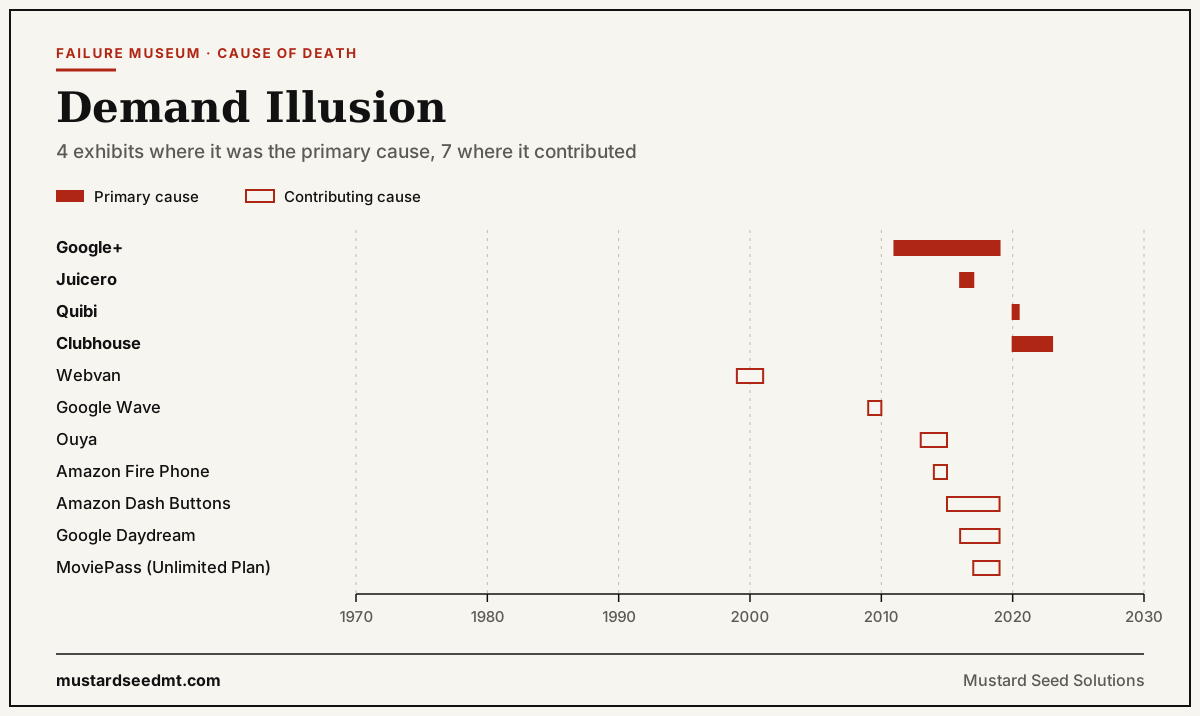
Exhibits with this cause of death
Quibi
A perfectly engineered answer to a question nobody, especially during a lockdown, was asking.
Juicero
$120 million to discover that hands could squeeze a juice pack just fine, thank you.
Google+
A social network nobody asked to join, built by a company that badly needed one to exist.
Clubhouse
Ten million people downloaded the room. Almost nobody came back once the world reopened.