
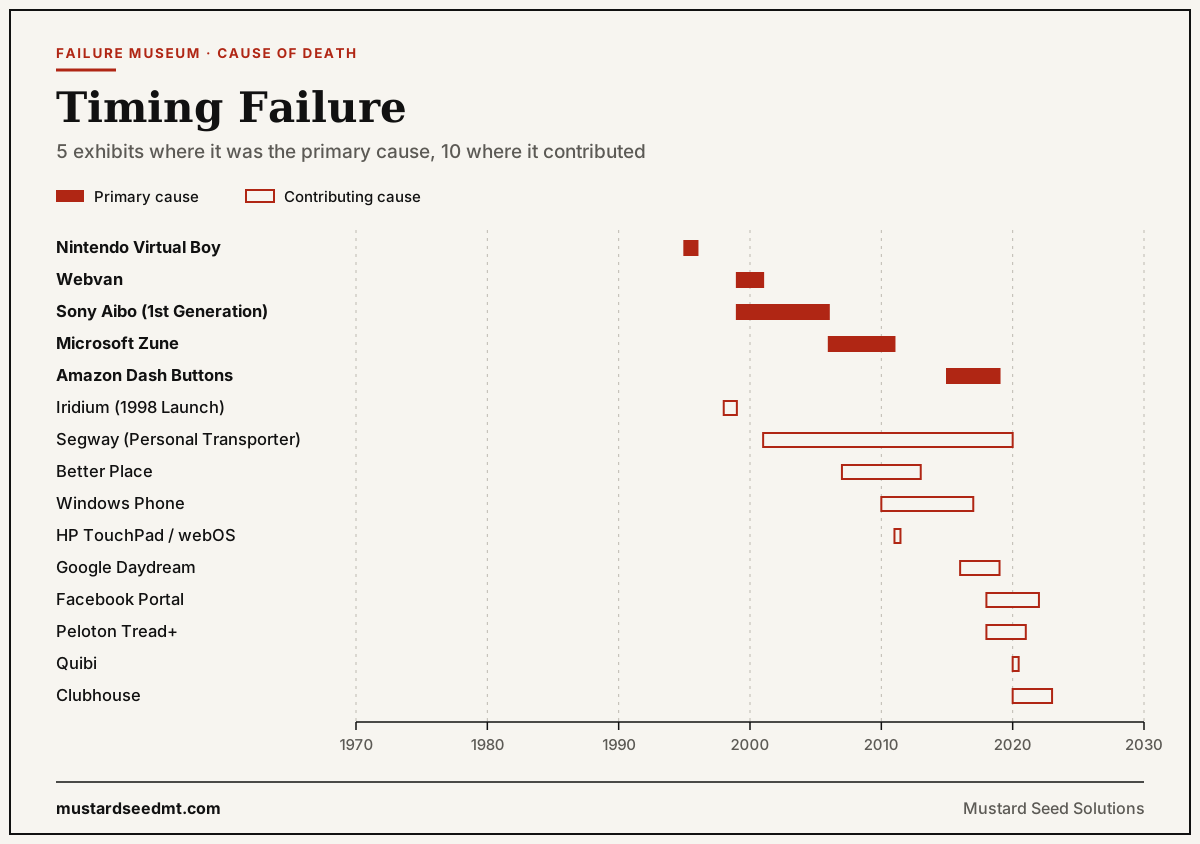
Cause of Death · 5 exhibits
Timing Failure
What is a timing failure?
A timing failure is when a product is right in concept but wrong in decade — launched before the infrastructure, buyer behavior, or complementary market it depends on actually exists, or launched after a window of buyer attention and willingness has already closed. Early timing failures are the more common and more forgivable of the two: the team correctly identifies a future direction but underestimates how long the ecosystem takes to catch up, and runs out of capital before the market arrives. Late timing failures happen when a genuinely competent product enters a category after a competitor has already captured the default choice, and being merely as good is no longer enough to displace an established habit. Timing failures are hardest to diagnose in the moment, because the same evidence — slow early adoption — looks identical whether the market is about to arrive in eighteen months or never.
How to recognize it early
- The pitch requires explaining an infrastructure or behavior change the buyer has not yet made on their own
- Early adopters need significant hand-holding to use the product at all
- A structurally similar, better-funded product entered the category in the last 12-18 months and is already the default answer
- The team's own roadmap assumes an external dependency (bandwidth, hardware cost, regulatory change) that has not yet shipped
How to avoid it
Knowing whether a market is early or closed is the actual question — talk to us before you commit the capital.
Would this have caught you? Run the Landing Survey →
Exhibits with this cause of death
Webvan
Grocery delivery for a world that wasn't online yet, built at a scale that assumed it already was.
Microsoft Zune
A genuinely competent music player, arriving to a war the iPod had already won.
Sony Aibo (1st Generation)
A robot companion for a home the market wasn't living in yet.
Nintendo Virtual Boy
Virtual reality, twenty years early, in one color, bolted to a tabletop tripod.
Amazon Dash Buttons
One button, one brand, one product — glued to a washing machine that would soon be able to order for itself.