
The Promise
Betamax, launched by Sony in 1975, reached consumers before VHS (JVC's competing format, 1976) and was widely regarded by contemporary technical reviews as offering superior picture quality — a genuine technical edge in the format's core selling point.
Sony brought serious engineering and manufacturing credibility to the format, and Betamax established meaningful early market share, particularly in Japan and among early adopters in other markets, before the standards war with VHS was decided.
The Entry
The decisive strategic difference was licensing: JVC licensed VHS broadly to other manufacturers (RCA, Panasonic, and others), rapidly building a coalition of hardware makers all producing compatible players, while Sony kept Betamax more tightly controlled, limiting how many manufacturers built and sold Betamax-compatible hardware.
VHS's broader manufacturer coalition also drove a second-order effect: more VHS hardware in the market meant video rental stores — a genuinely pivotal new retail channel emerging in the late 1970s and 1980s — stocked more VHS tapes, since that's where the growing installed hardware base was, creating a reinforcing cycle Betamax's narrower licensing never matched.
Betamax: Why It Failed
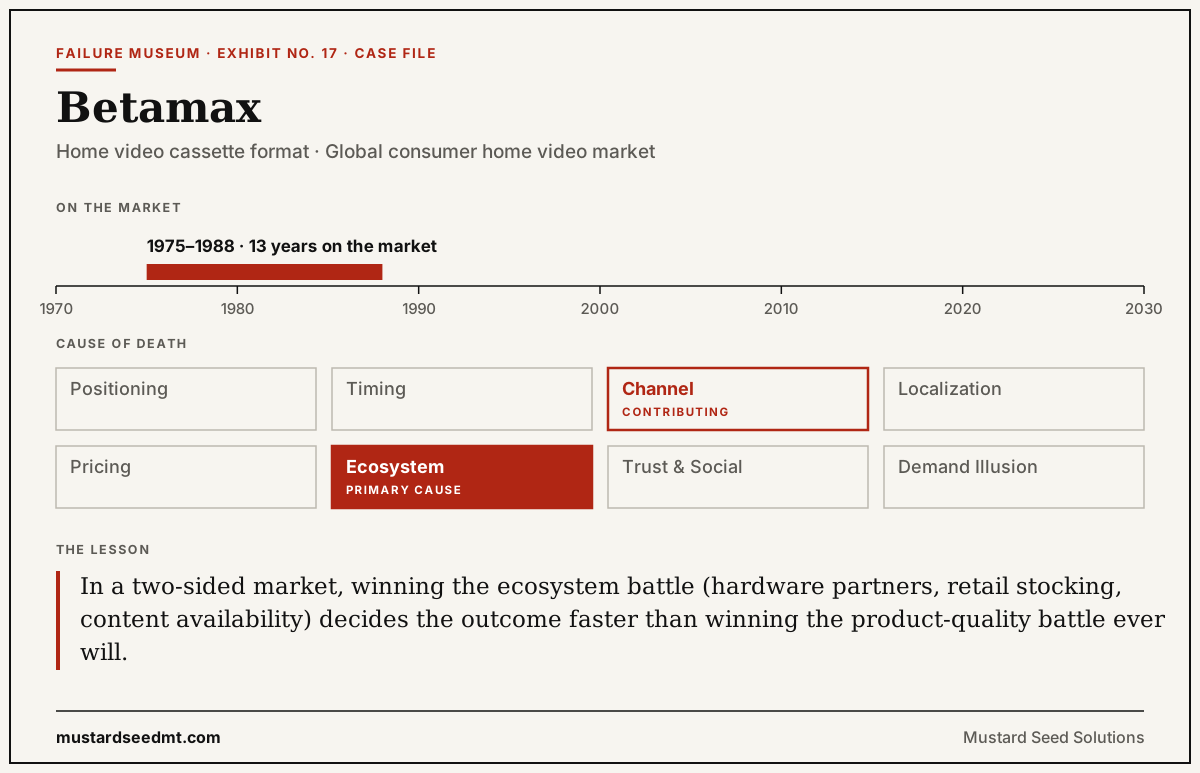
Betamax lost the format war to VHS primarily because JVC licensed VHS more broadly to competing manufacturers, which built a larger hardware installed base faster, which in turn meant video rental stores — the era's critical new distribution channel — stocked predominantly VHS tapes, creating a self-reinforcing ecosystem advantage that Betamax's superior picture quality never overcame.
The record suggests this is the canonical example of an ecosystem/network-effects failure: home video was, structurally, a two-sided market (hardware makers and content/rental availability reinforcing each other), and VHS's broader manufacturer licensing strategy won that two-sided race before consumers' format preference, based purely on picture quality, could meaningfully affect the outcome.
Our read is that the emerging video rental industry made the ecosystem dynamic decisive rather than marginal: once a consumer's local rental store carried mostly VHS tapes (because that's where the larger installed hardware base was), owning a Betamax player meant a materially worse selection of rentable movies — a consumer-facing consequence that had nothing to do with picture quality and everything to do with the channel and ecosystem battle happening behind the scenes.
Sony's tighter control of Betamax licensing was a reasonable strategic choice for protecting margin and quality control, but it directly constrained the hardware-manufacturer coalition size that determined the rental-store stocking decisions — a case where a sound business-model instinct (protect the format, license selectively) produced the opposite of the network effects the format actually needed to win.
What Survived
Betamax's professional and broadcast-industry variants persisted commercially for years longer than the consumer format, since broadcast customers valued the picture-quality edge in a context where consumer rental-store ecosystem effects didn't apply.
The Betamax-vs-VHS story became the canonical case study taught in business schools and cited in technology strategy discussions for decades afterward as the definitive illustration that the technically superior format does not automatically win a standards war — a lesson directly echoed in later format battles (HD DVD vs. Blu-ray) where licensing and studio/content alliances were treated as at least as important as picture quality from the outset.
Era: pre-2000
Where It Ended Up: Sony ceased Betamax hardware production for the consumer market by 1988 (professional/broadcast variants persisted longer); Sony itself later manufactured VHS players
The Lesson
"In a two-sided market, winning the ecosystem battle (hardware partners, retail stocking, content availability) decides the outcome faster than winning the product-quality battle ever will."
Sources
Related Exhibits
Better Place
A brilliant answer to EV range anxiety, waiting for car companies who never signed up.
Windows Phone
Genuinely well-designed. Genuinely appless. Guess which one buyers noticed first.
HP TouchPad / webOS
Forty-nine days on shelves. A fire-sale price tag made it a cult classic anyway.