The Promise
webOS, the operating system underneath the TouchPad, was widely praised by reviewers as genuinely ahead of its time: true multitasking with a card-based interface for switching between apps (a design later echoed by iOS and Android multitasking UIs), elegant notifications, and a coherent, fluid design language.
HP acquired Palm (webOS's creator) for $1.2 billion in 2010 specifically to get into the tablet and smartphone market with genuinely competitive, non-Android, non-iOS software — a real strategic bet on owning an operating system rather than just building hardware for someone else's.
The Entry
The TouchPad launched in July 2011, over a year after the original iPad (2010) had already established the tablet category and captured the overwhelming majority of both consumer mindshare and third-party app development attention.
Like Windows Phone, webOS entered a two-sided market already tilted decisively toward the incumbent: developers built tablet apps for iPad first, and the TouchPad launched with a comparatively thin app catalog that no amount of interface elegance could immediately fill.
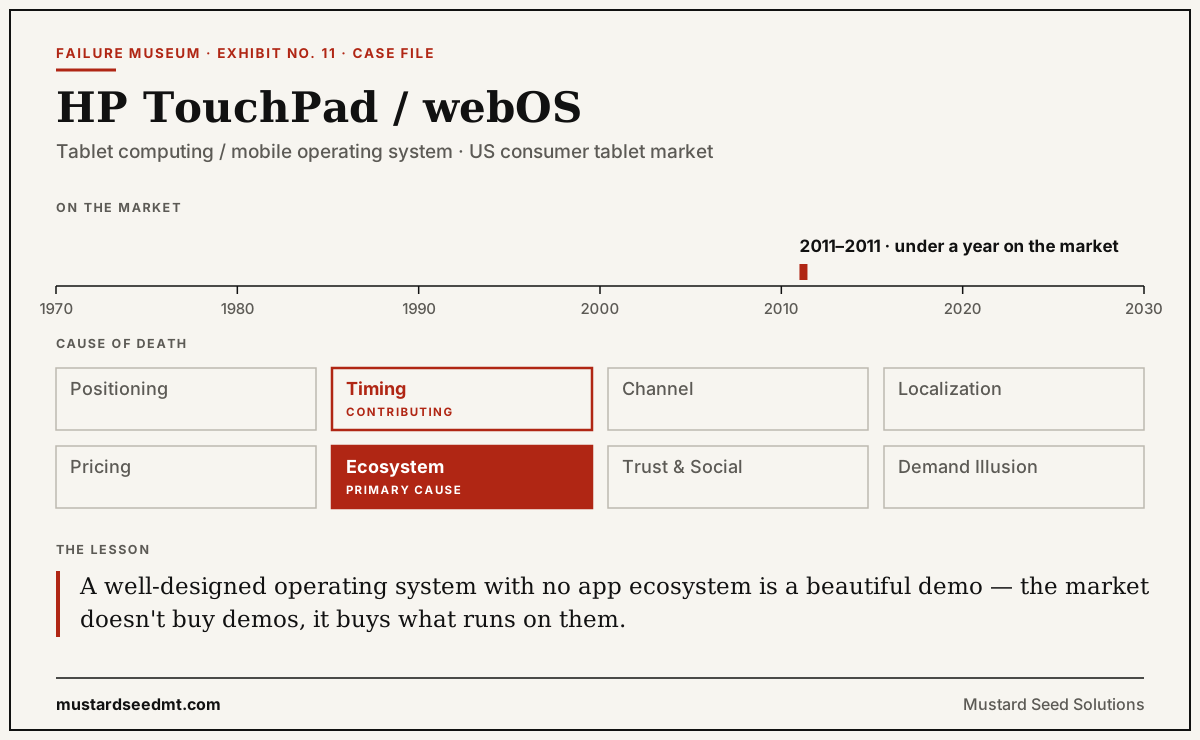
HP TouchPad / webOS: Why It Failed
The TouchPad failed because it launched into a tablet app ecosystem where the iPad had already captured the developer attention and consumer base needed to make third-party software worth building — the same structural ecosystem failure that killed Windows Phone, compressed into an even shorter timeframe because HP pulled the product after just 49 days rather than persisting for years.
The record suggests HP's decision to exit so quickly (49 days after launch) reflects how starkly the early sales numbers confirmed the ecosystem problem: without a developer base already committed to webOS, the TouchPad had little to differentiate its daily experience from an iPad beyond interface design — and interface elegance alone rarely overcomes a thin app catalog for most buyers evaluating a shared-purpose device.
Our read is that HP's own organizational commitment compounded the timing problem: the TouchPad launched over a year after the iPad, at a moment when HP's new CEO (Léo Apotheker, appointed months before launch) was already reportedly reconsidering HP's consumer hardware strategy broadly — meaning the product entered the market with uncertain internal backing for the sustained, multi-year investment that building a competing app ecosystem from zero actually requires.
The fire-sale aftermath is itself instructive: when HP slashed the TouchPad's price to $99 (from $499) to clear remaining inventory, demand was reportedly overwhelming — suggesting the product itself, at the right price, had real appeal; the failure was in the ecosystem and business model around it, not in the hardware or software quality.
What Survived
HP sold webOS to LG in 2013, where — rather than trying to compete in the crowded smartphone/tablet space again — it was repurposed as the operating system for LG's Smart TVs, a category with far less entrenched competition and no need for a large third-party app catalog to be useful. webOS TVs have shipped in the tens of millions since, arguably the most commercially successful outcome of any exhibit in this collection's afterlife.
The card-based multitasking interface webOS pioneered was widely recognized as influential on both iOS's and Android's later multitasking redesigns, even though webOS itself never won the platform war it was built to fight.
Era: 2010s
Where It Ended Up: HP discontinued hardware after 49 days; webOS sold to LG in 2013, where it lives on today as the operating system for LG Smart TVs
The Lesson
"A well-designed operating system with no app ecosystem is a beautiful demo — the market doesn't buy demos, it buys what runs on them."
Sources
Related Exhibits
Better Place
A brilliant answer to EV range anxiety, waiting for car companies who never signed up.
Windows Phone
Genuinely well-designed. Genuinely appless. Guess which one buyers noticed first.
Betamax
Widely considered the better format. Lost anyway — the classic standards war.