The Promise
Ouya proposed a genuinely appealing idea to both consumers and independent game developers: a $99 open, Android-based console connected to the TV, with every game free-to-try, that any developer could publish to without the approval gatekeeping or revenue-share terms of Sony, Microsoft, or Nintendo's traditional console platforms.
The pitch resonated immediately with backers: Ouya's 2012 Kickstarter raised $8.6 million against a $950,000 goal, becoming one of the most funded crowdfunding campaigns of its era and generating enormous press attention as a symbol of democratized game development.
The Entry
Ouya shipped in 2013 to backers and then retail, but the console's hardware was noticeably underpowered even by the standards of the smartphones its Android OS was designed for, and the actual game library that materialized was thin, with few must-play exclusive titles and limited output from the major indie studios the platform hoped to attract.
The open publishing model — anyone can submit a game — while philosophically appealing, meant Ouya's storefront filled quickly with low-quality or unfinished titles, making it harder for backers and new buyers to discover the handful of genuinely good games actually available.
Ouya: Why It Failed
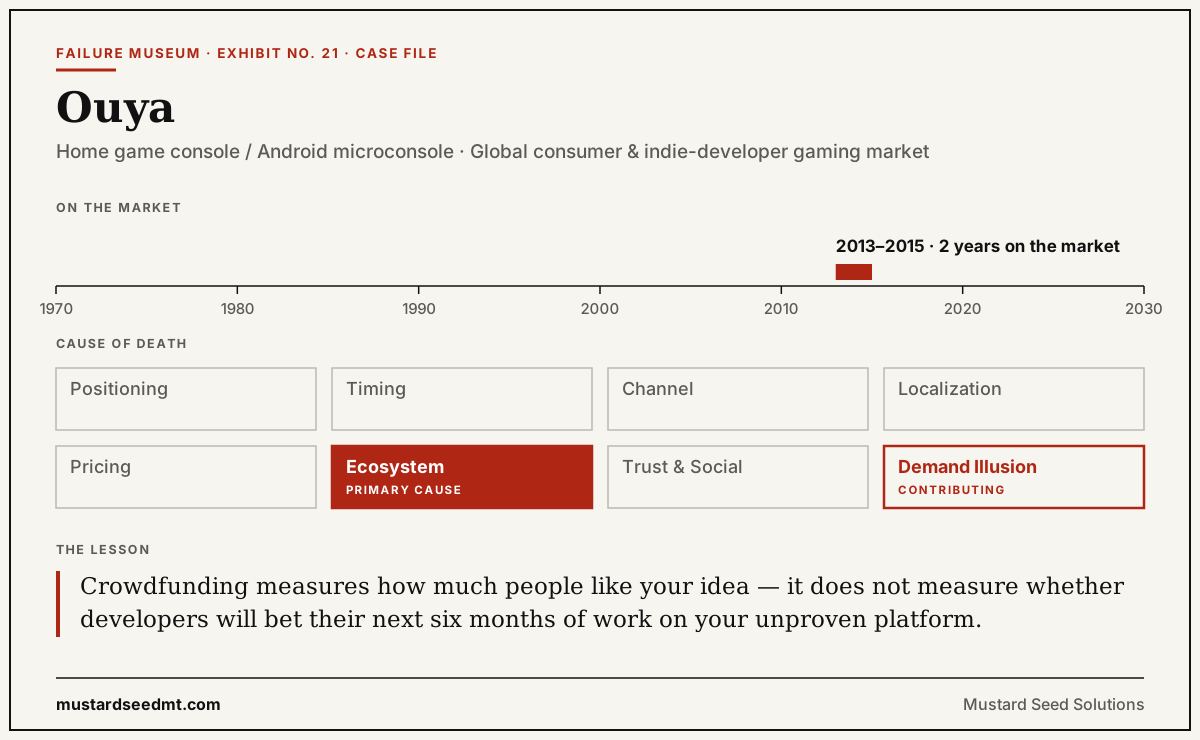
Ouya failed because strong crowdfunding enthusiasm for the idea of an open, developer-friendly console never translated into the ongoing developer investment needed to build a genuinely compelling game library, leaving underpowered hardware with a thin, low-quality-heavy catalog that gave neither backers nor new buyers a reason to keep the console plugged in.
The record suggests the Kickstarter's success is itself a case of demand illusion at the concept level: $8.6 million in crowdfunding pledges demonstrated real enthusiasm for the idea of an open console, but backing a concept on Kickstarter is a fundamentally lower-commitment action than a developer choosing to invest months building a game for a brand-new, unproven platform with a tiny existing install base — the two forms of "demand" don't transfer to each other automatically.
Our read is that this is a clean ecosystem failure once shipped: without a strong content flywheel (either first-party exclusive titles funded directly by Ouya, or a curation/quality mechanism that surfaced good games above the noise), the platform had no answer for why a developer should prioritize Ouya over building for the far larger existing Android, iOS, or established console install bases.
The underpowered hardware compounded the ecosystem problem: at $99, Ouya's technical specifications lagged well behind what mobile game developers' existing Android and iOS builds already assumed, meaning many potential ports required real additional engineering work for a small, unproven audience — an ask few developers judged worth the investment.
What Survived
Razer acquired Ouya's assets and remaining team in 2015, continuing a similar Android-microconsole vision under Razer's own hardware efforts (including the later Razer Forge TV) before eventually stepping back from the category as well, suggesting the underlying market for a dedicated open Android console remained thin regardless of which company pursued it.
The broader crowdfunded-hardware model Ouya popularized — validate consumer demand via Kickstarter before committing to manufacturing — became a widely adopted playbook for hardware startups afterward, even as Ouya itself became a cautionary reference point for the gap between crowdfunding enthusiasm and the sustained developer ecosystem a platform actually needs.
Era: 2010s
Where It Ended Up: Assets and remaining team acquired by Razer in 2015; the Ouya storefront was shut down entirely in 2019
The Lesson
"Crowdfunding measures how much people like your idea — it does not measure whether developers will bet their next six months of work on your unproven platform."
Sources
Related Exhibits
Better Place
A brilliant answer to EV range anxiety, waiting for car companies who never signed up.
Windows Phone
Genuinely well-designed. Genuinely appless. Guess which one buyers noticed first.
HP TouchPad / webOS
Forty-nine days on shelves. A fire-sale price tag made it a cult classic anyway.