The Promise
The Palm Pre, launched in 2009, ran the original version of webOS — praised at launch, including by reviewers directly comparing it to the iPhone, for its genuinely innovative card-based multitasking interface and elegant "synergy" contacts/calendar integration, arriving at a moment when Palm badly needed a hit to remain relevant against the rising iPhone and Android.
As the first webOS device, the Pre represented Palm's most serious, best-resourced attempt to reestablish itself as a genuine smartphone platform contender rather than a fading PDA-era brand.
The Entry
The Pre launched as an exclusive to Sprint, at the time the smallest of the major US carriers by subscriber count, sharply limiting the device's addressable market compared to a multi-carrier or larger-carrier launch — a channel decision that constrained volume from day one regardless of the product's quality.
Sprint's smaller distribution footprint, combined with webOS being a brand-new platform, meant the Pre had limited retail presence and no existing developer base to draw from, entering the market at a genuine structural disadvantage on two fronts simultaneously.
Palm Pre: Why It Failed
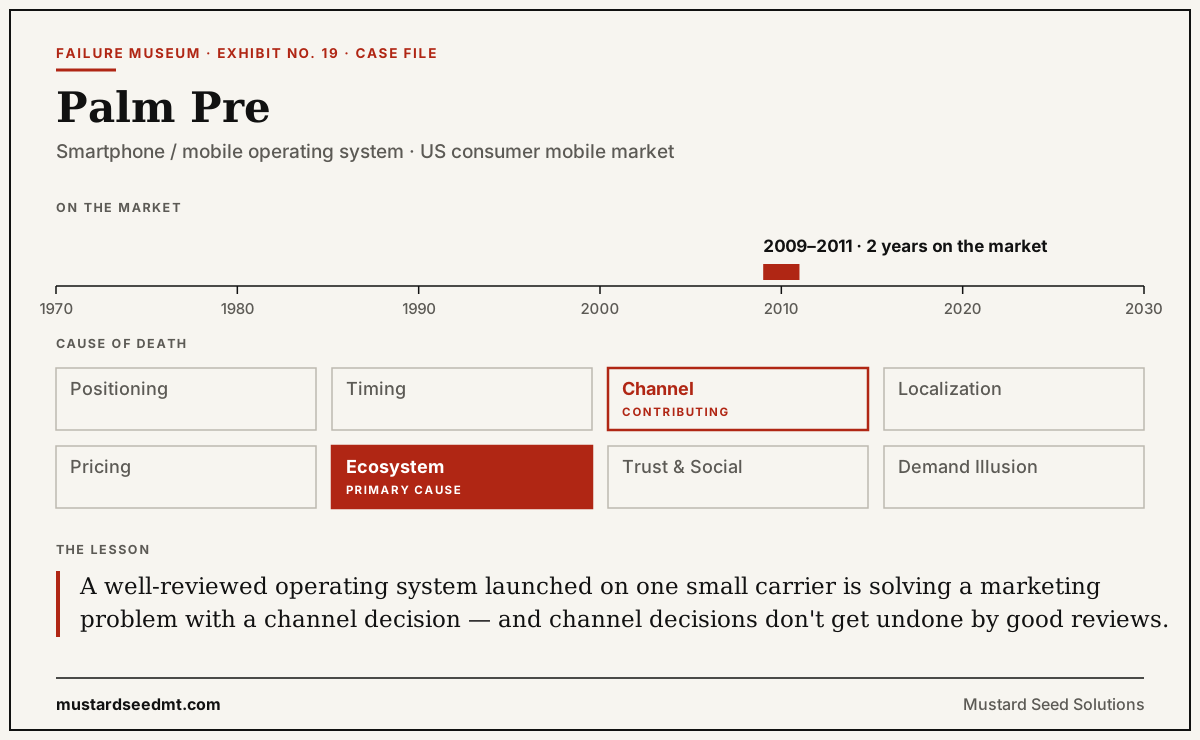
The Palm Pre failed primarily because launching as a single-carrier exclusive on Sprint — the smallest major US carrier at the time — sharply limited its addressable buyer base and retail visibility, while its brand-new webOS platform had no existing developer ecosystem to draw app support from, leaving a genuinely well-reviewed device unable to reach the volume needed to attract the app developers it needed to compete with iPhone and Android.
The record suggests the carrier-exclusivity decision compounded, rather than merely coincided with, the ecosystem problem: a wider carrier launch might have generated enough device volume to make developing for webOS worthwhile despite the platform being new, but the Sprint-only channel decision meant the Pre never reached the critical mass needed to break the same chicken-and-egg ecosystem problem later seen, at greater scale and cost, in the Windows Phone exhibit.
Our read is that reviewers' praise for the software (multitasking, synergy) never translated to sales precisely because software quality doesn't overcome a channel constraint on its own — buyers on other carriers, and potential Verizon or AT&T customers specifically, simply couldn't buy a Pre without switching carriers, a friction significant enough to remove most of the market regardless of how the device reviewed.
Palm's own limited resources going into the Pre's launch — the company was in financial distress after years of PDA-market decline — meant it had little ability to correct course with a wider carrier rollout or aggressive developer-incentive program once the Sprint-exclusive launch underperformed, unlike a larger company (e.g., Microsoft with Windows Phone) that could sustain years of ecosystem-building investment.
What Survived
HP acquired Palm in 2010 specifically for webOS and the underlying software's genuine technical merits, continuing development into the TouchPad tablet (see that exhibit) before discontinuing the hardware entirely in 2011 — meaning webOS outlived the Pre by roughly two years under new ownership, but ultimately succumbed to the same category of ecosystem problem at a larger scale.
webOS's card-based multitasking metaphor, first shipped on the Pre, is widely credited as directly influencing both iOS's and Android's later multitasking-switcher redesigns — a rare case where a commercially unsuccessful platform's interface ideas were absorbed by the platforms that beat it.
Era: 2010s
Where It Ended Up: Palm was acquired by HP in 2010, primarily for webOS; the Pre line was discontinued alongside the broader webOS hardware program (see HP TouchPad exhibit) in 2011
The Lesson
"A well-reviewed operating system launched on one small carrier is solving a marketing problem with a channel decision — and channel decisions don't get undone by good reviews."
Sources
Related Exhibits
Better Place
A brilliant answer to EV range anxiety, waiting for car companies who never signed up.
Windows Phone
Genuinely well-designed. Genuinely appless. Guess which one buyers noticed first.
HP TouchPad / webOS
Forty-nine days on shelves. A fire-sale price tag made it a cult classic anyway.