
The Wedge: How Datadog Got Its First Customers
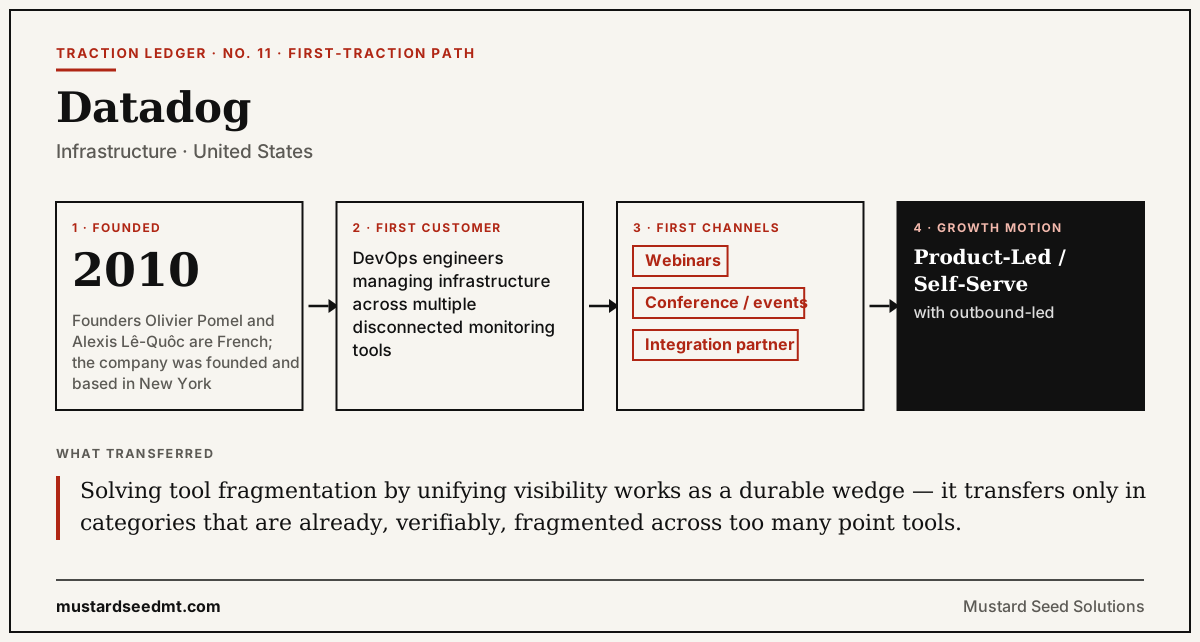
Datadog got its first customers by targeting a specific, everyday frustration: DevOps teams running infrastructure across many different tools, each with its own separate monitoring dashboard, and no single unified view of system health. Olivier Pomel and Alexis Lê-Quôc built the product around bringing metrics from all those tools into one place.
The earliest adopters were engineering teams already juggling multiple point-monitoring tools, who could sign up for a free trial and connect their existing infrastructure without a lengthy procurement process — a direct answer to a problem they were feeling immediately.
Founders Olivier Pomel and Alexis Lê-Quôc are French; the company was founded and based in New York (2010).
Datadog's First Channel
A major channel was the integrations themselves: Datadog built and marketed connectors to dozens of common infrastructure and cloud tools, and each integration listing became a discovery point for engineers already using that underlying tool who were searching for better ways to monitor it.
Webinars and conference presence at infrastructure and DevOps events reinforced this, positioning Datadog specifically as the tool that unified visibility across an already-fragmented monitoring stack rather than adding yet another dashboard to it.
The Motion: Product-Led / Self-Serve
The core motion combined a free trial with self-serve signup — an engineer could connect their infrastructure and see value within minutes — with a sales-assisted layer for larger accounts and multi-year contracts as adoption spread within an organization.
Per-host, usage-based pricing meant the product could start small inside one team and expand organically as more of a company's infrastructure was connected, without requiring a renegotiated contract at each step.
As the product expanded beyond infrastructure metrics into log management and application performance monitoring, each new capability was marketed as another "pillar" of the same unified platform, reinforcing the original wedge (too many separate tools) rather than introducing a new pitch.
The Turn — the motion held
The motion held. Datadog's growth from a single infrastructure-monitoring tool into a broad observability and security platform consistently reused the free-trial-plus-integrations entry point and the "unify your fragmented tools" positioning established at founding.
Era: 2005-2014
Where It Ended Up: Public (Nasdaq: DDOG) since 2019
What Transferred
"Solving tool fragmentation by unifying visibility works as a durable wedge — it transfers only in categories that are already, verifiably, fragmented across too many point tools."
Sources
Related Entries
Twilio
SMS and voice as an API — pay per call, no sales conversation required.
Hacker NewsGitHub
Git hosting that made open-source collaboration social, starting with the Ruby community.
Open-source repoHashiCorp
Open-source infrastructure tools that developers adopted years before HashiCorp sold anything.
Open-source repo