
The Wedge: How Docker Got Its First Customers
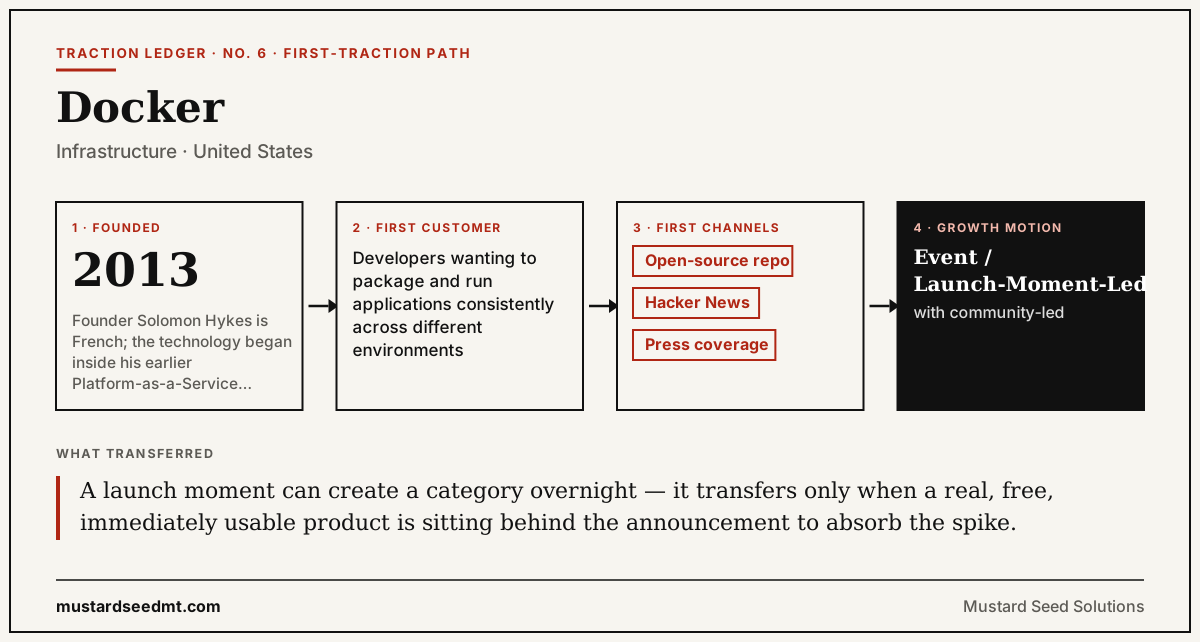
Docker got its first users almost overnight, following a single conference talk: Solomon Hykes' 2013 lightning talk at PyCon introducing an open-source container tool built inside his existing PaaS company, dotCloud. The talk and the open-source release together produced immediate, wide developer attention — a Hacker News front page and rapid press coverage followed within days.
The problem was concrete: developers were tired of "it works on my machine" inconsistency between development, testing, and production environments, and Docker's container format offered a lightweight, portable way to package an application with everything it needed to run identically anywhere.
Founder Solomon Hykes is French; the technology began inside his earlier Platform-as-a-Service company dotCloud in San Francisco, before being spun out as its own company (2013).
Docker's First Channel
The channel was the launch moment itself, amplified through Hacker News and technology press, which is unusual among devtools in this ledger — most compound gradually, but Docker's early adoption curve shows a visible, immediate spike tied to a specific week in early 2013.
That initial spike was sustained afterward by developer conferences and meetups, where Docker quickly became a common topic, and by the open-source project's own GitHub visibility as contributors began extending it.
The Motion: Event / Launch-Moment-Led
The tool was free and open-source from the start, which let the initial spike of curious developers convert immediately into actual users with no purchasing step in between — trying Docker cost nothing but time.
Commercial products (initially around orchestration and enterprise support) were layered on only after the open-source tool had become widely embedded in developer workflows, following the same open-core logic used by other infrastructure tools in this ledger.
The scale of the initial spike meant Docker had to build durable community infrastructure — documentation, a registry (Docker Hub), and a yearly conference (DockerCon) — quickly, to convert a launch moment into an ongoing ecosystem rather than a viral flash.
The Turn
The definitive turn was structural: dotCloud, the PaaS company Docker was built inside of, was discontinued entirely, and the company renamed itself Docker to focus only on the container technology — one of the clearest examples in this ledger of a side project's traction eclipsing and replacing its parent company's original product.
Era: 2005-2014
Where It Ended Up: Independent; sold its enterprise business to Mirantis in 2019 and refocused on developer tools
What Transferred
"A launch moment can create a category overnight — it transfers only when a real, free, immediately usable product is sitting behind the announcement to absorb the spike."
Sources
Related Entries
HashiCorp
Open-source infrastructure tools that developers adopted years before HashiCorp sold anything.
Open-source repoElastic
A search library built to solve one developer's recipe-search problem for his wife, open-sourced and adopted everywhere.
Open-source repoDatadog
Unified monitoring for DevOps teams juggling too many separate dashboards.
Webinars