
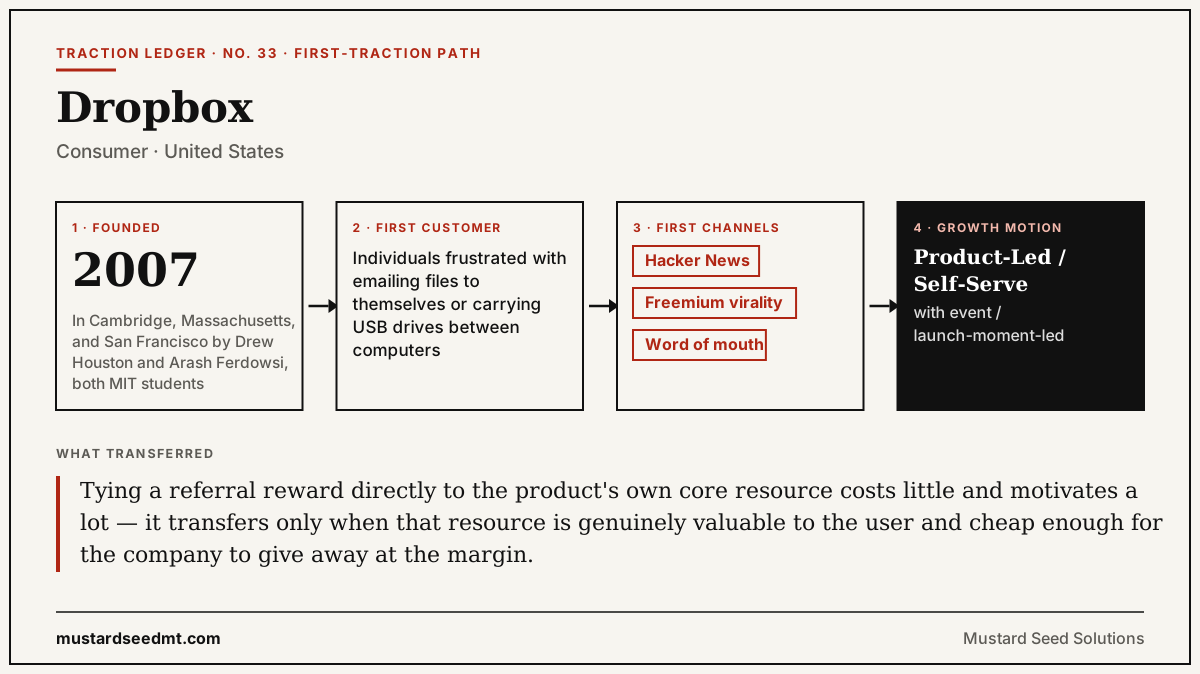
The Wedge: How Dropbox Got Its First Customers
Dropbox got its first wave of attention from a short demo video, posted by Drew Houston to Hacker News before the product had a public launch, that simply showed the file-syncing concept working cleanly across devices — a direct answer to the everyday frustration of emailing files to yourself or juggling USB drives.
That single video discussion drove the private beta waitlist from roughly five thousand to seventy-five thousand signups in about a day, according to accounts the founders have given repeatedly — an unusually well-documented, precisely dated single-moment spike for a company in this ledger.
Founded in Cambridge, Massachusetts, and San Francisco by Drew Houston and Arash Ferdowsi, both MIT students (2007).
Dropbox's First Channel
The initial channel was that Hacker News moment itself, but the more durable channel that followed was a deliberately engineered referral program: users who invited friends, and friends who signed up, both received additional free storage — turning ordinary product usage into an acquisition mechanism.
Because storage space was the exact currency the product was built around, offering more of it as a referral reward cost Dropbox very little at the margin while giving users a directly relevant incentive to invite others.
The Motion: Product-Led / Self-Serve
The free tier, with a limited storage allotment, let anyone try the core syncing experience immediately with zero commercial commitment, converting to a paid tier only once a user's own storage needs outgrew the free allowance.
The referral program is one of the most widely cited growth mechanisms in software history specifically because it tied the incentive (more storage) directly to the core value of the product (storage), rather than to an unrelated reward.
As adoption scaled from individuals to teams and businesses, Dropbox added collaboration and admin features aimed at organizational buyers, but the underlying free-tier-plus-referral engine continued driving a large share of new individual signups.
The Turn — the motion held
The motion held. The referral-driven freemium loop that Dropbox built around its launch remained a primary growth driver for years afterward, one of the longest-sustained examples of a single, specific growth mechanism in this entire ledger.
Era: 2005-2014
Where It Ended Up: Public (Nasdaq: DBX) since 2018
What Transferred
"Tying a referral reward directly to the product's own core resource costs little and motivates a lot — it transfers only when that resource is genuinely valuable to the user and cheap enough for the company to give away at the margin."
Sources
Related Entries
Twilio
SMS and voice as an API — pay per call, no sales conversation required.
Hacker NewsGitHub
Git hosting that made open-source collaboration social, starting with the Ruby community.
Open-source repoDatadog
Unified monitoring for DevOps teams juggling too many separate dashboards.
Webinars