
The Wedge: How Figma Got Its First Customers
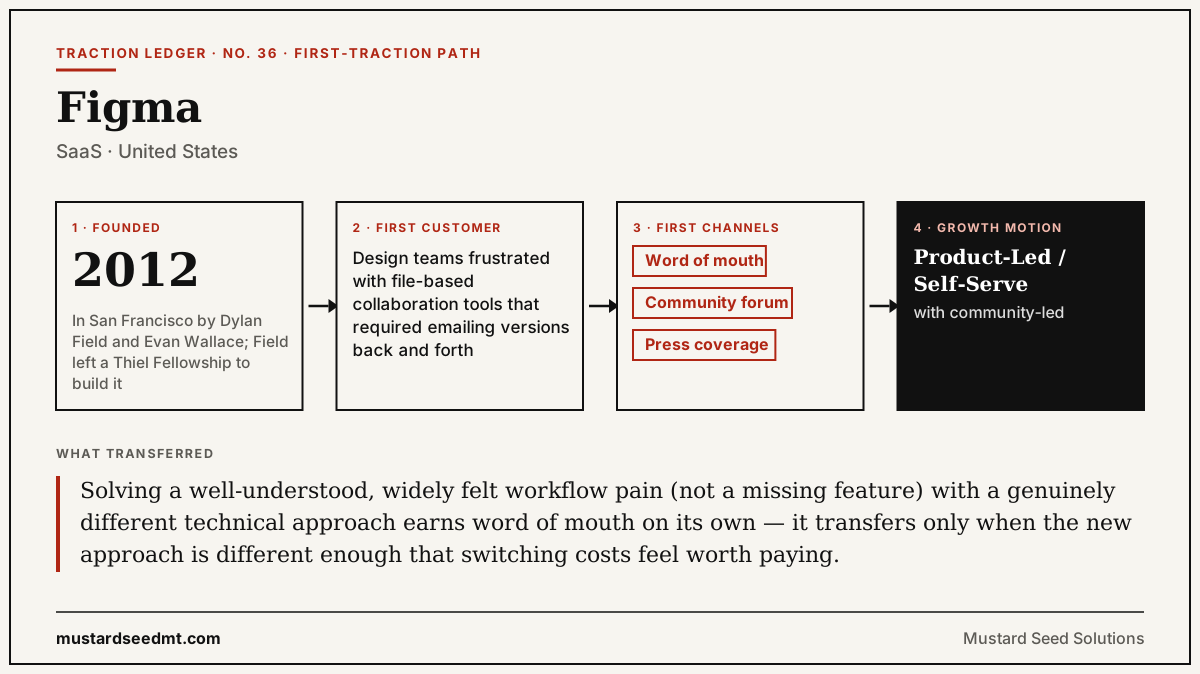
Figma got its first real users only after a long, unusually quiet private beta — roughly four years of development following its 2012 founding — before publicly launching in 2016 with a browser-based design tool that let multiple people edit the same file simultaneously.
The target buyer was design teams who had been living with the specific pain of file-based tools like Sketch: emailing design files back and forth, manually merging changes, and losing track of which version was current — a workflow problem rather than a missing feature.
Founded in San Francisco by Dylan Field and Evan Wallace; Field left a Thiel Fellowship to build it (2012).
Figma's First Channel
The channel at public launch was word of mouth inside the design community, amplified through design-focused forums and social media (particularly design-oriented Twitter accounts), plus press coverage covering a genuinely new technical approach — real-time collaborative editing running in a browser.
Because the core pain point (file-based collaboration friction) was widely and specifically felt among design teams already working around Sketch's limitations, the value proposition required little explanation once a team tried it.
The Motion: Product-Led / Self-Serve
The free starter tier removed installation friction entirely — running in a browser meant no software to install, unlike desktop-only competitors — letting a design team try real collaborative editing with essentially zero setup cost.
Paid team plans monetized the collaboration features (shared team libraries, more projects, administrative controls) that mattered most once a team had adopted the tool broadly enough to depend on it for daily work.
The product's differentiation — genuine real-time multiplayer editing — remained the central selling point throughout its growth, since it solved the exact workflow problem (version conflicts, email-based file sharing) that had motivated the first teams to switch.
The Turn — the motion held
The motion held. Real-time collaborative editing remained Figma's defining differentiator without a significant repositioning, all the way through Adobe's abandoned $20 billion acquisition attempt in 2022–2023 and the company's own independent path to a 2025 public listing.
Era: 2015+
Where It Ended Up: Public (NYSE: FIG) since 2025, following a 2022 Adobe acquisition attempt that was abandoned amid regulatory scrutiny
What Transferred
"Solving a well-understood, widely felt workflow pain (not a missing feature) with a genuinely different technical approach earns word of mouth on its own — it transfers only when the new approach is different enough that switching costs feel worth paying."
Sources
Related Entries
Twilio
SMS and voice as an API — pay per call, no sales conversation required.
Hacker NewsGitHub
Git hosting that made open-source collaboration social, starting with the Ruby community.
Open-source repoDatadog
Unified monitoring for DevOps teams juggling too many separate dashboards.
Webinars