
The Wedge: How Klaviyo Got Its First Customers
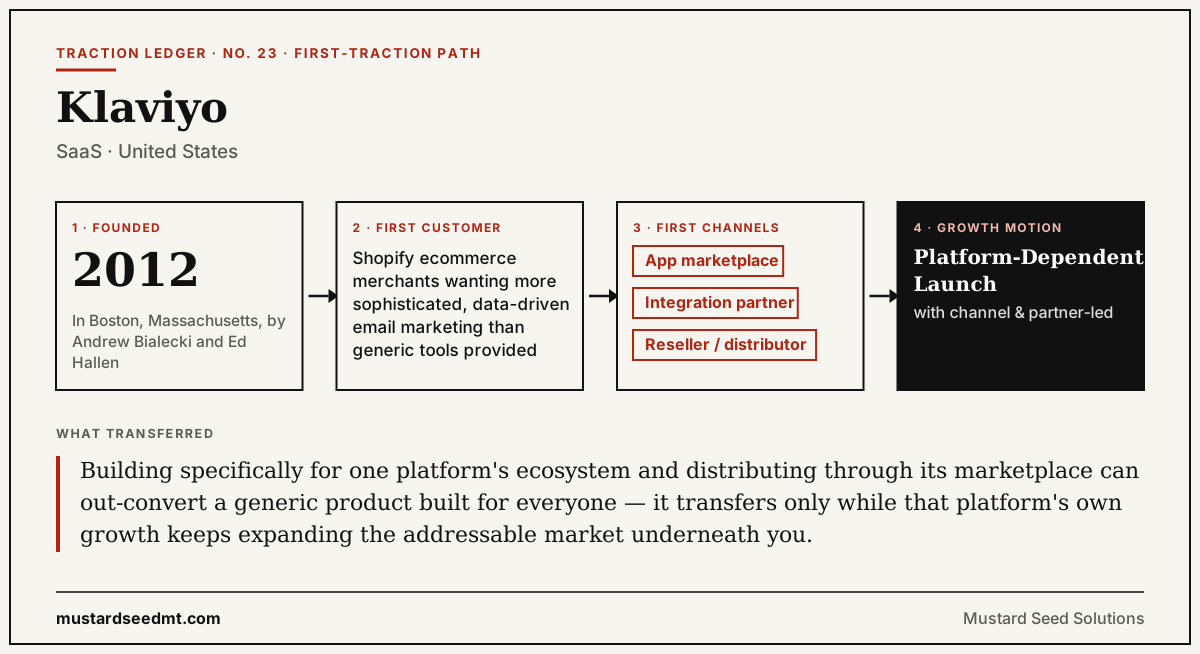
Klaviyo got its first customers by building specifically for Shopify merchants, at a moment when Shopify's own ecosystem of independent app developers was still young and growing, and generic email marketing tools weren't built around ecommerce-specific data like purchase history and browsing behavior.
Andrew Bialecki and Ed Hallen built the product to use a merchant's actual store data — not just an email list — to power more relevant, revenue-driving campaigns, a wedge specifically aimed at merchants who had outgrown basic email blast tools.
Founded in Boston, Massachusetts, by Andrew Bialecki and Ed Hallen (2012).
Klaviyo's First Channel
The primary channel was the Shopify App Store itself: a merchant searching the store for an email marketing solution would find Klaviyo listed directly inside the platform they already used daily to run their business, with no separate discovery process required.
This distribution was reinforced by relationships with ecommerce marketing agencies who recommended Klaviyo to their merchant clients, giving the company a second, trusted referral channel running alongside the app-store listing itself.
The Motion: Platform-Dependent Launch
Usage-based pricing, tied to the size of a merchant's contact list and email volume, matched naturally with how a Shopify store's own revenue grew — a larger, more successful store needed and could afford more email marketing capacity.
Deep integration with Shopify's own data (orders, products, customer behavior) let Klaviyo build features generic email tools couldn't easily replicate, giving the product a genuine platform-specific advantage rather than being a generic tool merely listed in the app store.
As Klaviyo matured, it expanded to other ecommerce platforms beyond Shopify and added SMS marketing alongside email, but the app-marketplace-and-agency distribution model, refined on Shopify first, extended directly to those new platforms.
The Turn — the motion held
The motion held. Klaviyo's expansion beyond Shopify to other ecommerce platforms was a market-widening move, not a change in mechanism — the same app-marketplace and partner-agency distribution model that won its first Shopify merchants was reapplied to each new platform.
Era: 2015+
Where It Ended Up: Public (NYSE: KVYO) since 2023
What Transferred
"Building specifically for one platform's ecosystem and distributing through its marketplace can out-convert a generic product built for everyone — it transfers only while that platform's own growth keeps expanding the addressable market underneath you."
Sources
Related Entries
Slack
An internal messaging tool built for one gaming studio's own team, released after the game itself failed.
Personal networkZoom
Reliable video calling built by a former WebEx engineer who thought existing video conferencing was too frustrating.
Freemium viralityHubSpot
The company that coined "inbound marketing," then used its own content to prove the concept worked.
SEO / content