
The Wedge: How Nutanix Got Its First Customers
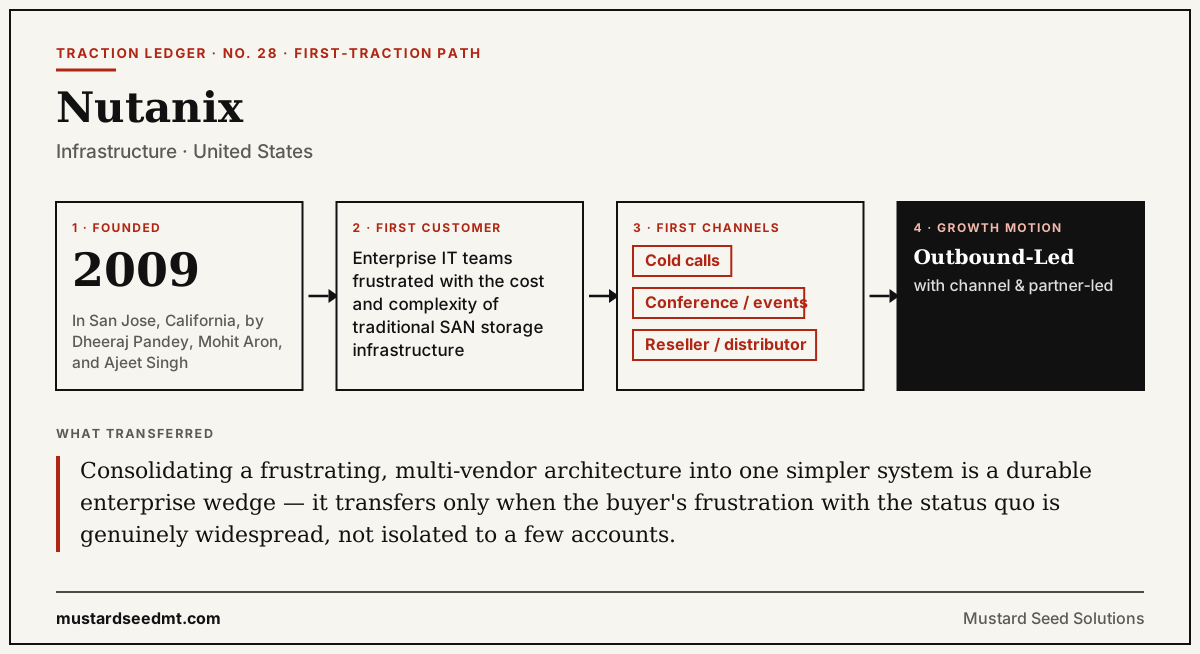
Nutanix got its first customers by offering a fundamentally simpler infrastructure architecture — hyperconverged infrastructure, combining compute and storage into a single system — as an alternative to the complex, separately managed storage area networks (SANs) that enterprise virtualization deployments traditionally required.
The first buyers were enterprise IT teams who had grown frustrated managing the operational complexity and cost of scaling traditional SAN storage alongside their virtualization infrastructure, and who wanted a more consolidated approach.
Founded in San Jose, California, by Dheeraj Pandey, Mohit Aron, and Ajeet Singh (2009).
Nutanix's First Channel
The channel was direct enterprise sales outreach, targeting IT infrastructure and virtualization administrators specifically, combined with conference presence at virtualization and infrastructure industry events where that buyer population was concentrated.
Reseller and distributor relationships supplemented direct sales, particularly for reaching enterprise accounts already procuring infrastructure through established channel relationships.
The Motion: Outbound-Led
The sales motion followed a traditional enterprise infrastructure pattern — multi-stage evaluations, pilots, and negotiated contracts — reflecting how large organizations actually procure core infrastructure, a high-consideration purchase unlikely to move through self-serve channels.
The hardware-and-software bundle pricing model directly addressed the buyer's core complaint: consolidating what had been separately purchased and managed systems into a single, simpler line item.
As the hyperconverged infrastructure category matured and gained broader recognition, direct sales remained the primary motion even as competition in the category increased, reflecting the sustained complexity of the enterprise infrastructure buying process.
The Turn — the motion held
The motion held. Nutanix's direct, enterprise-sales-led approach to reaching frustrated SAN customers remained consistent from its earliest pilots through its 2016 IPO and beyond.
Era: 2005-2014
Where It Ended Up: Public (Nasdaq: NTNX) since 2016
What Transferred
"Consolidating a frustrating, multi-vendor architecture into one simpler system is a durable enterprise wedge — it transfers only when the buyer's frustration with the status quo is genuinely widespread, not isolated to a few accounts."
Sources
Related Entries
HashiCorp
Open-source infrastructure tools that developers adopted years before HashiCorp sold anything.
Open-source repoDocker
A container tool that went from conference lightning talk to industry standard in under two years.
Open-source repoElastic
A search library built to solve one developer's recipe-search problem for his wife, open-sourced and adopted everywhere.
Open-source repo