
The Wedge: How Shopify Got Its First Customers
Shopify's origin is one of the most literal "the turn" stories in this entire ledger: Tobias Lütke, Daniel Weinand, and Scott Lake started Snowdevil, an online store selling snowboarding equipment, and built their own ecommerce software because the existing platforms available at the time weren't good enough for what they wanted to do.
Other people building online stores began asking to use the software the Snowdevil founders had built for their own shop, which is how the first real customers for what became Shopify arrived — not through a deliberate go-to-market plan, but through direct requests from people who saw the underlying platform and wanted it themselves.
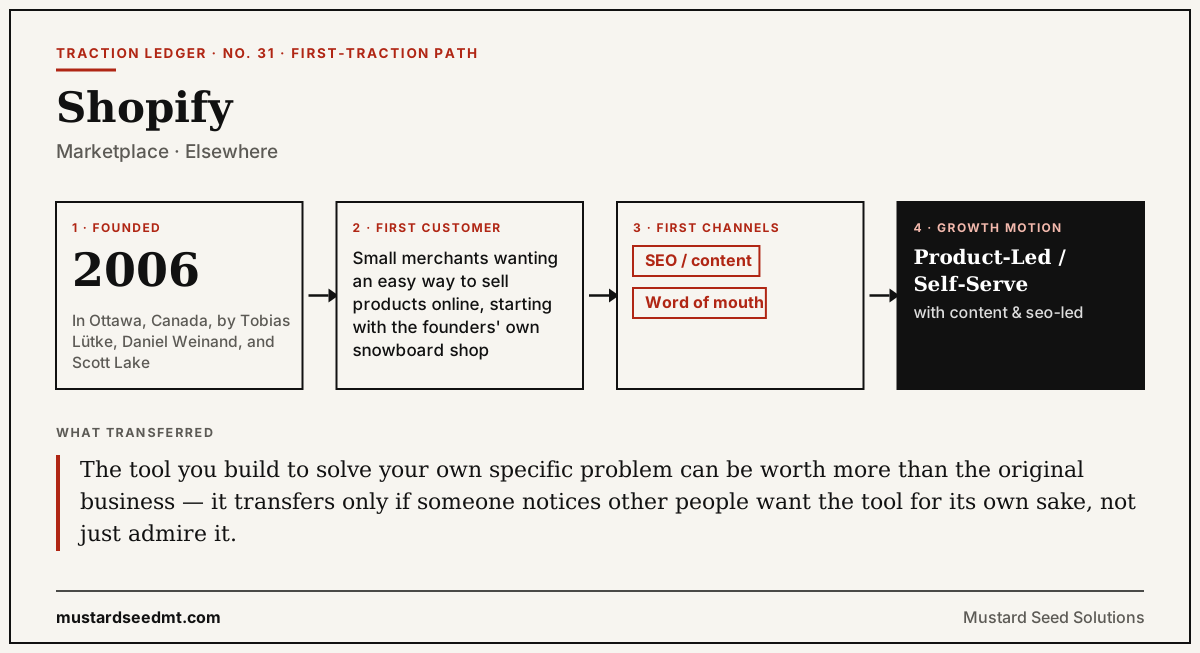
Founded in Ottawa, Canada, by Tobias Lütke, Daniel Weinand, and Scott Lake (2006).
Shopify's First Channel
Once spun out as standalone software, the channel was primarily word of mouth and search-driven content among early ecommerce merchants and web-store forums, where small business owners evaluating platforms to build an online store would encounter and try Shopify directly.
Because the product had already been proven running a real store (Snowdevil itself), early positioning could point to a genuine, working example rather than a hypothetical use case — an unusually concrete form of social proof for a brand-new software product.
The Motion: Product-Led / Self-Serve
The self-serve subscription model let a merchant sign up, choose a plan, and launch a store without a sales conversation, matching how small business owners actually wanted to evaluate and adopt a new sales channel for their own products.
As the merchant base grew, Shopify built an app and theme ecosystem that let a wide range of third-party developers extend the platform, turning it gradually into more of an operating platform for commerce than a single product.
Pricing tiers scaled with store features and transaction volume, letting a very small merchant start cheaply while larger merchants paid proportionally more as their own sales grew — the platform's revenue tracked its customers' success directly.
The Turn
The pivot from selling snowboards to selling the ecommerce software built to run that store is the namesake example behind how this ledger itself talks about "the turn" — a company recognizing that the tool it built to solve its own problem was the real business, and abandoning the original business to pursue it.
Era: 2005-2014
Where It Ended Up: Public (NYSE: SHOP) since 2015
What Transferred
"The tool you build to solve your own specific problem can be worth more than the original business — it transfers only if someone notices other people want the tool for its own sake, not just admire it."
Sources
Related Entries
Twilio
SMS and voice as an API — pay per call, no sales conversation required.
Hacker NewsGitHub
Git hosting that made open-source collaboration social, starting with the Ruby community.
Open-source repoDatadog
Unified monitoring for DevOps teams juggling too many separate dashboards.
Webinars